

The grand stage of Kisama erupts in rhythm as Hornbill Festival 2025 kicks off. (DIPR Photo)
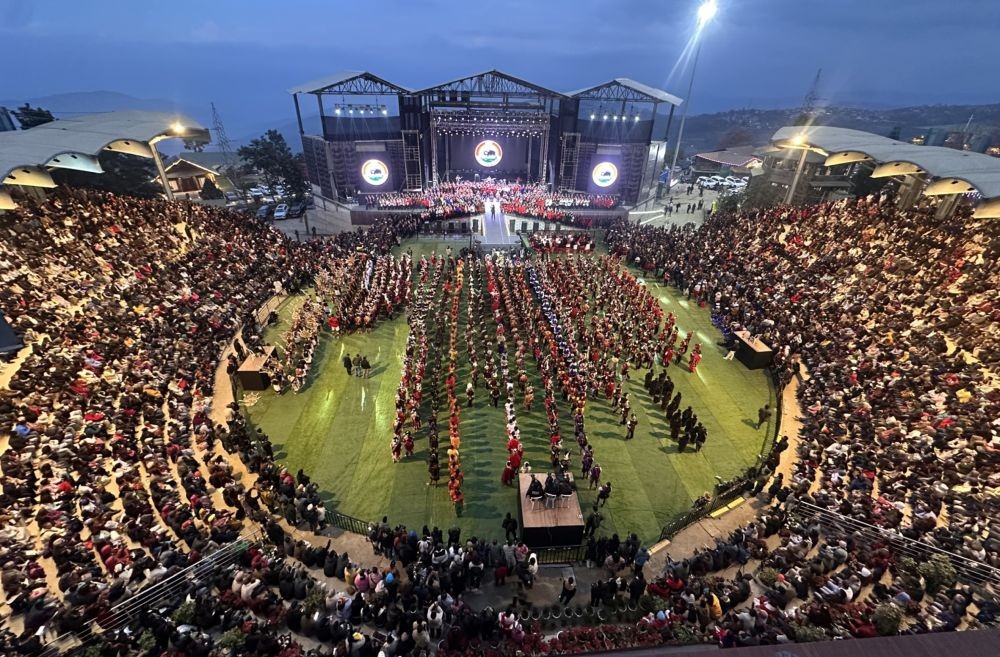
World Tourism Day is an opportunity not only to celebrate travel, but to ask a larger question: How can Nagaland make tourism a year-round opportunity for its people, businesses and communities?
Anup Kumar Gupta
Honorary Consultant, Nagaland Hotel & Restaurant Association (NHRA)
For Nagaland, tourism has never been only about places to visit. It is about people, communities, food, music, traditions, landscapes and stories. It is about the experience a visitor carries home and the opportunities that visitor creates for people along the way.
A tourist staying in a hotel does not spend only on a room. The visitor may eat at a local restaurant, hire a taxi, engage a local guide, purchase a handicraft, visit a village, attend a cultural programme or discover a local food experience. Tourism therefore reaches far beyond the hotel and restaurant industry itself.
That is why World Tourism Day is an appropriate moment not only to celebrate tourism, but also to consider what kind of tourism economy Nagaland wants to build.
Nagaland's tourism policy recognises the state's natural landscapes, biodiversity, tribal cultures, festivals and handicrafts as important tourism assets. It also places emphasis on infrastructure, promotion and marketing, human-resource development, community participation, sustainable tourism and collaboration among government, industry and local communities.
The opportunity now is to turn that vision into a tourism experience that is more accessible, more connected and more active throughout the year.
Beyond the peak season
Nagaland has successfully placed itself on the tourism map through its festivals, particularly the Hornbill Festival. Historical tourism statistics demonstrate the scale of visitor activity associated with the festival period.
In 2019, the Nagaland Tourism Department recorded 125,949 domestic and 5,568 foreign tourist arrivals in the state. During the Hornbill Festival period, 55,584 domestic and 3,015 foreign visitors were recorded. These are historical figures and should not be presented as a picture of today's tourism market. They do, however, illustrate the ability of a major event to create significant visibility and visitor movement.
The larger question is what happens when the festival ends.
What brings a visitor to Nagaland in January? What can a family experience in February? What reason does a traveller have to plan a visit in April, June or September?
These questions point towards the possibility of a 12-month tourism calendar.
Nagaland does not need to promote the same tourism product throughout the year. Different seasons can tell different stories — food, village life, nature, music, crafts, photography, agriculture, wellness, adventure and community experiences.
Smaller events and local experiences can become meaningful tourism products when they are connected with accommodation, restaurants, transport, guides and community participation. This can create reasons for visitors to travel beyond the traditional peak season and allow the benefits of tourism to reach more businesses and communities throughout the year.
The state's tourism policy itself identifies product diversification, village and rural tourism, homestays, eco-tourism, heritage, cultural tourism, handicrafts and other niche experiences as opportunities for developing Nagaland's tourism sector.
The challenge, therefore, is not necessarily a lack of experiences. It is how effectively those experiences are developed, connected and communicated.
From digital presence to digital tourism
The tourism journey has changed.
A potential visitor may first discover Nagaland through an Instagram video, search for accommodation online, watch a YouTube video about a village, read restaurant reviews, compare distances on a digital map and search for an itinerary before ever speaking to a travel agent.
The destination is therefore being evaluated long before the visitor arrives.
A traveller sitting in Delhi, Mumbai, Bengaluru, Kolkata or Guwahati should be able to answer a few basic questions with relative ease:
Where can I stay?
Where can I eat?
What can I experience?
How do I get there?
What is happening this month?
Who can guide me?
How can I make a booking?
If the answers are scattered across different websites, social-media pages and individual listings, planning becomes unnecessarily difficult.
The next phase of tourism promotion should therefore focus not only on making Nagaland attractive, but also on making it easy to discover, easy to understand and easy to plan.
Nagaland already has a digital tourism presence through the Tourism Department's online platform, which provides information on destinations, districts, events, festivals, travel operators and homestays. The next opportunity is to take this a step further.
The goal should be to move from digital presence to digital tourism.
Having individual hotels, restaurants and destinations on social media is useful, but the larger opportunity lies in connecting these digital touchpoints into one visitor journey.
A traveller should ideally be able to discover Nagaland, explore destinations, find verified accommodation and restaurants, identify local experiences, plan an itinerary, contact service providers, navigate to locations and eventually share feedback — with as little friction as possible.
This is where digital technology can move from being simply a promotional tool to becoming part of the tourism infrastructure itself.
This does not necessarily mean creating a complicated or expensive system from the beginning. A practical starting point could be a verified digital directory of participating hotels, restaurants, homestays, guides, transport providers, attractions and local experiences.
Each listing could provide basic, reliable information such as location, contact details, operating hours, accommodation or cuisine category, reservation information, nearby attractions and links to maps.
Accurate and regularly maintained information should come first. Booking integration and more advanced technology can follow once the underlying information is reliable.
For the hospitality industry, this also means recognising digital information as an important business asset.
A hotel's photographs, location, contact details, room information, reviews and reservation options may be the first interaction a traveller has with that property.
A restaurant's menu, opening hours, location and customer reviews can influence whether a visitor walks through its doors.
In this environment, maintaining an accurate digital identity is no longer simply a marketing exercise. It is part of customer service.
The Next Chapter: From Digital Tourism to Intelligent Tourism
Once the basic digital foundations are in place, the next chapter could be the intelligent use of technology.
Artificial intelligence is beginning to change the way people search, plan, book and experience travel. For Nagaland, this presents an opportunity to move beyond simply putting tourism information online and towards making that information more personalised, accessible and useful.
Imagine a traveller saying: “I have four days in Nagaland. I am travelling with my family, I enjoy local food and nature, and I would like to experience village life.”
An AI-enabled tourism assistant could potentially create a preliminary itinerary, suggest destinations based on the visitor's interests, identify suitable accommodation and restaurants, provide information about local experiences and connect the traveller with verified service providers.
This is where the distinction between digital presence, digital tourism and intelligent tourism becomes important.
A hotel having a website, Facebook page or Instagram account represents digital presence.
A visitor being able to discover that hotel, find its location, understand its facilities, check availability, make an enquiry or booking and subsequently share feedback as part of a connected tourism journey represents digital tourism.
The next stage is intelligent tourism — using data, automation and artificial intelligence to make that journey more personalised, responsive and efficient.
For hotels and homestays, AI could assist with routine guest enquiries, reservation communication, digital concierge services, review analysis, demand forecasting and identifying booking patterns. Instead of staff spending valuable time repeatedly answering the same basic questions, automation could handle routine requests while employees focus on the guest experience.
Restaurants could similarly use technology to understand customer preferences, assist with reservations, analyse reviews, anticipate demand and improve inventory and food-waste planning.
For tourism promotion, AI could help analyse search trends, visitor feedback and online conversations to identify which destinations, experiences and activities are attracting interest. This could help tourism planners and businesses understand what visitors are looking for and identify opportunities beyond the traditional tourism calendar.
AI could also help make Nagaland's tourism information more accessible.
A visitor should not have to understand which government website, tourism portal, hotel page or social-media account contains the information they need. In the future, an intelligent tourism assistant could potentially bring relevant information together and present it in a simple conversational format.
A visitor could ask:
“What can I do in Nagaland this weekend?”
Another might ask:
“Where can I experience traditional Naga food near my destination?”
Someone else could ask:
“I have two days, I am interested in nature and photography, and I am travelling on a moderate budget. What should I see?”
The value of such a system would not simply be convenience. It could help distribute tourism more widely by introducing visitors to lesser-known destinations, local businesses, homestays, guides and community experiences that may otherwise remain invisible online.
For a state where many tourism opportunities are community-based or operated by small businesses, this could be particularly important. A small homestay or local guide may not have the resources to build an advanced digital marketing system, but could still become discoverable through a reliable and connected tourism platform.
There is, however, an important condition.
Intelligent tourism can only be as reliable as the information on which it is built.
Incorrect information about hotel availability, prices, opening hours, routes, travel times or attractions can quickly damage visitor confidence. AI-generated information must therefore be supported by verified data, regularly updated information and human oversight.
This means that before Nagaland talks about sophisticated AI solutions, it must continue strengthening the fundamentals: accurate destination information, reliable digital listings, connectivity, trained people and cooperation among tourism stakeholders.
The future should therefore not be about replacing people with technology.
It should be about using technology to give people better tools.
A machine can recommend a restaurant, but it cannot replace the warmth of the person welcoming a guest.
An algorithm can suggest a village experience, but it cannot replace the local resident who tells the story of that village.
AI can translate information, but it cannot reproduce the feeling of sitting around a table, sharing food and conversation.
Technology can help a visitor discover Nagaland. The people of Nagaland will determine what that visitor remembers.
This is why the next chapter should not be described simply as an AI revolution. It should be seen as an opportunity to build a smarter, more connected and more human tourism ecosystem.
For NHRA and the wider hospitality industry, this could open an important area of work: helping hotels, restaurants and homestays understand and adopt practical digital tools; building awareness about responsible AI; encouraging digital skills; and ensuring that smaller businesses are not left behind as technology changes the way travellers make decisions.
The objective should be simple — not technology for its own sake, but technology that makes tourism easier to discover, easier to plan, easier to experience and more rewarding for both visitors and the people who serve them.
That is where digital tourism could lead next: from simply being connected to becoming intelligent, while remaining unmistakably human.

