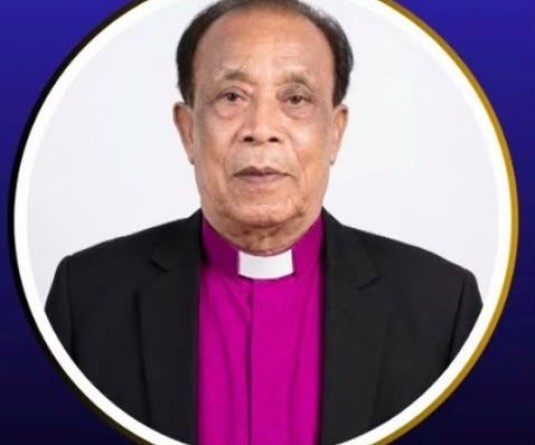
Besesayo Kezo, IPS
Retd DGP
Introduction: Democracy fundamentally depends on conflict within its traditional constitutional framework. The vigorous engagement between the ruling majority and the opposition is essential: it maintains accountability, prevents deviations from institutional norms, and provides a vital platform for dissenting voices. Without opposition, the very foundation of representative democracy is critically weakened.
Nagaland Experience: Nagaland exemplifies a unique form of governance. In 2015, 2021 (United Democratic Alliance), and after the 2023 elections, the state formed an “opposition-less” government, uniting all elected legislators under the ruling coalition irrespective of party. Although political leaders have presented this phenomenon as a sign of collective unity, it prompts critical questions regarding governance, legislative oversight, and the sustainability of democratic institutions.
Pros and Cons:
1.The Justification: Unity for the Naga Political Issue
The primary justification offered by Nagaland’s political leadership for eliminating parliamentary opposition is the long-standing Naga political issue.
i) A United Front: Leaders argue that facilitating peace talks between the Government of India and various Naga political groups requires consensus across party lines.
ii) Facilitating Resolution: By removing partisan conflict within the Nagaland Legislative Assembly, the government seeks to serve as a unifying facilitator for a political solution. From this perspective, traditional party rivalries are set aside in favour of a single, overarching socio-political objective.
2. The Institutional Vacuum: Loss of Checks and Balances
While the pursuit of a political resolution is a critical priority, the structural consequences of an opposition-less legislature remain significant.
i) Structural Challenges of Opposition-Less Governance: Dimension, Standard Democratic Model, Opposition-Less Model.
ii) Legislative Oversight: Shadow cabinet, debates, and rigorous question hours. Reduced floor debate; high consensus without formal challenge.
iii) Public Representation: Diverse voter mandates reflected in opposition benches. All elected MLAs absorbed into the executive fold.
iv) Financial Accountability: Public Accounts Committees chaired by opposition leaders. Internal oversight within the ruling coalition. When every Member of the Legislative Assembly (MLA) sits on the treasury benches, the formal mechanism for questioning executive decisions, budgetary allocations, and policy implementation is compromised. “Without an institutionalised opposition, public criticism shifts from the legislative floor to civil society, the media, and informal public spaces.”
3. Civil Society and the Burden of Critique
In the absence of a formal political opposition in the assembly, the burden of democratic vigilance rests heavily on civil society organisations, tribal hohos, student bodies, and independent journalism.
i) Informal Oversight: Non-state entities increasingly serve as the primary check on government policies, public expenditure, and administrative delays.
ii) Electoral Mandate Disconnect: Voters who cast ballots for rival political parties see their representatives join the very government they campaigned against, altering the post-election mandate.
Comment: The Nagaland model shows how acute regional conflict and unique historical circumstances can reshape traditional democratic norms. While national unity behind peace negotiations signals clear intent, preserving institutional health requires robust debate and public accountability. For democracy to endure, consensus on core challenges and institutional checks that ensure transparency, responsiveness, and accountability are vital. Ancient critiques warn that mismanaged majority rule risks degenerating into demagoguery, populism, and tyranny over truth and wisdom.
Political philosophy: Nagaland Context
When contextualised within Nagaland's social, cultural, and political landscape, the following historical critiques take on unique and pressing significance. 1. Plato’s Critique: The “Ship of State” and Qualifications for Leadership: In The Republic, Plato likened democracy to a ship in which the crew (the electorate) votes on who should steer, despite lacking knowledge of navigation. He argued that democracy prioritises popularity over competence, producing leaders who tell the masses what they want to hear rather than what they need to hear.
Relevance for Nagas
i) Money, Power & Populism: In contemporary Naga politics, electoral democracy is heavily dominated by financial power, patronage networks, and short-term individual gains rather than by long-term vision or governance capacity.
ii) Erosion of Merit: Candidates are often elected on the basis of wealth, clan strength, or emotional appeals rather than on their grasp of policy, lawmaking, or economic planning.
2. Alexis de Tocqueville: The Tyranny of the Majority and Conformity
Tocqueville warned that democracy risks creating a “tyranny of the majority,” in which numerical majorities suppress minority views, enforce intellectual conformity, and stifle dissent.
Relevance for Nagas
i) Majoritarian Tribal & District Dynamics: In a state structured along tribal and regional lines, strict electoral arithmetic can sideline smaller tribes or less populous districts.
ii) Pressure for Consensus: In Naga society, the strong cultural emphasis on collective identity can sometimes merge with majoritarian democracy, creating intense social pressure to conform. Dissenting voices or independent critics often face ostracisation rather than engagement.
3. Aristotle: The Decay into Oligarchy and Demagoguery
Aristotle observed that democracies easily decay into oligarchies (rule by a wealthy few) when power concentrates among those who can fund elections, thereby turning public office into a vehicle for self-enrichment.
Relevance for Nagas
i) Elite Capture & Opposition-Less Politics: The phenomenon of “opposition-less governance”—where partisan lines dissolve—echoes Aristotle’s fear that power would consolidate into a closed political class.
ii) Resource Concentration: When electoral democracy becomes an insider game, state resources, contracts, and administrative privileges remain locked within a narrow ruling elite, deepening public disillusionment.
4. Socrates: Ignorance vs. Civic Responsibility
Socrates argued that voting is a skill requiring critical thinking, civic education, and deep deliberation, not merely an inherent right exercised on impulse or under coercion.
Relevance for Nagas
i) Electoral Transactionalism: The democratic process in Nagaland often suffers from a transactional voter culture, in which the ballot is traded for immediate material benefits rather than accountability.
ii) Role of Civil Society: Socrates’ call for an educated, critical citizenry underscores the need for Naga civil society, student unions, and community elders to actively educate the public on the long-term cost of compromised elections.
Summary: Classical Critique Core Premise Naga Context
Platonic Incompetence: Popularity outweighs capability. Wealth and clan influence dictate election outcomes rather than governance capability.
Tocqueville: Tyranny of the Majority: Numerical strength silences dissent. Marginalisation of smaller tribes/districts; societal pressure to conform.
Aristotelian Decay: Democracy devolves into oligarchy with entrenched political elites and the emergence of opposition-less power structures.
Socratic Ignorance: Voting without civic awareness weakens institutions. Transactional voting undermines long-term political accountability.
Conclusion:
A frequent critique of democracy is not for its abolition but for acknowledging its susceptibility to misuse. In Nagaland, it is essential to judiciously integrate democratic electoral frameworks with indigenous traditions, enhance civic oversight, and foster dynamic legislative debate. These measures are indispensable to ensure that governance genuinely advances the interests of the entire community, rather than merely those of the majority or influential groups. Without an active Opposition, democracy risks inadvertently becoming a concealed dictatorship.