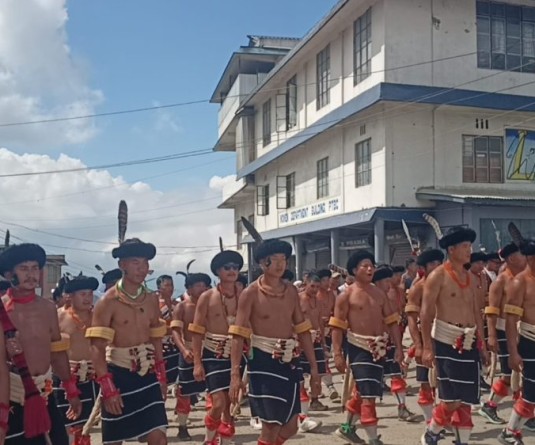
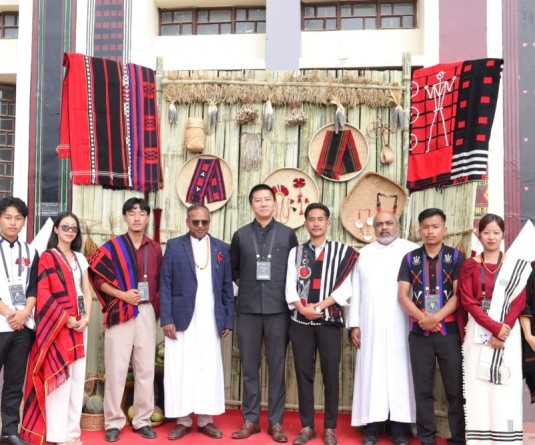
Governor Yadav along with other officials during a interactive session in Tuensang on October 8. (DIPR Photo)
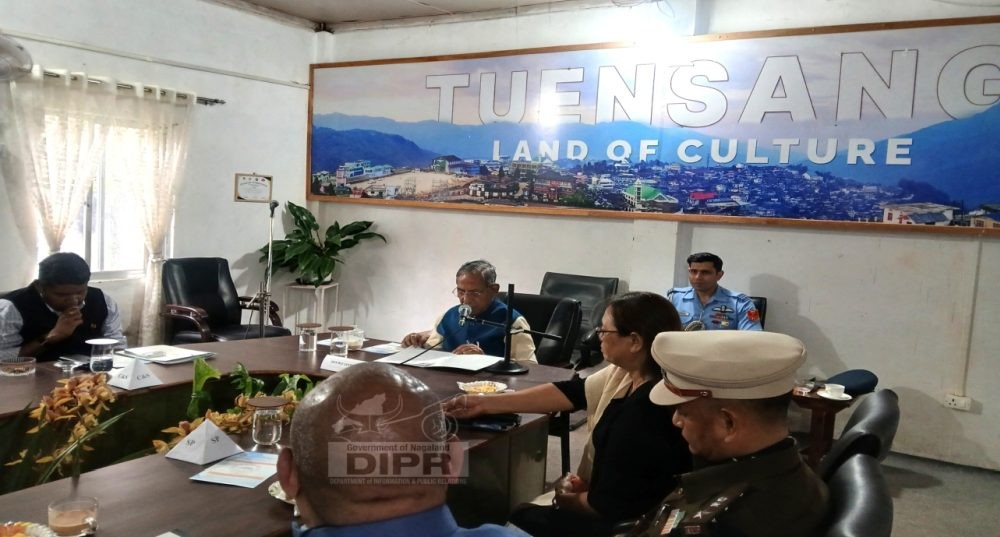
Tuensang, October 8 (MExN): Nagaland Governor Nand Kishore Yadav visited Tuensang district on October 8 and held an interactive session with department officials and civil society representatives from the district, a DIPR update stated.
During his visit, the Governor expressed gratitude to the people of Tuensang for their hospitality and affection, saying the visit provided him an opportunity to see the district firsthand, interact with the people and understand their aspirations, concerns and expectations.
Yadav highlighted Tuensang’s important place in the history of Nagaland. He said that before the foundation of the State in 1963, the district formed part of the Naga Hills-Tuensang Area and played an important role in the political and administrative evolution of Nagaland.
As one of the early administrative centres of the Eastern Nagas, Tuensang has also been an important meeting point of communities, cultures and traditions, he said. Its rich heritage and traditions, he added, are integral to the cultural identity of Nagaland.
The Governor said the people of Tuensang had demonstrated courage, resilience, hard work and community spirit despite geographical and infrastructural challenges.
Referring to the historical agreement signed in New Delhi on February 5, 2026, between the Eastern Nagaland People’s Organisation (ENPO), the Government of India and the Government of Nagaland concerning the Frontier Nagaland Territorial Authority, Yadav described it as an important milestone for Eastern Nagaland.
He said the agreement reflected the importance of dialogue, mutual understanding and democratic engagement in addressing the aspirations and developmental needs of the people.
The Governor expressed hope that the development would open new avenues for inclusive development, stronger institutions, better infrastructure and greater opportunities for the people of Eastern Nagaland. He also hoped it would usher in a new era of peace, cooperation and prosperity while preserving the unity and integrity of Nagaland.
Emphasising the importance of his visit, Yadav said governance becomes more meaningful when constitutional institutions remain connected with people at the grassroots level.
He highlighted Tuensang’s potential in agriculture, horticulture, handloom, handicrafts, tourism, education and entrepreneurship. With better connectivity, infrastructure, technology and opportunities for young people, the district could become an important contributor to the economic growth of Nagaland, he said.
Asserting that youth must remain at the centre of development, the Governor said young people possess talent, energy and creativity, but require opportunities, skills, access to technology and an environment in which they can pursue their aspirations.
He encouraged the youth of Tuensang to believe in their abilities, acquire new skills and become partners in the development of their communities.
Yadav also stressed that development must go hand in hand with preservation of cultural heritage. He said traditions, languages, customs, music and community institutions are valuable assets and that modernisation should strengthen rather than weaken the State’s identity.
The Governor appreciated the efforts of the district administration, security forces, churches, civil society organisations, community leaders and other stakeholders towards peace, stability and development.
Yadav assured the people of Tuensang that their aspirations and concerns would receive due attention and expressed hope that his visit would further strengthen the bond between Lok Bhavan and the people of the district.
Short speeches were also delivered by ENPO president A Chingmak, CKS vice president Sipong Chang and USLP joint secretary T. Bendang Dhongrü.
The programme was chaired by Tuensang Deputy Commissioner Lithrongla Tongpi Rutsa. PowerPoint presentations on departmental activities were made by the Department of Health and Family Welfare and the Department of Rural Development.