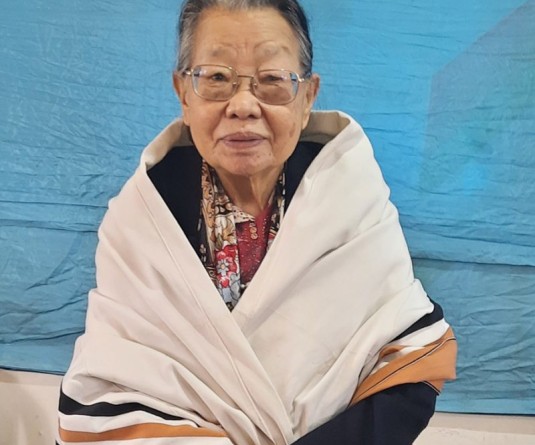
Mmhonlümo Kikon, author, poet and public policy analyst from Nagaland.
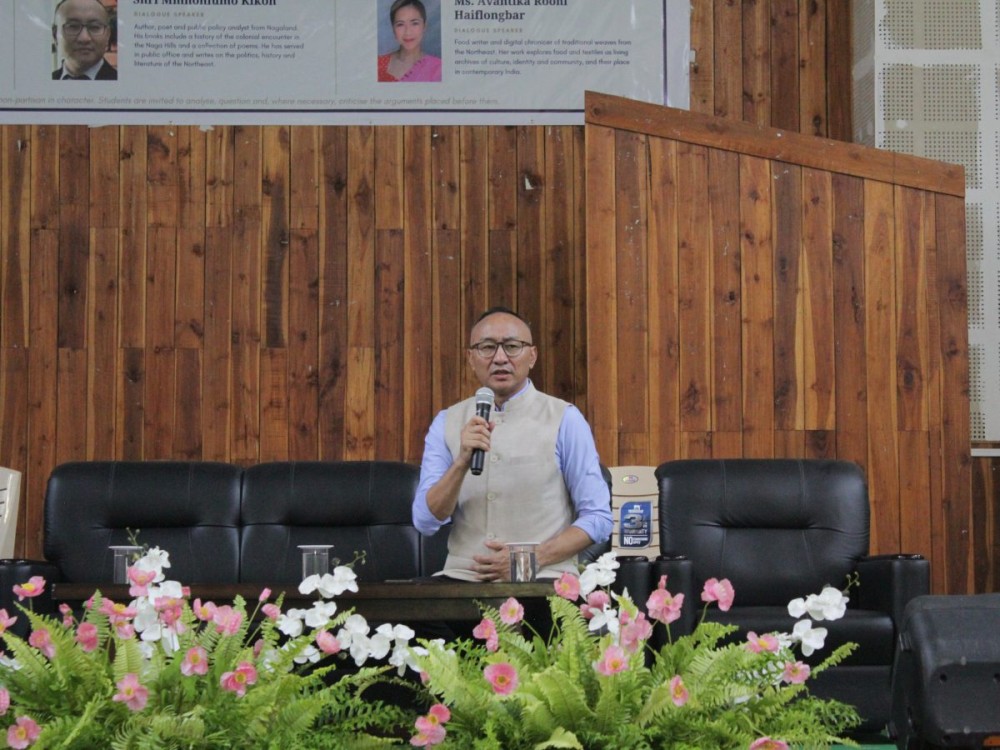
Kikon calls for informed public debate on policies, constitutional safeguards
Morung Express News
Dimapur | September 18
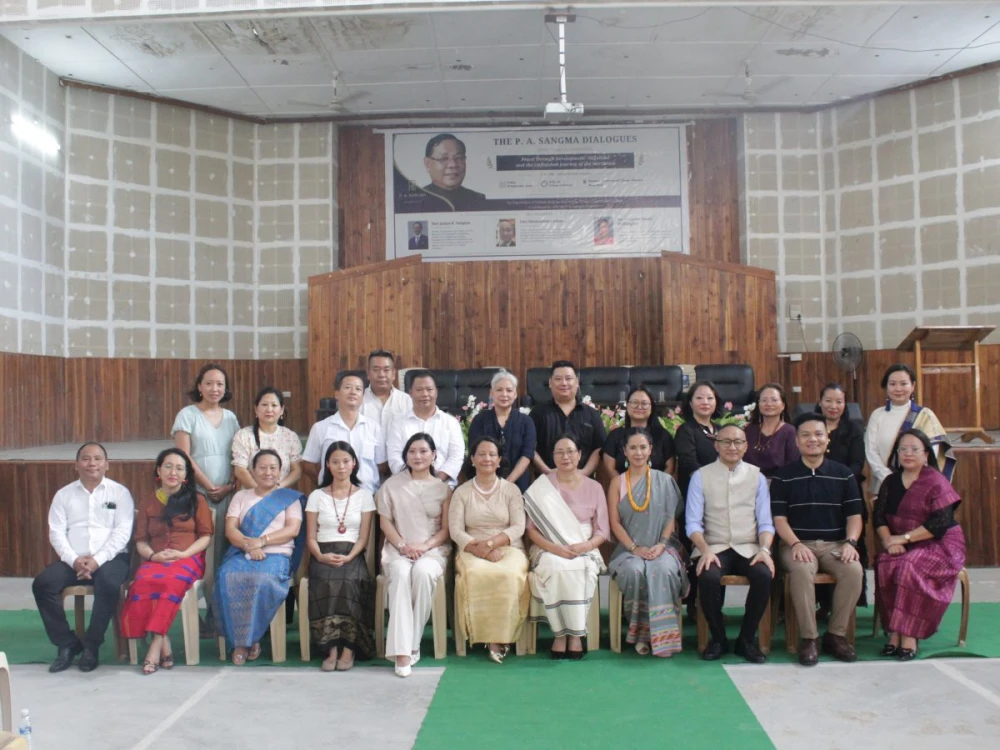
The ‘PA Sangma Dialogues,’ a one-day seminar on ‘Peace Through Development: Nagaland and the Unfinished Journey of the Northeast,’ was held at the College Auditorium of Dimapur Government College (DGC) on September 18.
Organised by the departments of Political Science and History, DGC, in collaboration with the PA Sangma Foundation, the seminar brought together speakers from the region for conversations on issues relating to peace, development, federalism, autonomy, Naga identity and the diverse cultural landscape of the Northeast.
James K Sangma, Rajya Sabha MP from Meghalaya, who was also scheduled to deliver a dialogue, could not be present as he was required to be in New Delhi for the first meeting of the Joint Parliamentary Committee examining the FCRA Amendment Bill, 2026, being held today.
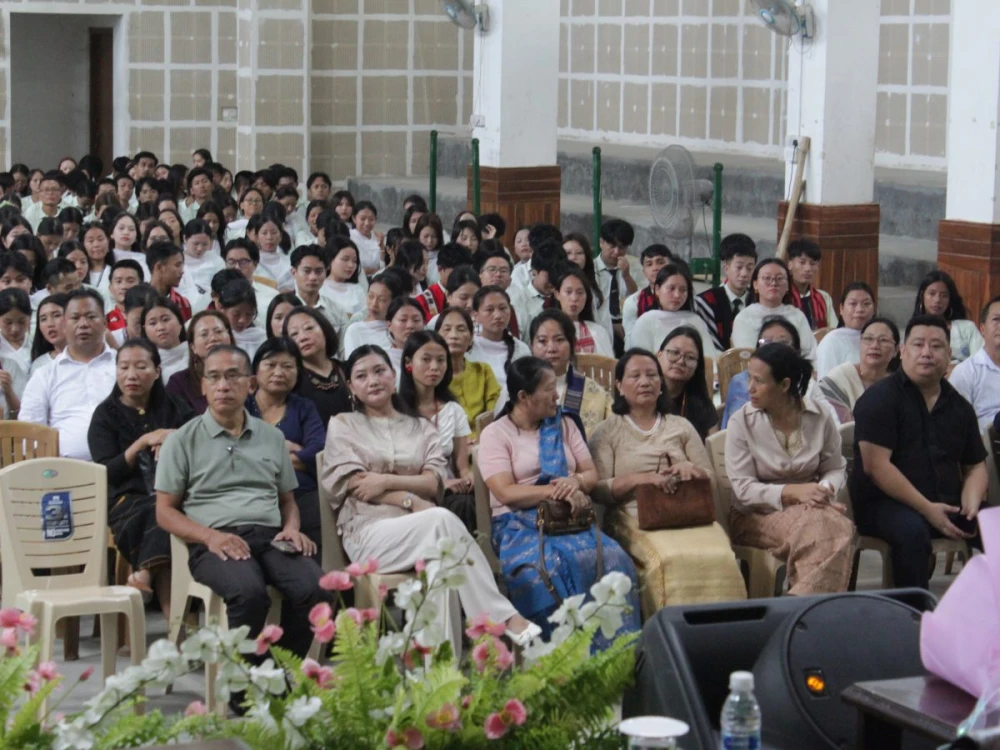
Mmhonlümo Kikon, author, poet and public policy analyst from Nagaland, and Avantika Roohi, food writer and digital chronicler of traditional weaves from Assam, spoke at the dialogue.
Kikon began by placing his own political affiliation on record while stressing that the discussion was purely about policy.
The former minister also used the occasion to question what he described as a contradiction in how educated political leadership is perceived in Nagaland.
“I have one problem with professors in Nagaland,” he said, referring to an experience many years ago in which, after delivering a policy lecture, he was told that he appeared unusually knowledgeable about the subject “for a politician.”
He said the remark reflected an underlying assumption that politicians are not expected to understand policy, even while society simultaneously demands “educated leadership, educated leaders, educated politicians.”
“When politicians speak with homework done, if they’re well-versed with any topic they’re supposed to dwell on, then you see that you are actually not fit in this role,” he recalled, turning the question back to the academic community: “What do you want from your leaders?”
For Kikon, the larger issue was the quality of public discourse itself. He observed that policy debates in Nagaland are often insufficiently informed, particularly among young people, despite the fact that constitutional provisions and legislation can have consequences “down the generations.”
Using the Frontier Nagaland Territorial Authority (FNTA) as an example, he questioned how many students had actually read the legislation before forming opinions about it. Referring to his assessment of social media discussions surrounding the issue, he observed that 99% of the conversations were “hogwash,” noting that they were largely uninformed and lacked substantive engagement with the policy.
Touching on the relationship between the FNTA and the Sixth Schedule of the Constitution, Kikon explained that the Sixth Schedule was designed to provide a measure of autonomy to tribal communities, particularly over areas such as customary law, social and religious practices, local administration and certain taxation and resource-related matters.
He stressed, however, that the arrangement operates differently across Assam, Meghalaya, Mizoram and Tripura because the historical and demographic circumstances of each state are different.
He placed these arrangements within the broader idea of asymmetrical federalism—the constitutional recognition that different states and communities can have different relationships with the Union.
“Each state has its own unique relation with the Union,” he said, pointing to provisions such as Articles 371A, 371G and 371C as examples of constitutional mechanisms designed to preserve the distinct characteristics and aspirations of different communities.
For Nagaland, he highlighted Article 371A, particularly its protection of Naga customary practices and the provision concerning ownership and transfer of land and its resources.
He contrasted this constitutional protection with arrangements elsewhere in the Northeast, noting that the precise nature of autonomy and control over land and resources differs from state to state.
The distinction, he said, is particularly important when comparing the Sixth Schedule with the FNTA. While the Sixth Schedule has constitutional status, the FNTA is the outcome of a political agreement involving the Ministry of Home Affairs, the Government of Nagaland and the Eastern Nagaland Peoples’ Organisation (ENPO).
“That is a political commitment, political agreement,” he said, noting that it was not created through a constitutional amendment by Parliament.
The discussion also moved to a more immediate question: how customary institutions deal with issues of justice, particularly violence against women.
Kikon said that the real test of any autonomy arrangement was not just its institutional design but how it functioned in the lives of ordinary people.
Referring to research on the adjudication of violence against women in Nagaland, he raised concerns about cases involving rape, domestic violence and women’s inheritance rights. He said that in some instances, customary mechanisms had been influenced by traditional attitudes in which reporting offences was seen as bringing shame upon a village or clan.
Kikon said this was a serious challenge to the principle of justice. The question was therefore not whether customary institutions exist under constitutional protections such as Article 371A, but whether those institutions can evolve to ensure justice for women while retaining the legitimate strengths of customary systems.
The dialogue also touched on how autonomy, customary identity and constitutional protection can coexist with contemporary principles of justice and individual rights. According to him, the answer requires a more informed citizenry and a more substantive public conversation about the laws and institutions that govern Nagaland.
Federalism and autonomy, he suggested, cannot be understood only as constitutional concepts. They have to be examined through their practical impact on people, communities and future generations, he added.