

Photo Courtesy: Dr Plabita Goswami
Dr Plabita Goswami, PhD (Gold Medallist)
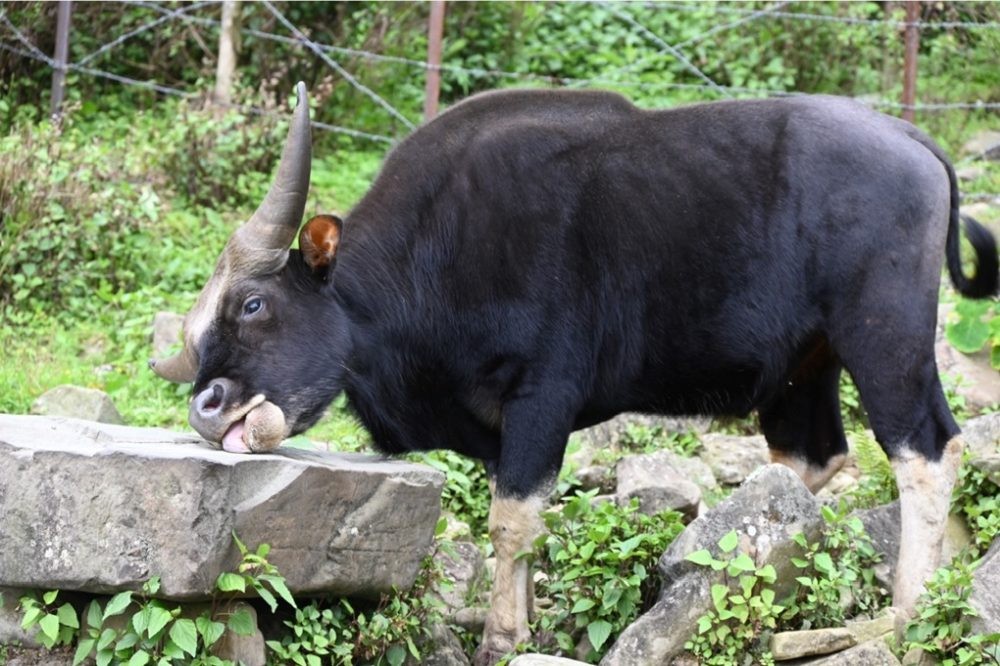
In a country where rural livelihoods are deeply tied to the land and its animals, few relationships are as profound, or as culturally defining, as that between the tribal communities of Northeast India and the Mithun (Bos frontalis). Revered as the "Cattle of the Hills," the Mithun is far more than livestock. It represents social capital, ritual honor, food security, and an indispensable economic safety net across the Eastern Himalayan hill belt.
Yet, in our shared tropical hill ecosystems, animal health is never an isolated affair. Mithun herds frequently share forest corridors, grazing areas, and village water points with small ruminants like goats and sometimes sheep. This close contact creates an epidemiological bridge across species lines—one where transboundary animal diseases can cross over with devastating consequences for local communities.
Among these threats, Peste des petits ruminants (PPR)—often referred to as "goat plague"—stands out globally as one of the most destructive viral infections affecting small ruminants. With morbidity and mortality rates reaching up to 100 percent in vulnerable populations, PPR causes an estimated global economic loss of USD 1.5 to 2.1 billion annually, striking hardest at pastoral and resource-limited small and marginal livestock rearers.
In response, the Food and Agriculture Organization (FAO) and the World Organisation for Animal Health (WOAH) launched the PPR Global Control and Eradication Strategy (PPR GCES), alongside India’s National PPR Eradication Programme launched in 2021–2022, have set a critical global benchmark: the complete eradication of PPR by 2030.
It is against this ambitious global backdrop that Dr Plabita Goswami and team at the Mithun Disease Diagnostic Laboratory (MDDL) under the Medicine Divisionat the ICAR-National Research Centre on Mithun, Medziphema (ICAR-NRCM) conducted an extensive health and socio-behavioral investigation across Nagaland and neighboring Mithun-rearing states of Arunachal Pradesh, Manipur, Mizoram, Assam.
The headline finding of our biological testing is both reassuring and momentous: All tested Mithun samples across Nagaland returned completely sero-negative for the PPR virus.
For our local Mithun owners and hill farmers, this is extraordinarily welcome news. It confirms that despite the endemic presence of PPR in small ruminant populations across parts of the region, our state's Mithun population currently maintains a clean bill of health regarding this lethal virus. While PPR is highly fatal and devastating to goats and sheep, cattle and bovineswhen come into close contact with infected small ruminants, they can catch the virus, develop an immune response, and produce antibodies.In a region where any sudden disease outbreak can wipe out household savings and disrupt community life, this negative PPR status is a vital layer of protection for local livelihoods.
However, as any epidemiologist knows, a clean test result in the laboratory is only half the story. The true test of long-term disease freedom lies not in the blood samples we collect today, but in the everyday choices, awareness, and biosecurity practices of the people who care for these animals every day.
When our study examined the socio-behavioral dynamics among 339 Mithun stakeholders—including farmers, community leaders, and state veterinary officers—the findings presented a striking contrast between positive intent and technical awareness.
On one hand, the community’s trust in animal health management is remarkably strong. Over 98 percent of respondents agreed that Mithun diseases cause serious economic losses. On the other hand, an overwhelming 99 percent expressed a strong desire for health training, scientific management, and veterinary consultation due to lack of awareness at the grassroot levels. Furthermore, when an actual disease outbreak occurs in a village, nearly 88 percent of farmers reported that they immediately seek veterinary help.
What does this mean for Nagaland as we head toward the 2030 global eradication deadline?
It means that our Mithuns are currently free of PPR, based on the absence of antibodies against PPR or other morbillivirus, proved through the serological tests conducted at MDDL, ICAR- NRCM.
However, our current defense rests ongeographical isolation of the susceptible sheep and goat population rather than active biosecurity. Because PPR continues to circulate in co-reared goat and sheep populations in neighboring states, the risk of spillover remains a quiet, ongoing threat. If a viral strain were to cross over into an unvaccinated, unaware herd, the resulting economic losses could be severe.
Maintaining Nagaland's PPR-free status in Mithun is not merely a scientific objective; it is an economic and cultural imperative for the socio-cultural upliftment of all Mithun-rearing states. To ensure our herds remain protected, we must move from a reactive "crisis-management" approach to a proactive, preventive health culture.
Here are four practical, actionable steps for our farming communities, village councils, and local extension workers:
1. Recognizing the Early Warning Signs: Monitoring herds regularly for the key signs such as high fever, severe discharge from the eyes and nose, painful mouth sores, breathing difficulty, and foul-smelling diarrhea of PPR in livestock. Any cluster of these symptoms should be reported immediately to the nearest veterinary center.
2. Implementing Biosecurity: Avoid housing Mithun and newly introduced goats or sheep in direct contact. New animals brought into the village should be quarantined for at least 14 to 21 days before joining shared grazing zones.
3. Practicing Vaccination: Preventive vaccination remains the single most effective tool against PPR in sheep and goats (the primary hosts). Communities should participate actively in state-sponsored mass vaccination drives instead of doing it after an outbreak occurs.
4. Strengthening Community-Led Knowledge Networks: Village leaders and youth organizations must partner with extension and government agencies to ensure livestock health information reaches every household in communities, with special focus on empowering women livestock handlers who manage daily animal care.
The zero-positive finding in our Mithun population gives Nagaland a rare and precious head start. It offers us the opportunity to lead by example in the national road map toward 2030. By bridging the gap between our high cultural devotion to the Mithun and practical on-farm biosecurity, we can safeguard not only the health of our animals, but the economic resilience and rich heritage of our tribal hill communities for generations to come.
Dr Plabita Goswami is a Scientist (Medicine) at the ICAR-National Research Centre on Mithun (ICAR-NRCM), Medziphema.


.jpg)
