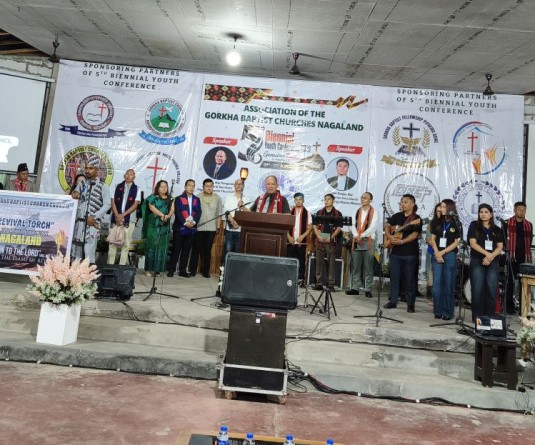
Members of the Forum for Naga Reconciliation-Recover Restore and Decolonise (FNR-RRaD) along with Naga tribal leaders addressing the press conference in Dimapur on September 5, coinciding with the September Dialogue 2026. (Morung Photo)
.jpg)
39 remains from the vaults of Pitt Rivers Museum
Morung Express News
Dimapur | September 5
Human remains allegedly taken away by colonial administrators as oriental curiosities will now be returned to the source community. The Pitt Rivers Museum (PRM), University of Oxford, United Kingdom, is all set to release a collection of Naga human remains, with origins in Nagaland, locked away for decades in the vaults, and almost forgotten.
The Forum for Naga Reconciliation-Recover Restore and Decolonise (FNR-RRaD) made the announcement jointly with representatives of Naga tribe hohos at a press conference in Dimapur on September 5, coinciding with the September Dialogue 2026. At the press conference were FNR Convenor Rev Dr Wati Aier, RRaD Coordinator and FNR Member Rev Dr Ellen Konyak, Tangkul Naga Long Vice President Jollyson R Shimray, Phom People’s Council President NT Thamlong Phom and Angami Public Organisation President Thejao Vihienuo.
“On 13th July 2026, the University of Oxford Council formally agreed to return 39 Naga ancestral remains kept in the Pitt Rivers Museum, UK,” said Dr Ellen Konyak Jamir, Coordinator of the RRaD and FNR Member. There were actually 40 sets. The council declined to release one set, citing insufficient evidence that it was of Naga origin.
According to Dr Jamir, the Director of the Pitt Rivers Museum, Prof Laura Van Broekhoven, communicated the news in a letter to FNR Convenor Rev Dr Wati Aier.
Prof Broekhoven’s letter said, “We hope we can now commence the work - together with the FNR, the Naga Tribe Hohos, and with the support of the RRaD team - towards the bringing home of the Naga ancestors to their homeland.”
The repatriation, expected to be completed by the end of the year, would bring closure to an initiative six years in the making.
The process started in 2020 when the Pitt Rivers Museum approached the Forum For Naga Reconciliation (FNR) to help facilitate and coordinate the return. It gave shape to the Recover Restore and Decolonise (RRaD), a research initiative led by two Naga academics, Dolly Kikon, based in the United States, and Arkotong Longkumer, based in the UK, along with a network of research volunteers.
As per the RRaD, the community response has been overwhelming, setting a precedent to understand, embrace and “live our history,” while building a shared future that leads to healing and unity amongst the Naga people.
The initiative included an extensive outreach campaign over the following years. In the words of the RRaD, it involved coordinating with various tribal hoho leaders, civil society organisations, church leaders and members, students, and intergenerational communities “across the Naga homeland to educate, share, and build solidarity.”
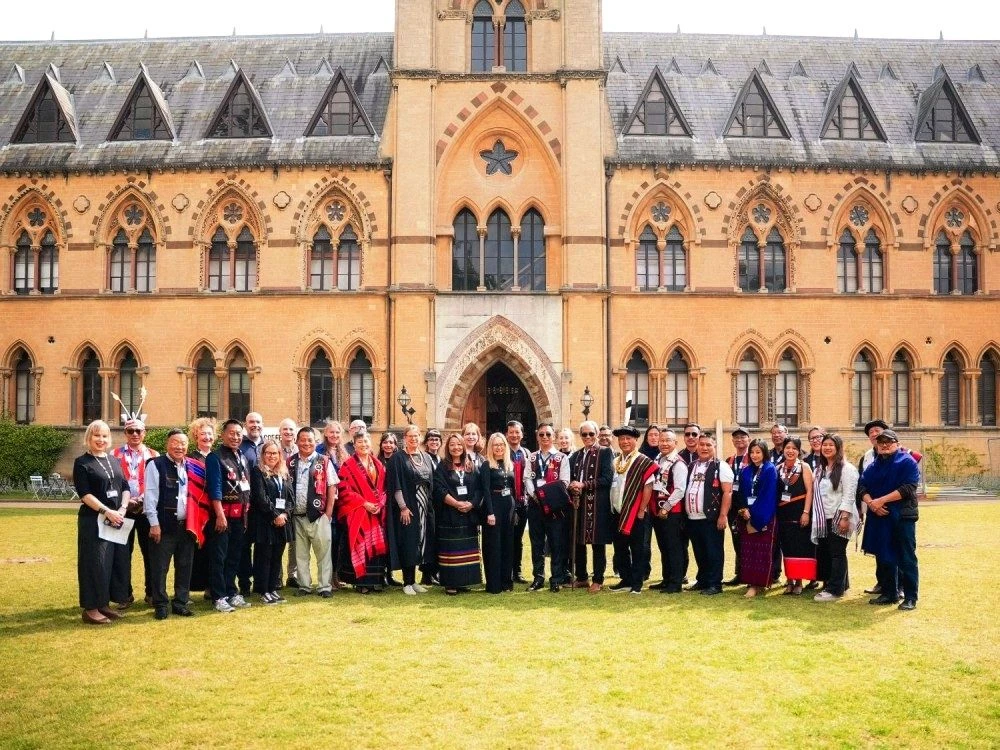
In June 2025, the PRM invited a group of Naga tribal hoho leaders and members of the FNR and RRaD, which resulted in the June 13, ‘Naga Oxford Declaration on Repatriation.’ The declaration affirmed the repatriation process as a united, consensual effort “towards the healing and wholeness of the Naga people,” and making their people whole by giving their ancestors a dignified rest, while also expressing solidarity with other indigenous peoples seeking similar returns for decolonisation.
The RRaD said that a Naga delegation will travel to the PRM to claim and return the ancestral human remains. “Repatriation, for the Nagas, is not simply about bones and ancestral remains finding their way back to the land… it is about memory returning to where it belongs,” it said.
.webp)
The interment
If the repatriation initiative was successful, the how and where of interring the remains has remained a question. This was clarified at the press conference by the Angami Public Organisation (APO) Thejao Vihienuo, who said that a place has been identified and they are pursuing the matter with the Nagaland state government. While the site has yet to be finalised, Vihienuo expressed confidence that it will materialize.
RRaD Coordinator Dr Ellen Konyak Jamir further addressed a potential conflict— whether the remains would be given Christian burial or interred with pre-Christian rituals. Dr Jamir told The Morung Express that the essence of the process should rather not be bogged down in theological or cultural debates.
Without ignoring the historical context, she said that the intent would be to treat the remains with a burial that aligns with the community’s prevailing beliefs and practices. She said that they remain open to feedback from the community.
.webp)
What next?
Besides the collections at the PRM, there are reportedly Naga human remains held by various institutions in Europe. Dr Jamir said, “We don't know what the future holds, but I want to encourage the Naga community to step up, explore these issues... Ultimately, it is up to the Naga people to decide whether they wish to pursue these other avenues.”
As far as the prospect of reclaiming Naga artifacts was concerned, she said that it involves a complex process. The Pitt Rivers Museum holds over 6,000 Naga artifacts. While the museum is open to welcoming Naga researchers to study these collections, she said that reclaiming them is not the RRaD’s current focus.
Describing RRaD as a team of volunteers, she that will need to regroup and evaluate the next steps once the repatriation of the human remains is complete. According to her, the process has opened up numerous opportunities for further study and exploration that require deeper research, and which members of the Naga community will feel inspired to take up.
A Path Home
The Return of Naga Ancestral Remains from the Pitt Rivers Museum to the Naga Homeland
FREQUENTLY ASKED QUESTIONS
How many ancestors are returning?
On 13 July 2026 the University Of Oxford Council agreed to the return of 39 Naga ancestral human remains. One further remain was not included, as it does not have a clear provenance as Naga.
Where are they returning to?
To the Naga homeland, arriving in Dimapur, Nagaland (NE India). The Naga have committed to a joint memorial resting place for the ancestors, intended as a place of healing and peace for all generations and as a symbol of the oneness of the Naga.
When will the return take place?
The Pitt Rivers Museum is working closely with the Nagas to agree a date for the repatriation. A handover ceremony will be held at the Pitt Rivers Museum with the delegation travelling from Nagaland for the occasion. The ancestors will then be accompanied home.
How did the ancestors come to be in Oxford?
They were taken during the colonial era. Most were brought to Oxford by two colonial administrator/anthropologists, John Henry Hutton and James Philip Mills between 1910 to 1940 approximately. Their acquisition was often coercive, rather than freely given. Records show that remains were confiscated during punitive military expeditions. The Naga have challenged the colonial description of these ancestors as 'headhunting trophies'.
Who has led this process?
Our Naga partners have led this process. The Forum for Naga Reconciliation (FNR) facilitated an inclusive, community-led process and its Recover, Restore and Decolonise (RRaD) team carried out participatory research across Naga communities. The Museum has supported the process by sharing information and procedures, helping with fundraising and working to stop the sale of a Naga skull at auction but the direction has been Naga-led throughout.
What is the Naga-Oxford Declaration?
A unanimous, intertribal declaration was presented in June 2025 at the closing ceremony of the visit. It commits the Naga to the return of their ancestors and to a shared memorial resting place, as well as extending solidarity to other Indigenous peoples pursuing repatriation.
What happens to the other Naga human remains and objects?
The Museum's holdings list a further 178 items as holding Naga human remains. In this case they contain, or may contain, human hair. It is our experience that some communities may object to this and others don't, as hair (human or not) was often used by people to make objects. At times this may make the objects closely tied to the person whose hair was cut, for example in objects of mourning and keepsake art or sacred hair embroideries; in other cases it was used more as a durable and flexible resource such as to make rope, shiny decorations to weaponry; flexible hunting nets, wigs and hairnets.
Is the same as the Maasai Living Cultures project?
It is part of the same wider approach, building long-term, regenerative partnerships in which the community, together with the Museum, decides the outcome. However, the outcomes differ: in the Maasai project, the delegates decided their belongings should remain in Oxford as an “everlasting bond", and what was most important was the Osotua reconciliation ceremonies, whereas the Naga have decided their ancestors should come home. For Maasai, if these were human remains, the same might have occurred. Both decisions were led by the community, working alongside the Museum.
Why does the return take time to arrange?
International transport of ancestral remains requires CITES approval and a specialist shipping agent, which needs roughly two months to arrange. The Museum is also coordinating hosting, travel and the ceremony for a large delegation, so planning runs well ahead of the November date.
Source: The Pitt Rivers Museum
.jpg)