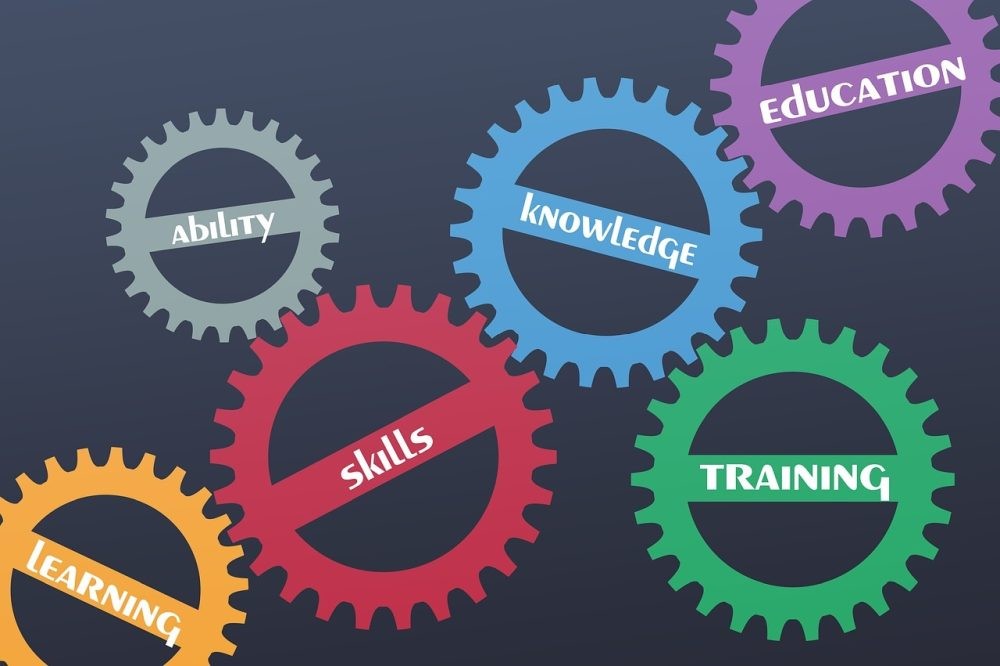
Photo Courtesy: Image by Gerd Altmann from Pixabay | For representational purpose only
Kaikho Hriizhiinio
PhD Scholar, University of Hyderabad
When I was 13 years old, one day as the day deepened blue, my mother called me with a message that has shaped the course of my life: “Your father and I have decided to send you to boarding school to have more time to study and learn more about the reality of the world. We are not as wealthy as others, but we will do what we can for all of you.” She went on to explain that an educated, wise person lives a truly meaningful and purposeful life, leaving me with a piece of wisdom I carry to this day: “Do not be afraid; work hard, have faith in God, and seek His wisdom.” Those words were not merely encouragement; they were a foundational philosophy—a reminder that genuine growth requires courage, faith, and an active pursuit of truth.
This search for purpose is not a new human quest; it has been there since ancient classical thought. Socrates famously stated that “An unexamined life is not worth living,” emphasising the importance of thinking deeply about life and its essentiality to human dignity. Building on this, Aristotle argued that the ultimate goal of life is to attain happiness, which can only be achieved by living ethically. However, nowadays, many people are not allowed to engage in such reflection. Every year, an increasing number of young people end up feeling lost, suffering from unemployment and growing frustration amid an unstable job market. When systemic issues fail them, who is truly to blame? To solve this crisis, we must look beyond basic job placement and embrace two powerful, complementary approaches.
First, at the individual level, our youth need to discover their Ikigai- Japan's concept of purpose, which brings together what they love, what they do best, what the world needs and what can keep them going. As a starting point, students should ask themselves a simple yet effective question: What kinds of activities cause me to lose track of time? Which skills are frequently complimented about me? What problems in my community or in the world do I feel a strong desire to solve? What problem in the world am I both equipped to solve and excited to tackle? Even maintaining a reflective journal or attempting new experiences can help to show these personal connections. The long lives seen in Japan are proof that living with a sense of purpose promotes both well-being and longevity.
Second, personal effort needs to be backed by strong institutional support. Educational systems must step up by practising cura personalis. This Latin phrase, meaning “care for the whole person,” is the key principle of Ignatian spirituality and the guiding philosophy behind top Jesuit educational institutions worldwide. It demands a holistic development that simultaneously nurtures the emotional, physical, intellectual, and spiritual aspects (mind, body, intellect, and soul). It identifies students’ strengths and matches them with experienced staff to provide moral support, assist with mental and emotional well-being, and help them cope with personal and academic problems. Service learning projects connect students with real-world community initiatives, enabling them to put their knowledge into practice while enhancing empathy and civic duty. Genuine societal excellence is achieved when young people are seen as lively, individual persons rather than merely as figures in economic statistics.
Indeed, economic theory supports the idea of holistic development. Traditionally, the primary engines of economic growth are capital and labour. However, high aptitude without virtue can prove destructive to society; it is the ethically equipped labourer and the driven entrepreneur who elevate overall productivity and drive sustainable economic development. The concept of the labour dignity principle is also deeply rooted in ancestral Naga values, in which the dignity of labour and community contribution were central to personal honour. In this context, modern complacency should not be seen as a mere absence of jobs but rather as a decline in personal and collective responsibility. As the concept of cura personalis suggests, the wholeness of the individual ultimately yields the richest fruits for the welfare of society.
However, holistic education can be established within a stable societal structure. This is where the role of government has a vital role to play. A state's primary duty is to build a reliable stage so its citizens can flourish—by setting fair rules, managing public funds transparently, and laying the essential infrastructure of roads, hospitals, and clean utilities. True political leadership looks beyond the short-term horizon of the election cycle. By making long-term investments in medical research, technology, and environmental protection, a state may sow the seeds for a sustainable future. These commitments do not pay off overnight, but they secure a wealthier, healthier future for future generations to come.
The importance of long-term investments is especially critical amid the profound structural changes of the Artificial Intelligence era. To guide this technological shift without losing our humanity, policy recommendations must remain rooted in the core values outlined in UNESCO’s Recommendation on the Ethics of AI: respecting human dignity and rights; fostering just, peaceful, and interconnected societies; ensuring diversity and inclusion; and supporting the flourishing of ecosystems. Technology without ethical boundaries risks adding to the very frustration our youth face today.
Ultimately, both individuals and the state must demonstrate a shared moral framework. As former US President John F. Kennedy famously challenged his country: “Ask not what a country can do for you, but ask what you can do for the country.” The hard, ethical wisdom of leaders and parents alike does not end with the individual; when put into practice, it contributes to the enduring welfare of the broader society.