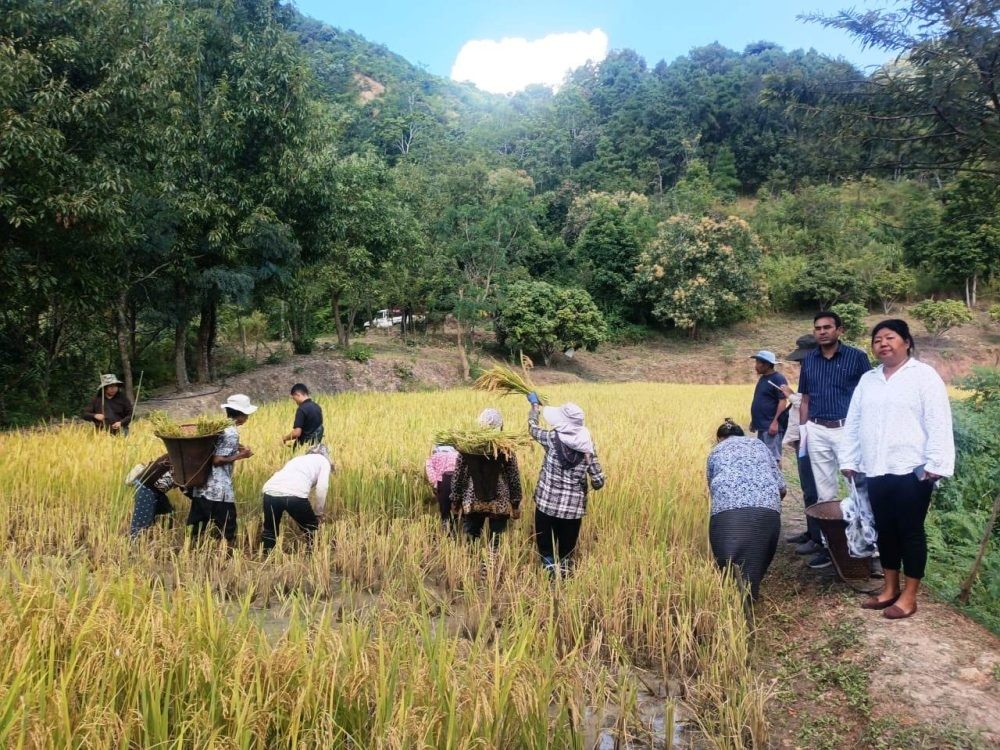
Field day organised by the ICAR Research Complex for NEH Region, Nagaland Centre, in collaboration with KVK Kohima and State Department of Agriculture, showcased the performance of the varieties under farmers' field conditions on October 16.
Kohima, October 17 (MExN): Seven newly released rice varieties have demonstrated a potential yield advantage of 35-45 per cent over locally cultivated varieties in Nagaland, with one variety recording a grain yield of 5.5 tonnes per hectare under natural farming conditions, according to a field demonstration held at Chiechama village in under Chiephobozou Block, Kohima.
The field day, organised by the ICAR Research Complex for NEH Region, Nagaland Centre, in collaboration with Krishi Vigyan Kendra (KVK) Kohima and the State Department of Agriculture, showcased the performance of the varieties under farmers' field conditions on October 16, the ICAR Research Complex for NEH Region Nagaland Centre said in a press release.
Hornbill Gold 308 recorded a grain yield of 5.5 tonnes per hectare under natural farming conditions, demonstrating its potential to improve rice productivity in the region. The other varieties, Patkai Pearl 131, Sekrenyi Lha 138, Tokhvu Tssok 171, Moatsu Tsuk 189, Ahuna Khi 395 and Aoleang Tahwan 295, also exhibited encouraging performance compared with locally cultivated varieties.
“The demonstrated varieties indicated a potential yield advantage of approximately 35-45 per cent over local varieties, highlighting opportunities to strengthen rice production in the region,” the statement said.
The short duration, high yield potential and preferred grain quality of these varieties offer considerable scope for improving cropping intensity and farm profitability, officials said. Their early maturity can facilitate the timely establishment of subsequent rabi crops, including potato, onion, toria and field pea, by providing a wider window for land preparation and sowing.
Addressing participating farmers, Dr Harendra Verma, Scientist at ICAR Research Complex for NEH Region, Nagaland Centre, highlighted the yield potential, early maturity, grain quality and disease resistance of the newly released varieties.
He emphasised that their performance could be further enhanced through timely transplanting of young seedlings aged 18-22 days, adoption of suitable crop management practices including application of organic manures, biofertilisers and essential micronutrients, along with the inclusion of suitable pulse crops in the cropping system.
Dr Verma also stressed that the adoption of short-duration rice varieties could help farmers overcome delays in establishing rabi crops, improve land-use efficiency and increase overall farm income.
Dr Martina Shitiri, ACTO, KVK Kohima, encouraged farmers to adopt high-yielding, early-maturing and disease-tolerant rice varieties suited to their local conditions. She also emphasised the importance of seed multiplication and sharing among neighbouring farmers to facilitate wider dissemination and cultivation of these varieties in the next cropping season.
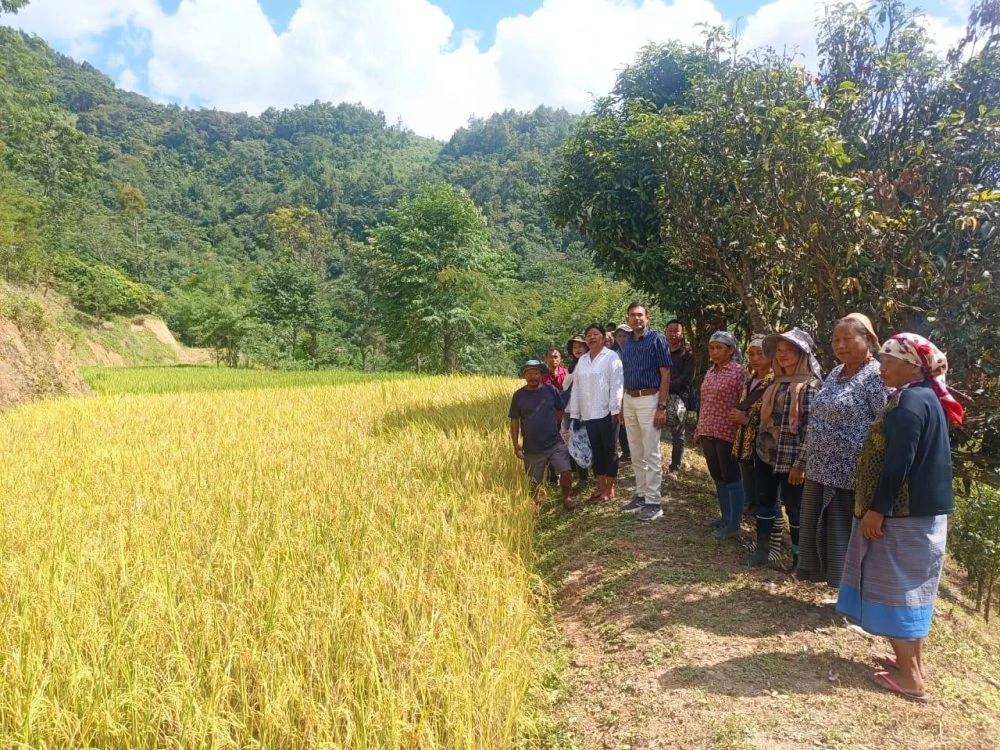
Officials from the Department of Agriculture, Chiephobozou Block, and farmers of Chiechama village observed the performance of the demonstrated varieties and appreciated their potential to improve rice productivity. The participating officials also exchanged views with farmers on appropriate cultivation practices and strategies for wider adoption of the varieties in the coming seasons.
A total of 31 farmers from Chiechama village participated in the field day. The farmers expressed satisfaction with the performance of the newly released varieties and showed encouraging interest in their adoption.
The programme provided a platform for direct interaction among scientists, agricultural officials and farmers, enabling assessment of varietal performance under field conditions and promoting awareness of improved rice technologies.
The field day marked an important step towards strengthening farmer adoption of improved rice varieties in Nagaland. Their wider evaluation and adoption, supported by appropriate crop management and locally adapted cropping systems, could contribute to higher rice productivity, improved cropping intensity and enhanced livelihood opportunities for farming communities across the state, the release said.