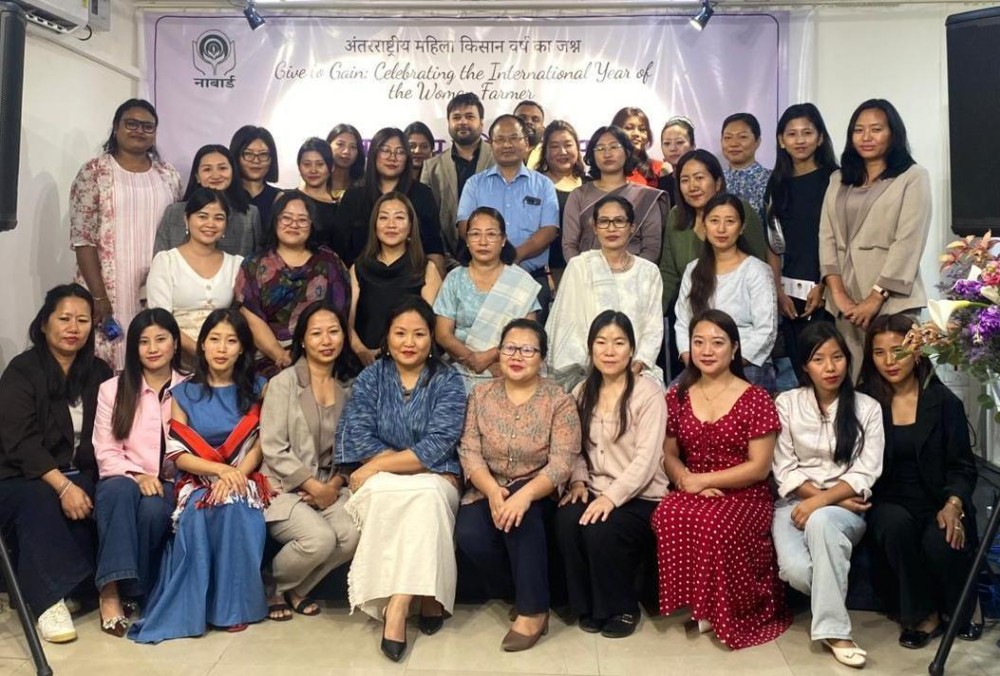
Women entrepreneurs and speakers after a panel talk marking International Women’s Day at Tia Ki Nagaland Art Space in Bank Colony, Dimapur, on March 7. (Morung Photo)
Morung Express News
Dimapur | March 7
Women leaders from diverse fields shared insights into their work, challenges and personal journeys during a panel discussion titled “A day in the life of” held today at Tia Ki Nagaland Art Space, Bank Colony.
The event was part of the celebration of the International Women’s Day organised by the Women Entrepreneurs Network Nagaland (WENN) in collaboration with National Bank for Agriculture and Rural Development (NABARD).
Moderated by Anungla Zoe Longkumer, founder/curator of Tia Ki Nagaland Art Space, the session featured Alole Tsühah, coordinator of Miqlat Ministry under the Nagaland Baptist Church Council Women’s Department (NBCCWD); Temsunaro Jamir, Public Prosecutor, Dimapur; and Sashila Ozukum, founder and principal of Hope Academy.
Shelter from the storm
Beginning the conversation, Alole Tsühah shared about her work with vulnerable women through the Miqlat Ministry, a social and faith-based organisation that offers refuge and rehabilitation to women and girls at risk.
Tsühah explained that Miqlat was conceptualised following a women’s conference held in 2001, where participants resolved to address pressing social issues affecting women. The ministry was formed in 2004 and officially launched in 2005. The name Miqlat, she said, is a Hebrew word meaning “refuge” or “shelter.”
The organisation works with women who are victims of trafficking and sexual exploitation, school dropouts, women involved in liquor businesses, substance abusers and those affected by HIV and AIDS.
Reflecting on her journey, Tsühah said she joined the ministry in 2010 after completing her theological studies, motivated by a desire to work with women facing social challenges. Initially, she admitted that she too had certain perceptions about women engaged in prostitution, but those views changed after interacting closely with them.
“As I got to know them, I realised that many women are not doing it because they want to, but because circumstances have compelled them,” she said, noting that many had families to support or husbands struggling with substance abuse.
Young girls who come to Dimapur seeking better opportunities often end up in liquor joints or exploitative environments after being misled with promises of employment.
Through outreach programmes, the Miqlat team visits liquor joints and undisclosed red-light areas to build relationships and inform women about the services offered by the organisation. Women who seek help are brought to the shelter, where they receive medical care, counselling and rehabilitation support.
Livelihood training also forms a key part of the rehabilitation process. Women are engaged in activities such as tailoring, card-making, basket-making and detergent production, and those who complete training often become instructors themselves.
Despite the demanding nature of the work, Tsühah said her commitment to serving women continues to motivate her. “Whenever the work becomes overwhelming, I remind myself of the commitment I made to serve,” she said.
Integrity in Law
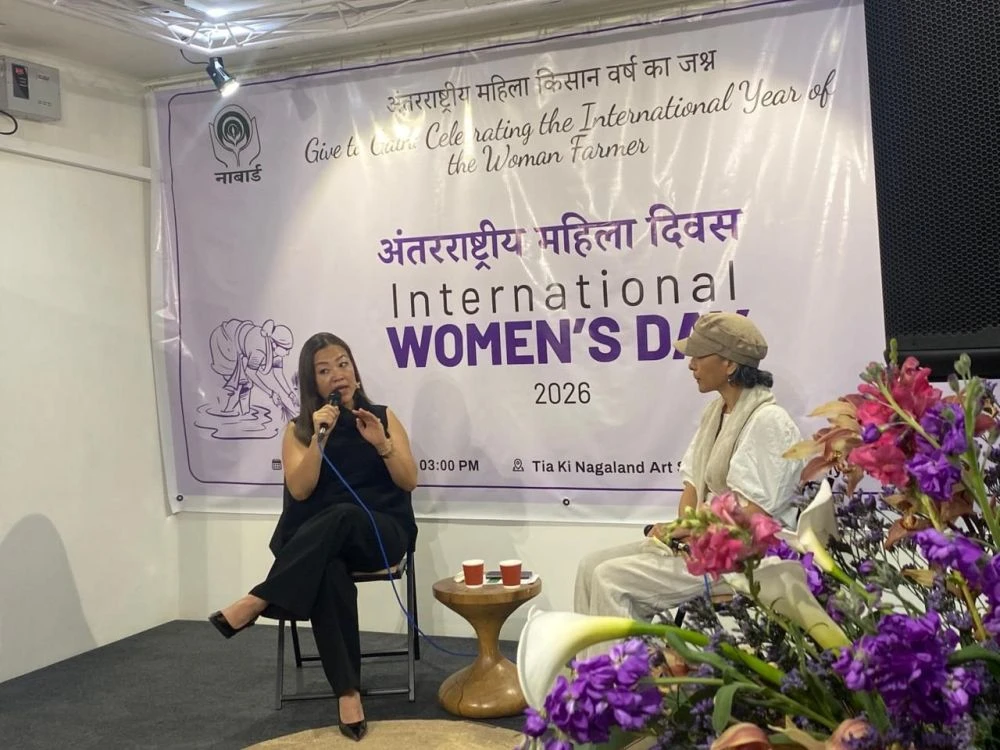
The discussion then moved to the legal field, with Temsunaro Jamir sharing insights from her work as a public prosecutor in Dimapur.
Jamir spoke about the complexities of criminal prosecution and the responsibility of ensuring justice through the legal process. She explained that the legal definition of rape involves force and that the “ingredient of rape” must be established for a case to stand in court.
She acknowledged that challenges remain within the justice system, noting that people with money and connections often have an advantage. However, she emphasised that law enforcement officers and prosecutors must remain committed to presenting the truth.
Although Nagaland is often regarded as one of the safer states, Jamir noted that crimes such as sexual abuse and rape do occur. She also pointed out that patriarchal thinking can sometimes be internalised by women themselves, and in certain cases families attempt to hide crimes committed within households.
Highlighting the need for greater legal awareness, Jamir said even educated individuals are often unaware of their rights. She stressed that failing to report an offence committed against a minor can itself be an offence, and called for awareness initiatives to begin at the grassroots level, including in villages and church communities.
Jamir also spoke about balancing the dual role of being a mother and a public prosecutor, noting that passion for one’s profession helps sustain motivation. Encouraging young people interested in the legal field, she maintained that integrity and strong drafting skills are essential qualities for lawyers.
Building Hope, one student at a time
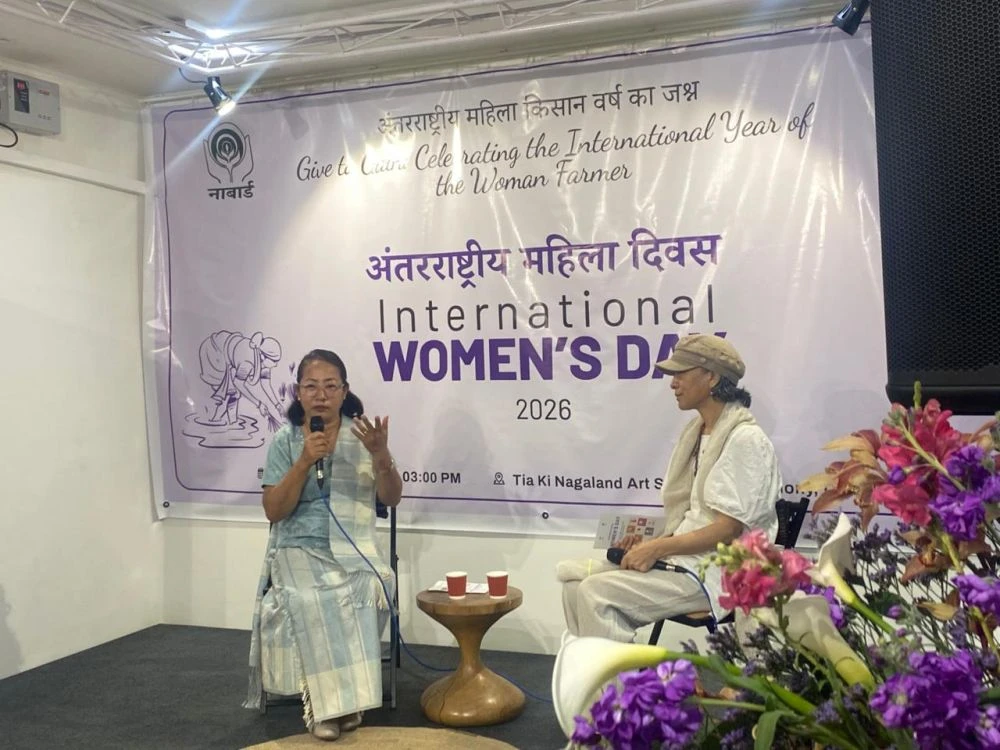
The session also featured Sashila Ozukum, who shared the journey of establishing Hope Academy. She said the school began in 2007 with just six students.
Today, the institution has grown to the senior secondary level serving close to a thousand students, a development Ozukum attributed to perseverance and the investment they put into the institution over the years.
In its early days, she handled multiple responsibilities herself, serving as cashier, principal and even doing cleaning work when required. She said the school has always maintained an open-door environment where students feel comfortable approaching teachers, while staff remain attentive to children who may be facing difficulties at home.
She also spoke about the challenges of building the institution, including operating from rented premises before eventually purchasing land in Naga United Village.
At one point, the collapse of the bridge, which served as a lifeline connecting Naga United Village to the Dimapur–Chümoukedima road created major commuting difficulties for students and staff alike. While facing many challenges, she acknowledged God for never giving up on her.
Reflecting on her personal routine, Ozukum said that as an empty nester now, she begins her day with a gym session before heading to school and later unwinds with personal time and church activities. “You have one life, let’s live it well,” she said.
Concluding the session, moderator Anungla Zoe Longkumer referred to the theme “Give to Gain: Celebrating the International Year of the Woman Farmer,” encouraging the audience to reflect on the speakers’ experiences. She acknowledged the organisers for creating a platform that highlights women’s voices and leadership.
.jpg)