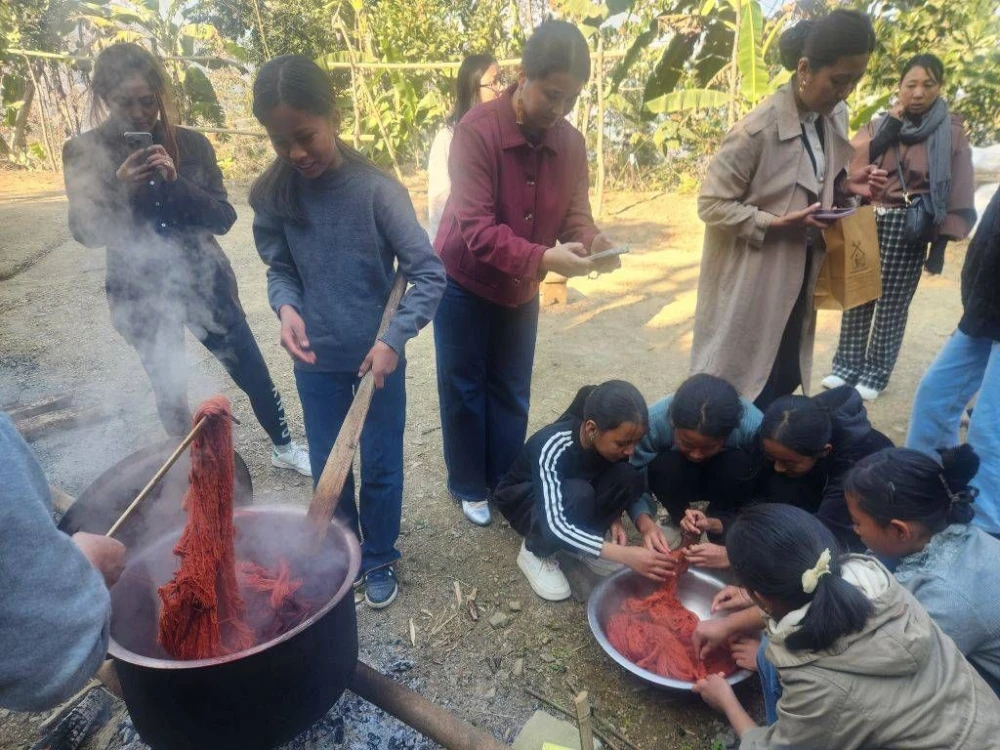
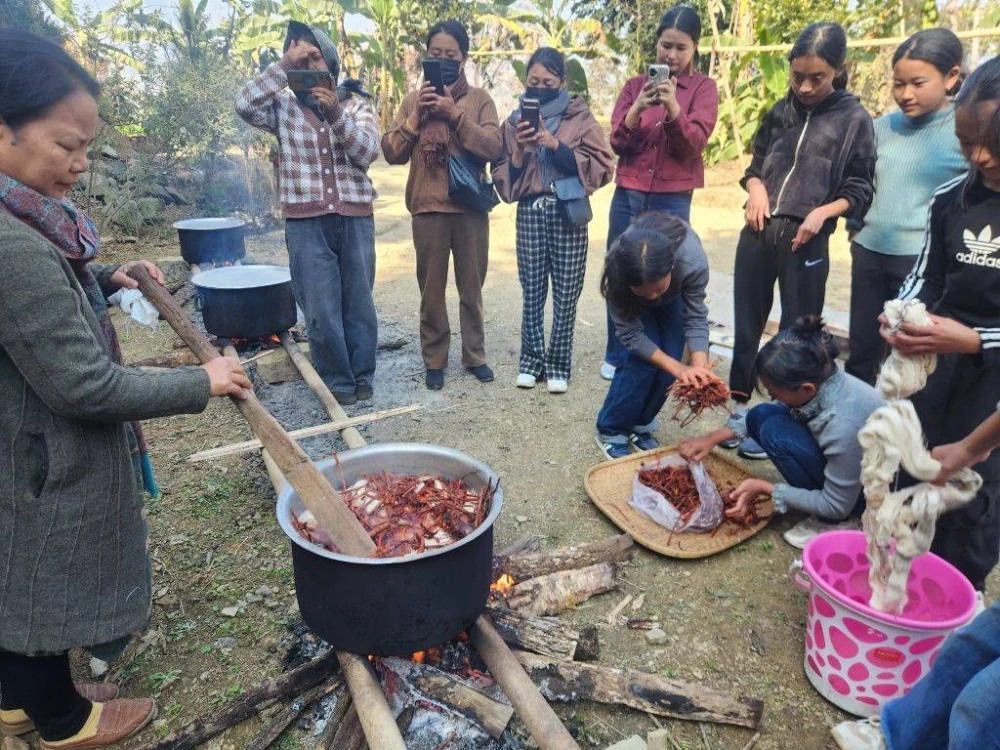
Participants of the community-based natural dye workshop organised by Nenterprise Chizami Weaves at NEN Resource Centre, Chizami on January 20.
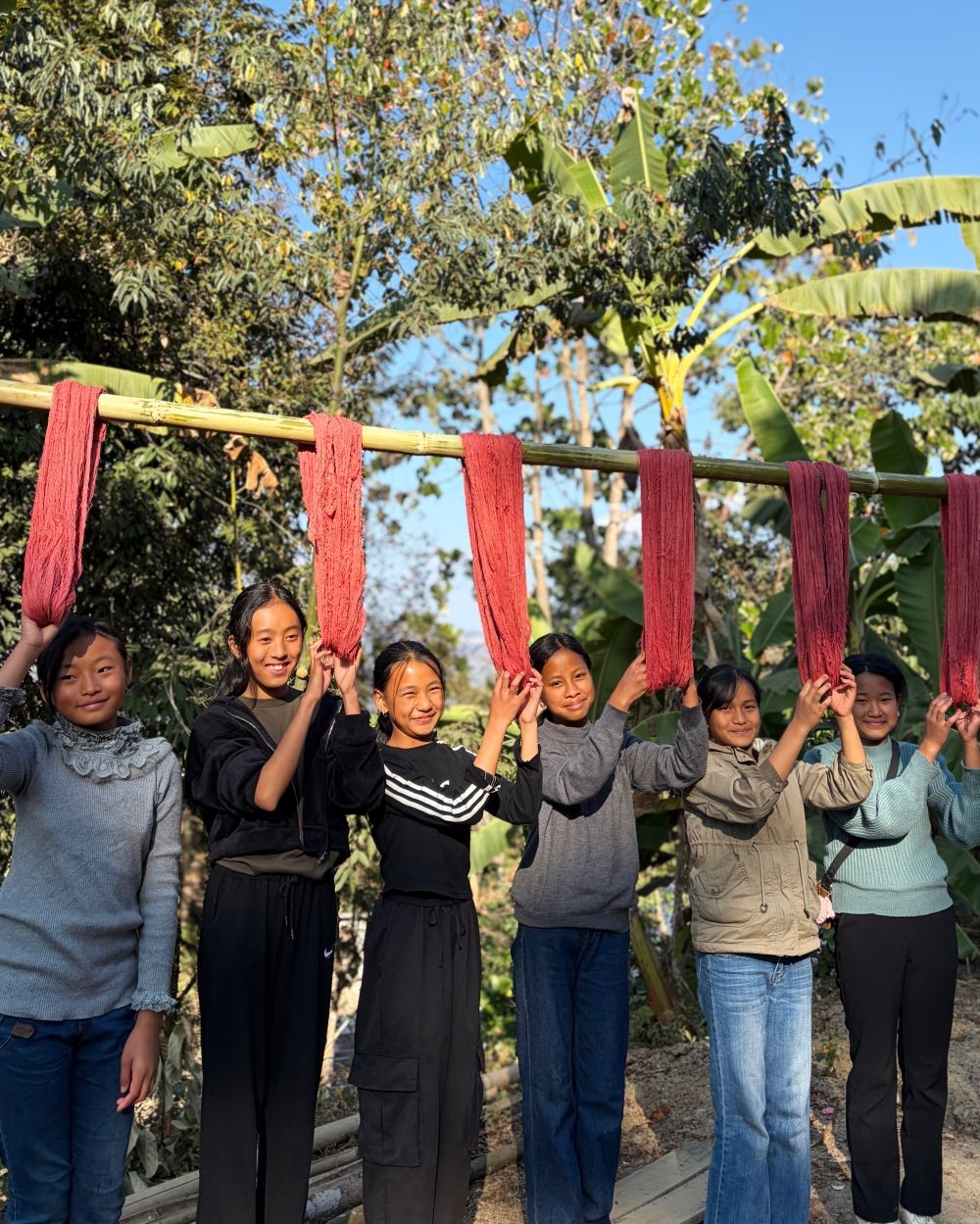
Chizami, January 21 (MExN): A community-based natural dye workshop organised by Nenterprise Chizami Weaves was held at the NEN Resource Centre, Chizami on January 20.
The programme brought together 19 participants aged between 11 and 48 from Chizami and neighbouring villages and towns, reflecting growing interest in traditional and sustainable craft practices.
The workshop began with a brief address by Kuteu L Mero, Programme Assistant, Nenterprise Chizami Weaves, stated a press release.
Neitshopeu Chirhah, General Manager of Nenterprise Chizami Weaves, welcomed the participants and noted that the programme, initially planned for students, was expanded to include all age groups due to strong community interest.
She emphasised the importance of reviving natural dyeing traditions and nurturing cotton plantations using eco-friendly materials such as tree bark, flowers, and plant-based resources.
Chirhah also highlighted Chizami Weaves’ focus under the public charitable trust Nenterprise on women’s livelihoods, community development, and cultural preservation, stating that the workshop aimed to inspire younger generations to value traditional practices.
In her address, Seno Tsuhah, Chairperson of Nenterprise Chizami Weaves, encouraged participants to develop practical skills and highlighted the importance of intergenerational knowledge exchange, citing examples such as indigo dyeing traditions of Thailand’s Karen tribes and the use of naturally dyed cotton and stinging nettle textiles.
The hands-on session was led by Kezunyipeu Tsuhah, Production Manager, who introduced key natural dye materials including walnut tree bark, the roots of Rubia sikkimensis, and the bark of Quercus semiserrata.
The workshop marked the second edition of the initiative and was conducted free of charge to ensure accessibility. The initiative also underscored that knowledge can easily fade if not shared, and aimed to inspire the younger generation to carry forward traditional wisdom and practices.
The Chizami Weaves team expressed hope that similar programmes would continue to promote traditional knowledge, sustainable practices, skill development, and community-based knowledge sharing.