Baptist bodies urge reform, not repeal of NLTP Act
Dimapur, February 17 (MExN): “The renewed debate on the Nagaland Liquor Total Prohibition (NLTP) Act has once again exposed deep divisions within Naga society. In recent public discourse, Civil Society Organisations (CSOs) advocating for the lifting of the NLTP Act have increasingly blamed the Nagaland Baptist Church Council (NBCC) and the churches, portraying them as the primary obstacles to reform.”
Highlighting this in a joint statement, the Dimapur Baptist Pastors’ Fellowship (DBPF) and the Dimapur Baptist Women Union (DBWU) stated while such accusations may resonate with certain sections of the public, they risk oversimplifying a complex issue that demands careful moral, legal, and social reflection.
A central point of contention is the proposal to lift the NLTP Act exclusively in Dimapur district. The justification commonly offered is Dimapur’s proximity to the Assam border and its allegedly porous nature, which supposedly facilitates the inflow of liquor. To this the DBPF and DBWU, contented that this argument “lacks coherence.” It stated that if proximity to the border is the determining factor, then every district in Nagaland becomes effectively close to the border, because Dimapur itself is an integral district within the state. “What is permitted in Dimapur does not remain confined there; it inevitably moves inward, closer to our homes, villages, and communities across Nagaland.”
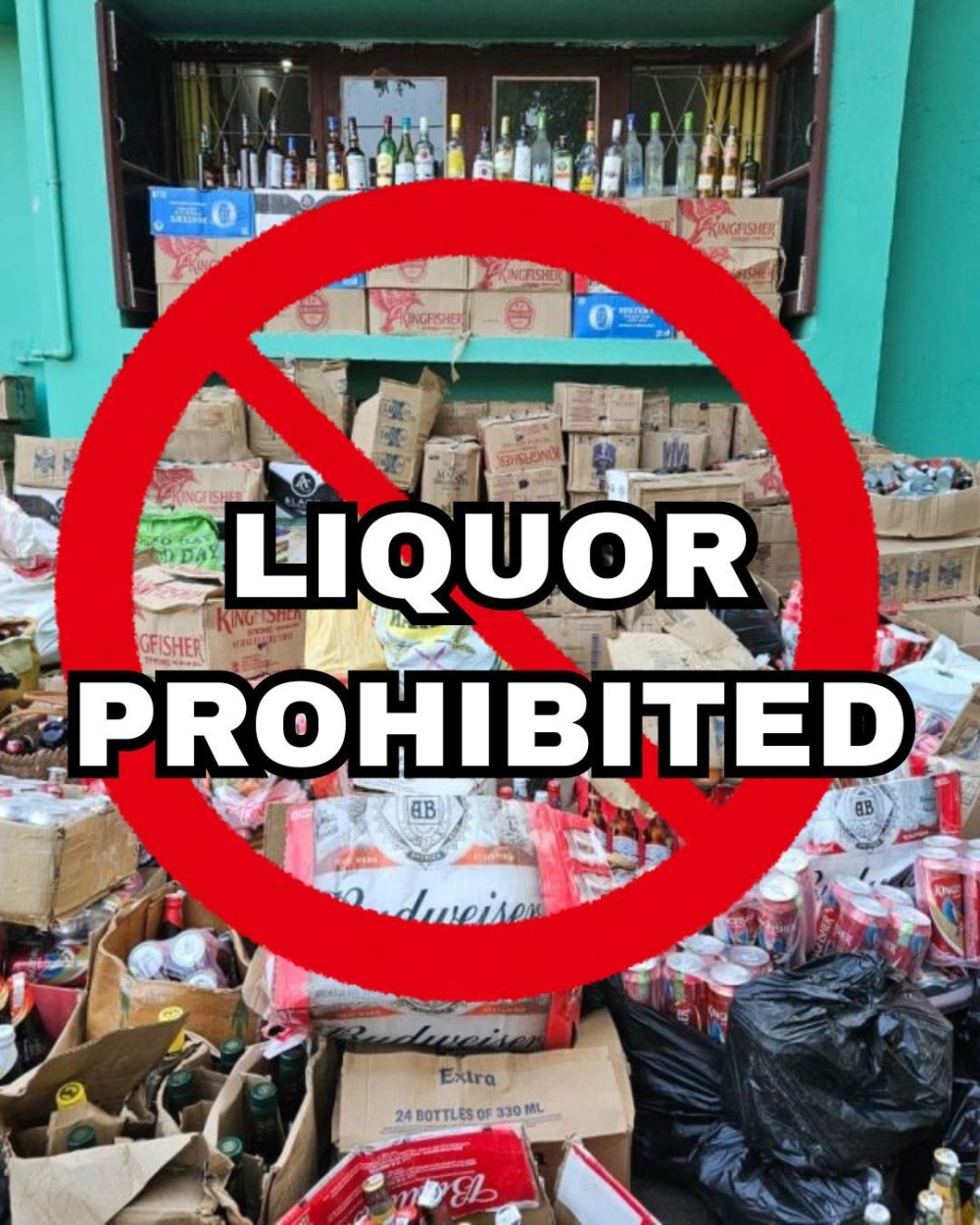
The church bodies noted that despite the Act being in force, the consumption and sale of alcohol remain “blatantly visible,” including at major public events like the Hornbill Festival.
“This reality raises a fundamental question: is the problem the absence of law, or the deliberate ignoring of an existing law?” they stated.
They argued that advocating for the Act’s repeal due to poor enforcement “is to confuse administrative failure with legislative intent.”
“Weak enforcement calls for reform and strengthening, not abandonment of the law itself,” they emphasised.
They stated that arguments by certain Civil Society Organisations (CSOs) centred on economic and regulatory grounds ignore “the broader and well-documented social costs associated with alcohol consumption.”
“At the end of the day, whether cheap or premium, alcohol continues to destroy lives. It breaks families, fuels domestic violence, deepens poverty, reduces productivity, and renders individuals non-contributive to society,” the statement read.
Citing global public health studies, they cautioned that increased availability leads to increased consumption and related harm, “an outcome Nagaland, already grappling with unemployment and social stress, can ill afford.”
They highlighted an “irony” within Dimapur itself, where some localities and colonies have voluntarily banned alcohol sales. “These communities demonstrate that responsible citizenship, collective discipline, and moral consensus can succeed where enforcement mechanisms struggle,” the statement noted, countering claims that prohibition is unworkable.
They also rejected comparisons to the failed prohibition era in the United States as “misplaced,” emphasising that Nagaland remains “closely knit, value-driven, and faith-informed. Policies must be evaluated within their own cultural realities, not through imported historical analogies.”
They also raised concern on the psychological impact of legalisation. “At present, many citizens are psychologically restrained from consuming alcohol precisely because it is illegal,” the statement argued, open availability is not a guarantee of control; rather, it carries the risk of an uncontrollable rise in consumption.
The DBPF and DBWU justified that “Placing the blame squarely on the NBCC (Nagaland Baptist Church Council) and the churches diverts attention from the real issues—administrative weakness, lack of manpower, and poor enforcement.”
They pointed out that the Excise Department itself has acknowledged shortages, advocating for a “more constructive approach” to strengthen the Act, “reform enforcement mechanisms, and foster collaboration between the state, civil society, and faith institutions, rather than singling out the Church as a convenient scapegoat.”
The NLTP Act represents more than a legal restriction; it reflects Nagaland’s moral vision, cultural values, and concern for social well-being,” they emphasised with a cautioned that selectively lifting the Act in Dimapur risked “inconsistency, wider social harm, and deeper division.”
“The real challenge before Nagaland is not whether to discard the law, but whether we are willing to enforce it responsibly, reform it wisely, and uphold the common good above narrow economic interests,” DBPF and DBWU asserted.