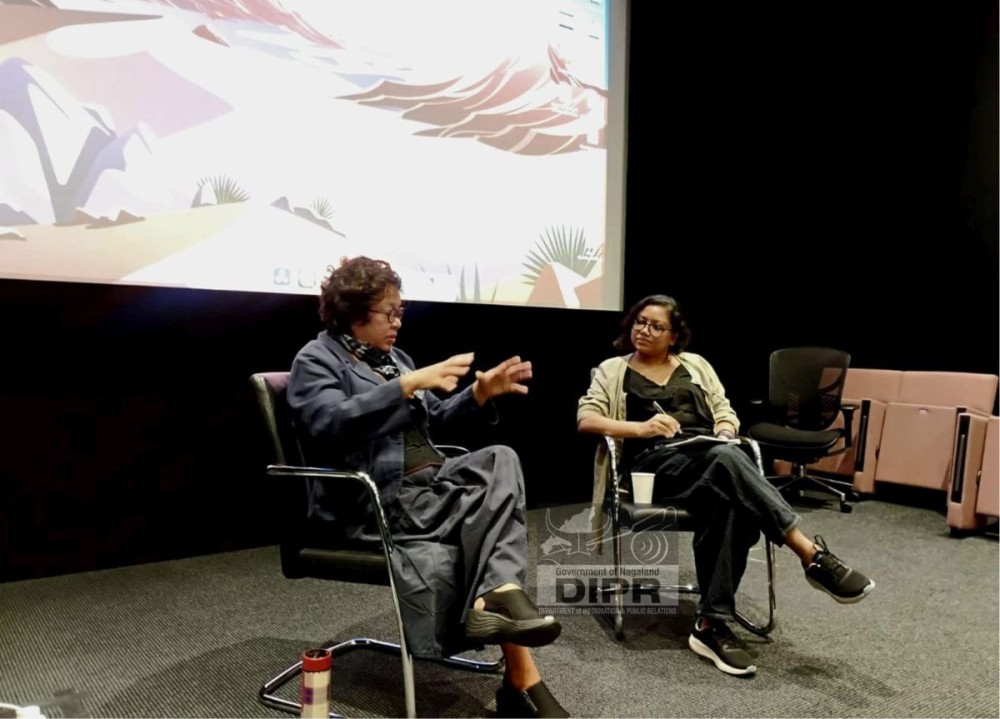
Filmmaker Kivini Shohe participated in Indigenous Cinema: South Asian Perspectives at New York University Abu Dhabi. (DIPR Photo)
Kohima, December 12 (MExN): Filmmaker from Nagaland, Kivini Shohe participated in the Indigenous Cinema: South Asian Perspectives, a three-day international gathering that brought together filmmakers, scholars, and artists to explore the cinematic traditions of South Asia.
The event was held from December 8 to 10 at New York University Abu Dhabi, organised by the Rights and Representation Research Forum in collaboration with the NYUAD Film and New Media Programme and the Indigenous Film and Media Alliance South Asia, stated a DIPR report.
The programme also showcased a curated selection of films from Northeast India, presenting a diverse range of short films, documentaries, and feature films. These screenings were complemented by panel discussions on identity, land, memory, resistance, and the evolving politics of Indigenous representation
Kivini Shohe delivered an artist talk and screened her documentary Under the Longfuru Sky, a film that offers an honest portrayal of a remote community negotiating the tension between ancestral traditions and modernity. In her talk, she reflected on her personal journey as a filmmaker, the challenges of shooting in a place like Nagaland, and her commitment to observational filmmaking. She emphasized that for communities like hers, cinema becomes one of the few remaining ways to archive knowledge, cultural memory, and traditions that are rapidly disappearing.
Rashmi Sawhney Associate Program Head of Film and New Media; Associate Arts Professor of Film and New Media: NYU Abu Dhabi commented that Kivini Shohe’s films add a rich perspective on the culture of Nagaland and Naga people, revealing the huge diversity of the state and throwing light on important contemporary issues. It is particularly important to establish a cross-regional dialogue among indigenous communities across different states of India and south east Asia, and her films and her work more broadly in the cultural sector makes a tremendous contribution towards this.