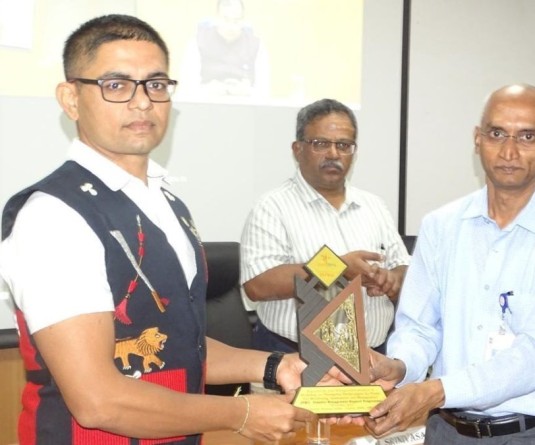
Prof Mithilesh Kumar Sinha
Retired Professor, Nagaland University, Lumami
Friendship serves as the cornerstone of social connections and is a crucial element of human existence. It significantly contributes to personal growth, emotional health, and general happiness.
Research indicates that the absence of close friendships can adversely affect our well-being. Nevertheless, in recent times, we have observed a troubling trend termed 'friendship recession,' which denotes a decline in both the quality and number of friendships.
The world, including India, is presently experiencing a new phenomenon termed the 'Friendship recession,' which results in social isolation and feelings of loneliness. This recession is consuming individuals from the inside. The phrase "friendship recession" was initially popularized by social scientists who noted a significant decrease in the size of people's close social circles, especially in Western nations. However, this trend has now permeated urban areas globally. From Tokyo to Toronto, and Mumbai to Melbourne, the indicators are evident. In 1990, merely 3% of Americans indicated that they had no close friends; by 2021, this figure had increased to 12%. Furthermore, the proportion of adults with ten or more close friends plummeted from 33% in 1990 to a mere 13% in 2021.
Current Landscape in India
India's swiftly urbanizing cities are facing a significant increase in social isolation, mirroring a worldwide "friendship recession" that presents both mental and economic challenges. The research, which compiles data on social connections from both global and Indian perspectives, indicates that tier 1 Indian cities have 60 percent of their residents experiencing feelings of loneliness, while 43 percent of urban youth report feeling isolated. A 2021 Ipsos survey found that 43% of urban Indians often feel lonely and without friends. More than 60% of individuals in major metropolitan areas of India express feelings of loneliness, even when surrounded by millions of others.
Impacts of Smartphones on Friendship Recession
While India continues to be a global frontrunner in smartphone production and exports in 2026, the societal implications of this connectivity are emerging as a significant public issue. Generation Z, despite being the most digitally engaged, is statistically the most isolated generation in India. Approximately 35% of survey participants acknowledged that they are investing excessive time on their phones, with 44% of these individuals identifying as Gen Z men.
The New India: Online, But Alone
The New India: Online, But Alone In 2022, the Centre for the Study of Developing Societies (CSDS) revealed that over 42% of urban youth in India experience feelings of loneliness, even while being members of various online communities. In metropolitan areas such as Mumbai, Bengaluru, and Delhi, young professionals find themselves surrounded by thousands yet lack personal connections. Extended commutes, busy schedules, and gated communities have transformed neighbors into strangers and colleagues into virtual acquaintances. Research conducted by TISS (Tata Institute of Social Sciences) indicated that digital interactions in urban India have surged by more than 300% over the past decade, while offline social interactions have decreased by 60%. We are connected around the clock. Yet, we remain isolated. A 2023 NCERT report states that nearly 40% of schoolchildren in urban India engage more online than they do offline with their peers.
Impacts of Friendship Recession
India's decline in meaningful adult friendships, referred to as a friendship recession, has significant repercussions including deteriorating mental health (such as loneliness, anxiety, and depression), increased physical health risks (including heart disease, cognitive decline, and a mortality rate comparable to that of smoking), diminished social capital, and economic difficulties. Urban youth and men are particularly vulnerable to feelings of isolation, despite the prevalence of digital connectivity, due to factors such as hectic lifestyles, migration, and changing priorities
There exists a direct relationship between the decline in friendships and the increasing prevalence of depression, anxiety, and low self-esteem among Indians, especially within the age group of 20 to 50. In 2020, the Indian Journal of Psychiatry indicated that one in three Indians experiences mental health challenges, with loneliness being a prevalent factor. Red Lab references studies that compare the effects of chronic loneliness to the health risks associated with smoking 15 cigarettes daily, highlighting connections to heart disease, stroke, and cognitive deterioration.
In order to tackle the decline in friendships, it is essential to make deliberate efforts to restore community, prioritizing vulnerability and genuine connections in the physical world rather than relying on digital ease. Additionally, there is a necessity to consciously foster relationships by participating in groups that share common interests, maintaining current relationships through regular check-ins and joint activities, and taking the initiative to invite others out. While technology can be utilized to initiate connections, the emphasis should remain on face-to-face meetings to cultivate deeper relationships.