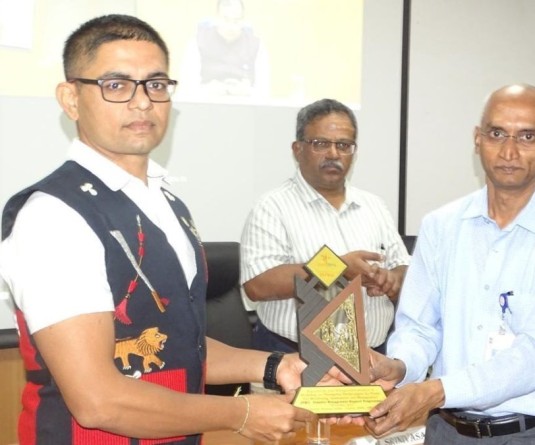
Pooja Teotia and Ngayaipam A Shimray
Nagaland's fiscal position has come under growing policy attention, with the latest Fiscal Health Index (FHI) 2023–24 offering an important assessment of the state's public finances. The Index, which evaluates states across five pillars i.e., Quality of Expenditure, Revenue Mobilisation, Fiscal Prudence, Debt Index and Debt Sustainability, places Nagaland eighth among North-Eastern and Himalayan states, with a score of 27.1, placing it in the "Aspirational" category. The findings highlight a broader challenge faced by many hill states: pursuing development goals while operating within limited fiscal space. For Nagaland, this challenge is reflected in the structure of its finances with over two-thirds of revenue receipts committed to salaries, pensions and administrative expenditure, while own revenue sources accounting for only around 14 per cent of total receipts. Meanwhile, interest payments absorb nearly half of the state's own revenue, and the fiscal deficit has moved beyond the 3 per cent Fiscal Responsibility and Budget Management (FRBM) threshold.
Fiscal Transformation: Lessons from Comparable States
Nagaland's fiscal challenges are not unique. Several North-Eastern states face similar structural constraints arising from difficult terrain, dispersed populations, limited industrialisation and high dependence on central transfers. However, the experience of better-performing states demonstrates that these constraints need not translate into persistent fiscal weakness. Strategic improvements in expenditure quality, revenue administration and institutional capacity can gradually strengthen fiscal resilience even within limited fiscal space.
Arunachal Pradesh provides the clearest example of an investment-led approach to fiscal transformation. Ranked the highest among North-Eastern and Himalayan states in the FHI 2023–24, the state has progressively shifted public expenditure towards capital formation and long-term asset creation. Investments in roads, connectivity and hydropower have enhanced productive capacity while creating future economic opportunities. For Nagaland, the lesson is not to replicate Arunachal's hydropower model, which is supported by a significantly larger resource base, but to adopt the broader principle that public spending should increasingly create assets that expand future growth potential. This could include decentralised renewable energy solutions, improved connectivity between agricultural clusters and markets, tourism infrastructure, logistics networks and digital infrastructure- all of which can generate wider economic multipliers.
Mizoram's experience highlights the importance of fiscal discipline and stronger revenue institutions. Despite facing similar structural constraints of geography, population size and a narrow economic base, the state has substantially reduced its fiscal deficit while remaining within FRBM limits. Importantly, this improvement has been supported not merely by expenditure restraint but by better revenue administration through GST compliance, digitization and improved monitoring. For Nagaland, strengthening data-driven tax administration, reducing leakages and bringing sectors such as tourism, hospitality, transport, construction and retail into the formal economy can widen the revenue base without increasing the tax burden. Mizoram also demonstrates the importance of aligning expenditure with developmental priorities. For Nagaland, where committed expenditure absorbs a large share of revenue receipts, gradual rebalancing towards infrastructure, human capital and productivity-enhancing investments will be essential. Expenditure reviews, outcome-based budgeting and rationalisation of low-impact schemes can help maximise developmental returns from limited resources.
Meghalaya offers a further lesson in improving expenditure efficiency. By prioritising capital creation, infrastructure and developmental programmes, while strengthening budgeting and public financial management systems, the state has improved the effectiveness of public spending. Its experience reinforces that the fiscal outcomes depend not only on the quantum of expenditure but also on the quality of allocation.
The broader lesson from these states is that fiscal resilience is built through a combination of sound financial management and a stronger economic base. Fiscal indices capture how states manage resources, but they cannot fully measure the productive capacity that determines future revenues. For Nagaland, the pathway ahead lies in combining prudent fiscal management with strategic investments in tourism, agriculture, entrepreneurship, connectivity and other sectors that can attract investment, generate employment and expand own-source revenues.
Harnessing Nagaland's Economic Strengths for Fiscal Transformation
Improving Nagaland's fiscal health requires moving beyond expenditure management and conventional reforms towards strengthening the productive base of its economy. Unlike large manufacturing states, Nagaland's advantage lies in its unique natural, cultural and ecological assets. The imperative is to convert these strengths into commercially viable sectors that create employment, attract investment, expand own-source revenues and build a more sustainable fiscal future.
Building a High-Value Horticulture Economy
Horticulture is one of Nagaland's foremost comparative advantages and a key driver of its economic potential. Recognised as the Best State in Horticulture (2024), the state combines favourable agro-climatic conditions, expanding organic cultivation and three Geographical Indication (GI) products, Naga King Chilli (Naga Mircha), Naga Tree Tomato and Naga Sweet Cucumber, with a diverse range of premium produce, including pineapples, kiwi, passion fruit and oranges. These strengths provide a strong foundation for developing a high-value agricultural economy.
However, much of this produce is still marketed in raw form, limiting value addition within the state. The priority should therefore shift from production to building integrated value chains through processing, branding, packaging and exports. Investments in food processing, cold-chain infrastructure, quality certification and market linkages would enable farmers and local enterprises to capture greater value while stimulating private investment, expanding formal economic activity and strengthening the state's own-source revenues.
Unlocking the Bamboo and Forest-Based Economy
Nagaland's vast forest wealth and abundant bamboo resources constitute one of its most underutilised economic strengths. While bamboo has long supported handicrafts and rural livelihoods, its potential extends far beyond traditional uses to high-value industries such as engineered bamboo, furniture, eco-friendly packaging and sustainable construction materials, in line with India's growing green economy.
The state's rich biodiversity further broadens these opportunities. Medicinal and aromatic plants, essential oils and natural wellness products offer significant potential for value addition. By strengthening processing, market linkages and producer ecosystems, Nagaland can transform its bio-resources into engines of rural enterprise, employment and sustainable revenue generation.
Tourism as a Catalyst for Economic Diversification
Tourism represents one of Nagaland's most promising avenues for economic diversification. Its distinctive tribal heritage, rich biodiversity, indigenous cuisine, vibrant music and pristine landscapes offer experiences found nowhere else in the country. While the Hornbill Festival has successfully established Nagaland as a tourism destination, the next phase should focus on developing a year-round tourism economy built around cultural, eco- and adventure tourism, complemented by community-led experiences.
Developing tourism circuits around Kohima, Mon and Dzükou Valley, supported by investments in hospitality infrastructure, skill development, destination branding and digital outreach, can increase visitor spending, stimulate local entrepreneurship and strengthen the state's revenue base through higher GST collections and greater formalisation of tourism-related businesses.
Expanding the Creative Economy and Rural Enterprises
Nagaland's rich traditions in handloom, handicrafts, bamboo craft, fashion, music and indigenous design offer the foundations of a vibrant creative economy. While these sectors already sustain numerous artisans and micro-enterprises, much of their commercial potential remains untapped in domestic and international markets.
The next step is to transform these cultural assets into competitive industries through design innovation, branding, quality certification, GI-based marketing and e-commerce integration. Strengthening MSMEs in food processing, textiles and handicrafts with better access to finance, technology and markets can encourage formalisation, create employment and broaden the state's revenue base. Equally, promoting Nagaland's musical heritage through festivals and creative platforms can enhance tourism, showcase local talent and unlock new economic opportunities.
Leveraging Strategic Location
Nagaland's strategic location on India's eastern frontier positions it to benefit from the country's Act East Policy and the gradual expansion of regional connectivity. Although geopolitical realities currently constrain cross-border trade, sustained investments in highways, logistics networks and market infrastructure can prepare the state to capitalise on future economic integration. In the meantime, improving connectivity between production centres, the wider North East and national markets will be essential to lowering logistics costs, expanding market access and enhancing the competitiveness of local enterprises.
The Road Ahead
The common thread across these opportunities is their ability to expand Nagaland's productive economy and, in turn, strengthen its fiscal capacity. The policy imperative is to build the institutions, infrastructure, value chains and market linkages that convert the state's strengths, its horticulture, biodiversity, bamboo resources, handicrafts, MSMEs, cultural heritage and tourism assets, into higher productivity, greater value addition and sustained economic activity.
As agriculture moves up the value chain, tourism matures, creative enterprises formalise and MSMEs scale up, the state's own-source revenues can grow through greater formalisation, higher GST collections, business registrations and wider economic activity. A more diversified economy will attract private investment, generate employment and gradually reduce dependence on transfers by creating additional fiscal space for development.
Ultimately, Nagaland's challenge is not the absence of opportunity, but the limited commercialisation of its comparative advantages. By combining prudent fiscal management with strategic investments that unlock these strengths, the state can move beyond managing fiscal constraints towards building a more resilient, self-sustaining and growth-oriented economy.
The views expressed in this article are solely those of the authors and are written in their personal capacities. They do not necessarily represent or reflect the official views, policies, or positions of their respective organizations or employers.
Pooja Teotia, CFA, Consultant Grade II at NITI Aayog in the Economic & Finance Division
Ngayaipam A Shimray, YP at NITI Aayog, Nagaland State Division