Chizokho Vero
Kohima | June 21
Chief Minister Neiphiu today asserted that “it is a high time that special schemes are formulated for involvement of women groups in our development plans.”
“In the past, the programme many not have been effectively implemented for want of directions and focus, but efforts are now on to revamp its operations through direct linkages with women Self Help Groups (SHGs)” Rio said and further informed that from 2006-07, certain percentage of the HTM projects will also be earmarked for such women SHGs.
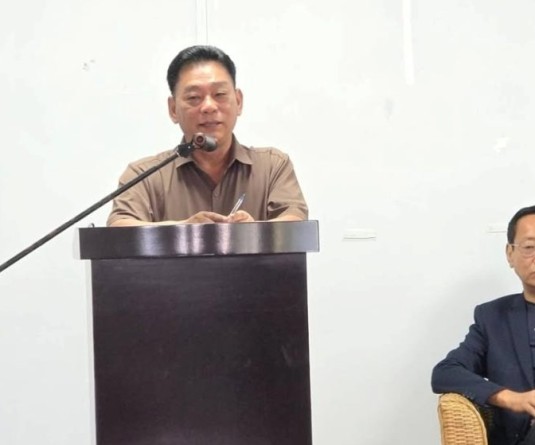
Addressing the two-day State Level Seminar on Women Farmers in Horticulture” here at the Ura Academy Hall, Rio hoped that such requirement will be taken into account when “your strategies for horticulture activities are drawn up.”
Considering the fact that rural women constitute majority of the total female population of the state, and that they are equal partners with men in cultivation activities, Rio said “it is a high time that special schemes are formulated for involvement of this vital groups in our development plans.”
Rio regretted that although various programme have been launched by the government in the agri and allied sectors for increasing production and productivity, full impact has not been achieved, because the system has always been biased towards male farmers and the technologies which were imparted were not gender sensitive.
Rio felt that one of the means for bridging the gaps could be to organize women into small, homogenous groups to collectively work together for women’s development and empowerment.
Under the Horticulture Technology Mission, a central sector in women in horticulture was formulated during 2002-03, which aims at motivating women farmers of the state through group approach.
During the last three years, a total of 259 women SHGs, numbering 2703 women farmers have benefited from the department’s programme. “I hope this number will increase only in size, but it would start impacting the economy of the state significantly,” Rio said.
Rio also reminded that for any commercial venture to succeed, a collective approach with a focused area “is always more rewarding as compared to individual or scattered approaches.”
Rio, who also holds the portfolio for Horticulture, further said that the department has already chalked out a series of activities for ensuring the inclusion of women farmers in horticulture, with specific focus on particular crops in each districts, based on the strengths of the district.
Rio termed the horticulture sector as one of the most important sectors for sustaining and improving the socio-economic condition of the rural areas which accounts for more than 80 percent of the total population of the state.
He hoped that the seminar would be able to address the many women-specific issues, which may focus on training requirements exposures, areas of activities, credit linkages, technical inputs, marketing aspects etc.
He also informed the participants that the government has been looking into the vital aspect of marketing and tying up the linkages with some corporate sectors.
But what is essential is that these linkages can effectively be utilized “when you become more organized, and professional in your approaches,” he said.
To develop and sustain any market linkages, he said, one has to be consistent in production both in terms of volume and quality. “Once we overcome this initial hurdle, I am positive that market will not be a problem,” Rio added.
Minister for Agriculture, Printing and Stationery Kuzholuzo (Azo) Nienu was also present at the seminar. Earlier, Secretary Horticulture Thangi Mannen delivered the keynote address. Kevinourheno Seyie, president Angami Women Organization (AWO) also spoke on the occasion.
The seminar will go on till June 22. The technical session will take place from 9:00 am onwards.