

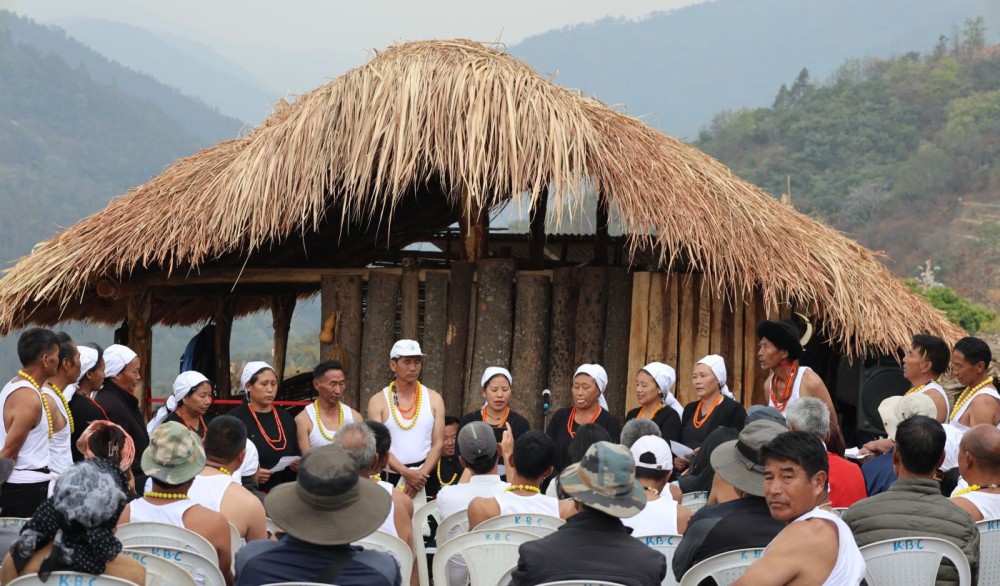
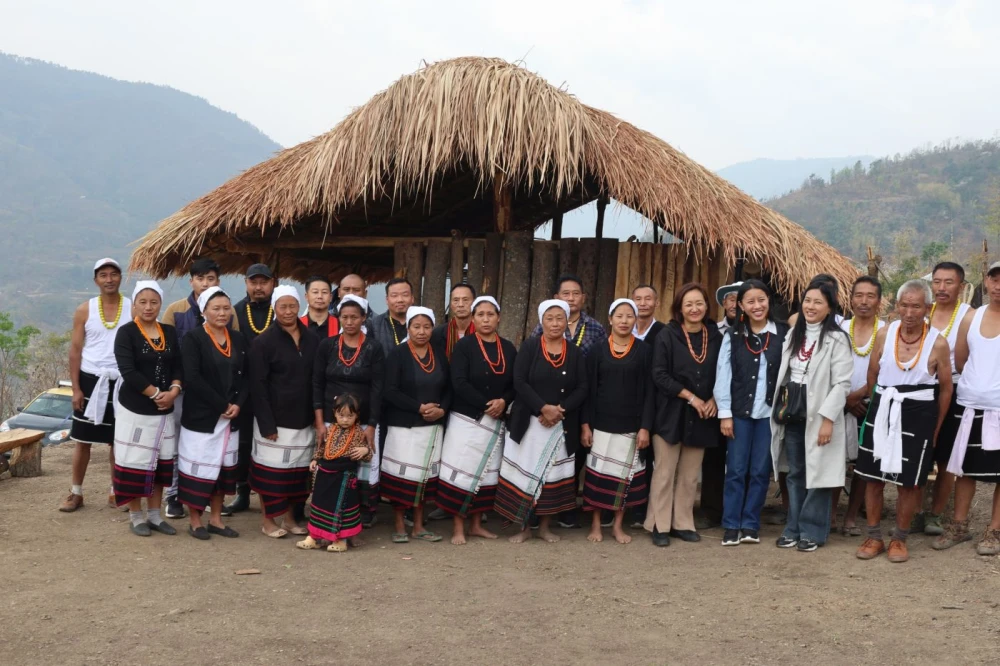
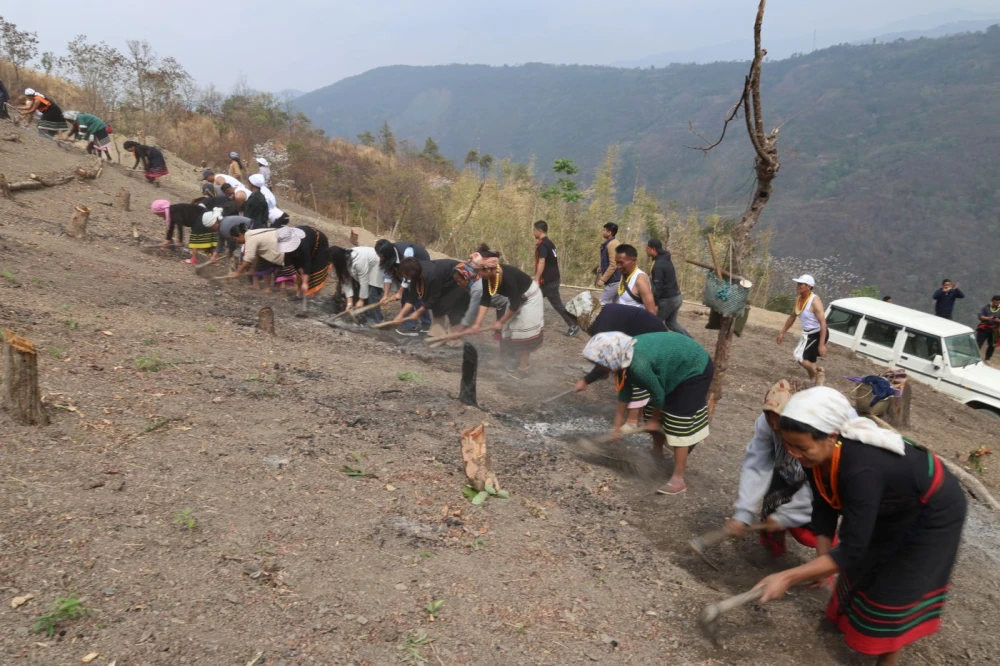
The Kezoma Baptist Church inaugurated a traditional Naga thatched hut and launched the millet sowing at Teyenu in Kezoma village on March 14.
Morung Express news
Kohima | March 14
Farmers in Nagaland village are reviving traditional architecture while embracing a sustainable crop that could enhance economic stability and improve nutrition in the region. The Kezoma Baptist Church inaugurated a traditional Naga thatched hut and launched the millet sowing at Teyenu in Kezoma village on March 14.
District Agriculture Officer, Kohima, Kekhrieletuo Yhome highlighted the growing importance of millet cultivation as a viable and sustainable agricultural alternative for farmers in the district and a means of enhancing economic stability.
“Although rice continues to be staple food crop in Kohima, its cultivation in the region is largely limited to once a year due to climatic and geographical conditions,” the DAO noted. “In contrast, millets present a promising opportunity, as it can be cultivated twice a year offering farmers an additional source of income even at the individual household level.” He emphasised that with the increasing demand and favourable market price for millets, farmers have the potential to significantly enhance their economic stability by diversifying their crops.
Stressing that millets are not only economically beneficial but also nutritionally superior, he said this crop contain higher protein content and lower starch levels, making them particularly beneficial for people with health concerns such as diabetes. “Their nutritional value makes them an increasingly important food option not only for the people of Kohima but also for the larger population beyond the district.”
Another advantage of millet cultivation, he pointed out, is the multiple uses of the crop. “Apart from the grains consumed by humans, the hay produced from millet can serve as valuable fodder for livestock, thereby contributing to integrated farming practices and reducing waste.”
The officer also highlighted that agricultural work such as tilling de-husking or millet separation has become easier with the introduction of improved machinery and farming equipment provided by the department. He said, “These mechanisation efforts aim to reduce the physical burden on farmers while improving productivity and efficiency in cultivation.”
However, the DAO acknowledged that millet cultivation in the district is still not at its full potential. “While production is gradually increasing, marketing and value-chain development need further improvement. With time, better market access, awareness, and demand generation are expected to encourage more farmers to adopt millet cultivation.”
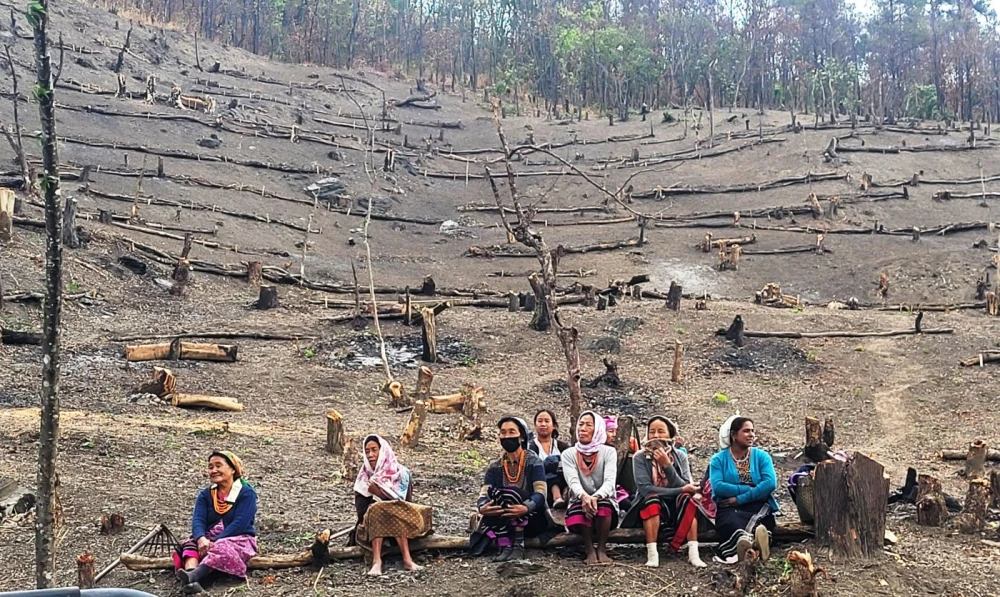
Yhoms stressed the importance of proper sowing practices, particularly recommending late sowing of seeds when conditions are favourable. Keeping in mind the challenges associated with Jhum cultivation, he advised farmers to consider sustainable agricultural approaches that help maintain soil fertility and reduce long-term land degradation.
He encouraged farmers to adopt practices that help retain soil nutrient, including planting crops that support soil health. “By selecting suitable crops and improving farming practices, farmers can ensure better soil conservation and long-term productivity of their land.”
The DAO lauded Kezoma Village for being a “torchbearer in agricultural practices” where the village leads by example, guiding other villages and supporting the department in promoting improved farming methods adding that millet cultivation, this year has increased three fold in the village.
Giving a brief history of the Naga traditional hut, Deacon Chairman of KBC Mezangol Yongo highlighted the unique qualities of thatched huts, noting that they remain cool in summer and warm in winter. However, he acknowledged that the materials used were not long-lasting and required frequent repairs. Over time, these traditional thatched houses have been replaced by newer homes made of tin or concrete.
Earlier, Medongol Thami, Pastor KBC said dedication prayer with short speech by Chairman Kezoma Village council, Kikrosa Naki and chaired by Mhasivizo Thami Associate Pastor, KBC.
.jpg)
.jpg)
.jpg)
