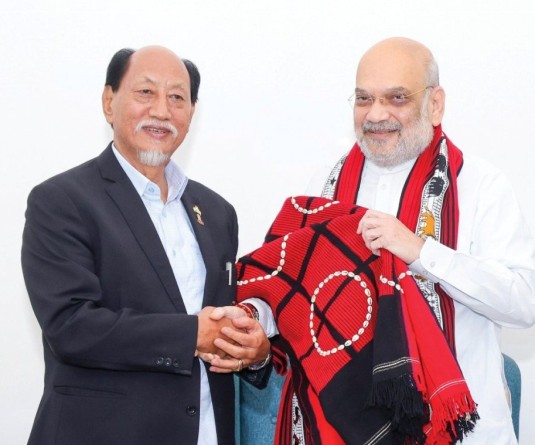
Nagaland Tourism Commissioner & Secretary Kovi Meyase, Director Veyielo Doulo and others during the observance of World Tourism Day at Chizami on September 27. (Morung Photo)
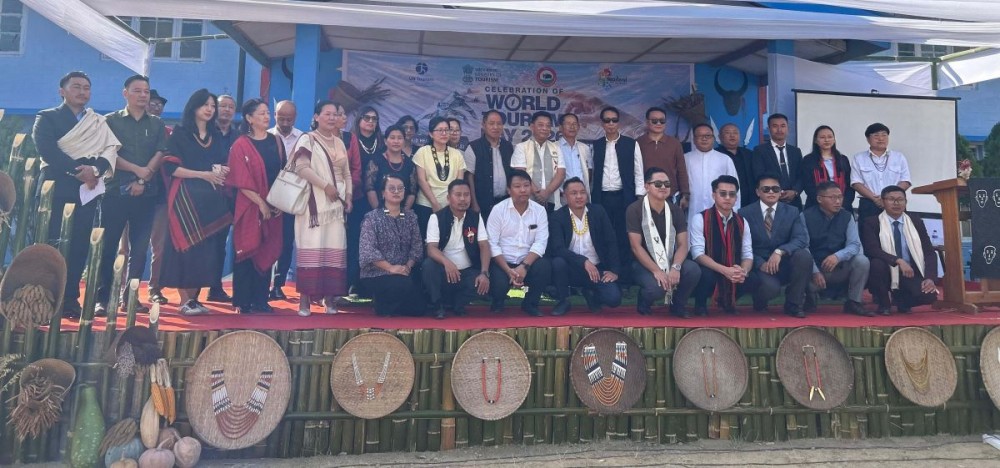
State observes World Tourism Day at Chizami
Our Correspondent
Kohima | September 27
Nagaland’s Commissioner & Secretary for Tourism, Kovi Meyase, today said that digital technology and Artificial Intelligence (AI) can transform the tourism sector, particularly by creating greater visibility and opportunities for rural destinations.
“Let us build a digital future for tourism that is open, inclusive and human and harness these new tools to drive sustainable development for all,” Meyase said while addressing World Tourism Day 2026 at Chizami in Phek district under the theme “Digital agenda and Artificial Intelligence (AI) to redesign tourism.”
“Through responsible use of digital platforms and artificial intelligence, we can showcase our villages, festivals, cuisine, handicrafts and natural attractions to audiences across India and the world,” Meyase said.
Stating that Nagaland is blessed with rich cultural heritage, vibrant traditions, breathtaking landscapes and warm hospitality, he said digital technology presents tremendous opportunities.
“However, as we embrace technology, we must ensure that tourism remains people-centred, sustainable and authentic. Technology should complement our culture and communities, not replace them,” he said.
Meyase said AI and digital platforms are increasingly influencing how travellers decide where to stay, what to see and where to go.
He said World Tourism Day has been observed in every United Nations Member State since 1980, celebrating the many ways tourism connects cultures and enriches lives.
“This year, it also asks what kind of future we want for tourism. The theme, digital agenda and artificial intelligence to redesign tourism, reflects one of the defining transformations of our time,” he said.
He said AI is changing how travellers choose destinations, how the industry operates and how travel experiences are designed. “It can strengthen small businesses, improve services and create new opportunities,” Meyase said.
He stressed that local communities, tourism workers and emerging destinations must have a role in shaping the future of the sector.
This requires investing in digital skills, widening access to technology and ensuring innovation benefits the people and places that make tourism possible, he said.
‘Tourism should be viewed beyond destinations and landscapes’
Rukewete K. Edemi, Convenor, Chizami Range Students’ Union, said tourism should be viewed beyond destinations and landscapes, stressing the need for its connection with local livelihoods, entrepreneurship, cultural preservation and community development.
He said Chizami Range possesses rich cultural heritage, indigenous knowledge, scenic landscapes and strong community institutions, but added that skills, infrastructure, digital visibility, responsible investment and stronger collaboration between government and communities are essential to unlock its tourism potential.
Emphasising the role of young people, Edemi said students and youths should be given meaningful opportunities to participate in tourism through digital storytelling, guiding, homestays, entrepreneurship and conservation.
Stating that communities are now ready to participate in shaping the future of tourism in Nagaland, he said, “Tourism is more than a destination. When we talk about tourism, we often think about beautiful mountains, landscape, traditional food, festivals, and places that visitors want to see. But tourism is much more than that. Tourism is about people. It is about the farmer who produces local food. It is about the young people who become a guide. It is about the family that opens its home as a homestay. It is about the artisan who keeps a traditional craft alive. It is about the students who document a story of the village.”
He said tourism is also about the community that welcomes a visitor and, at the same time, takes responsibility for protecting its land, culture and environment.
He maintained that tourism has the potential to become much more than an economic activity and can become a pathway for livelihood, entrepreneurship, cultural preservation and community development.
Zhavame now rural tourism village
Nagaland’s Tourism Director Veyielo Doulo made a formal declaration of the department’s adoption of Zhavame village in Phek district as a rural tourism village.
The certificate was handed over to the village council chairman, Vivotso Domeh, by Kovi Meyase.
Doulo wanted to see Zhavame, which is famous for Kapamodzü peak, become a tourist hotspot and one of the best rural tourism villages in the state.
He also urged the concerned villages and institutions to start observing World Tourism Day annually on September 27 in their respective areas henceforth to spread awareness of the importance and value of the tourism industry.
“Tourism is not merely about places and attractions; it is about people, culture, traditions and the warmth with which visitors are welcomed. Chizami has beautifully demonstrated this spirit today,” said Agumbe Nring, Tourist Officer, Phek.
Stating that youth can play a role in promoting tourism, culture and community development, he said tourism must go hand in hand with community participation, cultural preservation, environmental responsibility and sustainable development.
Chizami, with its rich cultural heritage, natural beauty and strong community spirit, has immense potential to inspire visitors while preserving its unique identity for generations to come, Nring added.
The celebration also featured an experience-sharing session by Vesalu Puro, Proprietor of Annie’s Farm (Flower Garden) at Pfutsero, who recently received high acclamation from Prime Minister Narendra Modi during the 137th episode of Mann Ki Baat.
Sentien Kichu, Azi Rudy and Vetho Rhakho presented an Ao song as a trio, while Depeu Vero made a special appearance. The celebration also witnessed special appearances by the Chizami Students’ Union and Mesulumi Students’ Union.
Earlier, Wate Kapfo, President, Chizami Town Chakhesang Students’ Union, led the acknowledgement of the dignitaries.
Mentionably, the celebration marked the culmination of two days of youth-oriented activities and literary competitions, highlighting the role of students and communities in shaping the future of tourism in Nagaland.
The programme was organised by the Department of Tourism, Government of Nagaland, in collaboration with the Chizami Range Students’ Union.