

Respondents participate in the research project funded by North Eastern Council (NEC), Government of India.
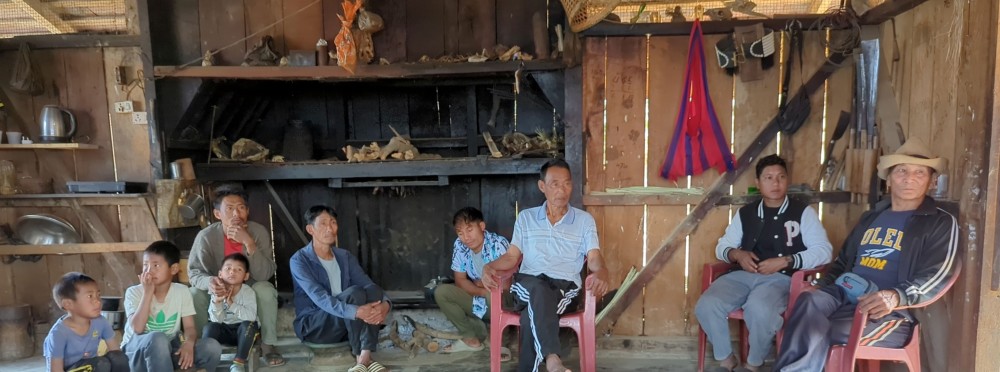
Lumami, February 24 (MExN): Farmers in eastern Nagaland are increasingly reporting visible impacts of climate change on their crops, according to findings from an ongoing research project funded by the North Eastern Council (NEC), Government of India.
The observations were made during a field visit to Longsing village, Noksen block, Tuensang district, and Moalenden area under Mokokchung district on February 21 by Principal Investigator Dr Ashutosh Tripathi and Co-Principal Investigator Prof Ashutosh Tripathi of the Department of Environmental Science, Nagaland University. The research team was assisted by Nohochem Sangtam, Head, EVS, Fazl Ali College, Mokokchung.
During interactions with farming communities, villagers reported experiencing erratic rainfall, delayed monsoons, rising temperatures, and sudden heavy showers, all of which have disrupted traditional cropping patterns. Cultivation of paddy, sugarcane, orange, chilli, and other vegetables has been particularly affected. Many farmers reported declining yields and increased pest incidence.
Shifts in rainfall timing have also adversely impacted jhum cultivation practices and soil fertility cycles.
The NEC-supported project, titled “Evaluation of Climate Change Perception, Knowledge and Responses in Tribal Communities of Nagaland, NE India,” seeks to document grassroots experiences and recommend region-specific adaptation strategies. The researchers observed that while farmers are adjusting sowing dates and diversifying crops as coping mechanisms, there remains a pressing need for stronger institutional and technical support to enhance climate resilience in the region.

.jpg)
.jpg)
.jpg)
