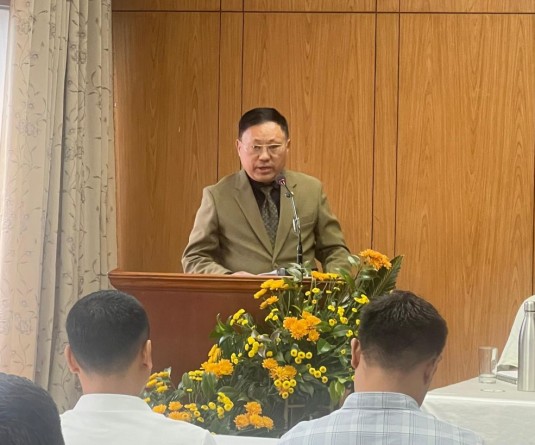
Officials administer the first dose to a student during the National De-Worming Day (NDD) programme in Mokokchung on August 10.
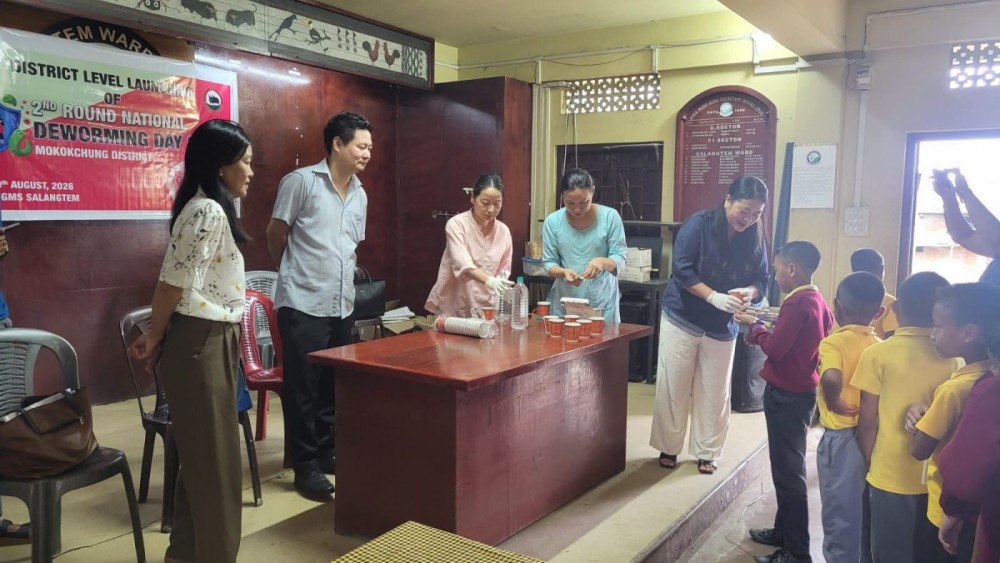
Kohima, August 10 (MExN): The second round of the National De-Worming Day (NDD) programme was launched across Nagaland on August 10, with health authorities administering Albendazole tablets to children aged between one and 19 years and stressing the importance of hygiene and nutrition in preventing soil-transmitted helminth (STH) infections.
The programme was launched at Government High School, Pezoucha, New Secretariat, Kohima, as well as at Government High School, Phek village, and Government Middle School, Salangtem, Mokokchung.
The NDD is being implemented through schools and Anganwadi platforms under a fixed-day approach, in collaboration with the Departments of School Education and Social Welfare. A mop-up round is scheduled for August 17.
In Kohima, the programme was organised by the Office of the Chief Medical Officer under the aegis of the National Health Mission (NHM). It was conducted by Dr Khrievilhou Nakhro, District Programme Officer (RMNCAH+N), and chaired by Dr Katila Longchar, Medical Officer (RBSK). A teacher of Government High School, Pezoucha, delivered the keynote address.
Nakhro highlighted the harmful health effects associated with worm infections among children, including anaemia, nutritional impairment, loss of appetite, weakness and anxiety, stomach ache, nausea, vomiting, diarrhoea and blood in the stool.
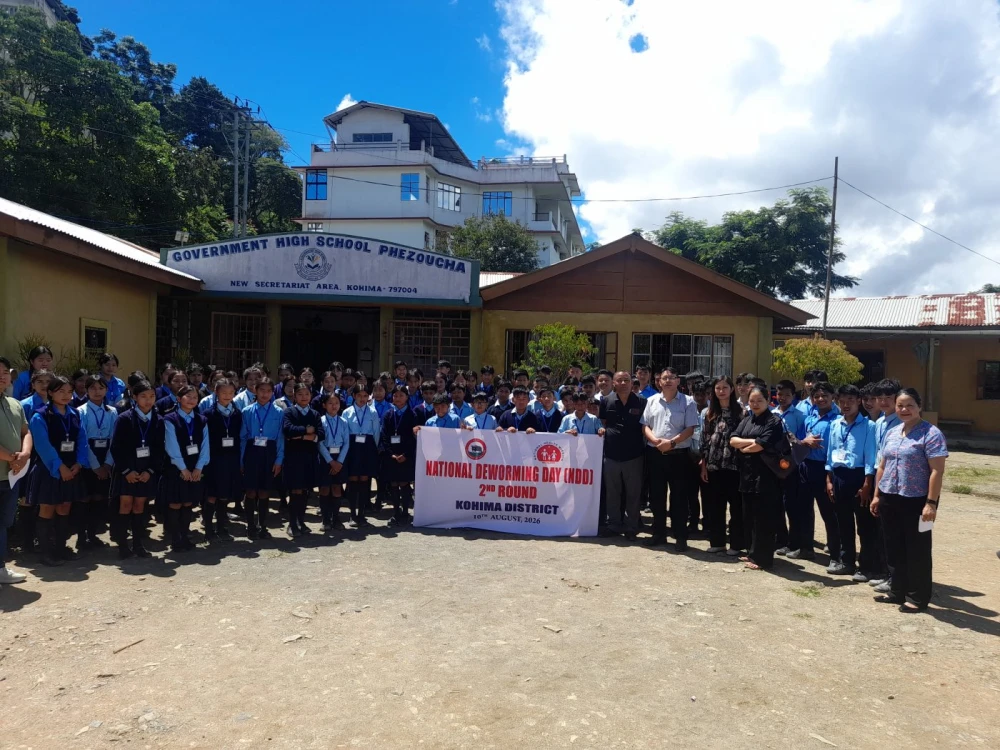
He said de-worming tablets would be provided free of cost at schools and Anganwadi Centres to children aged one to 19 years, stressing that children should be de-wormed even if they did not show symptoms or fall sick, as worm infections can affect their health and nutritional status.
He said the direct benefits of de-worming included controlling anaemia and improving nutritional uptake, while indirect benefits included improved immunity, concentration and capacity to learn, enhanced work potential and livelihood opportunities.
De-worming also helps break the transmission cycle and reduce worm infestation in the community, Nakhro said.
In Phek, the second round of NDD was launched at Government High School, Phek village. Dr Khriekuolie Liezietsu, District Programme Officer (RMNCHA&N), Phek, highlighted the objective of the mass de-worming programme to reduce the harmful effects of soil-transmitted helminths among children aged one to 19 years.
Liezietsu explained that Albendazole is an antiparasitic medicine widely used for de-worming and said it can treat intestinal worm infections and tissue parasite infections, while relieving symptoms such as stomach pain, diarrhoea and itching.
He urged students to practise good hygiene and follow the "Golden Rules" — washing hands with soap before eating and after using the toilet, keeping nails short and clean, wearing shoes while playing outside, drinking clean and safe water, and washing fruits and vegetables before eating them.
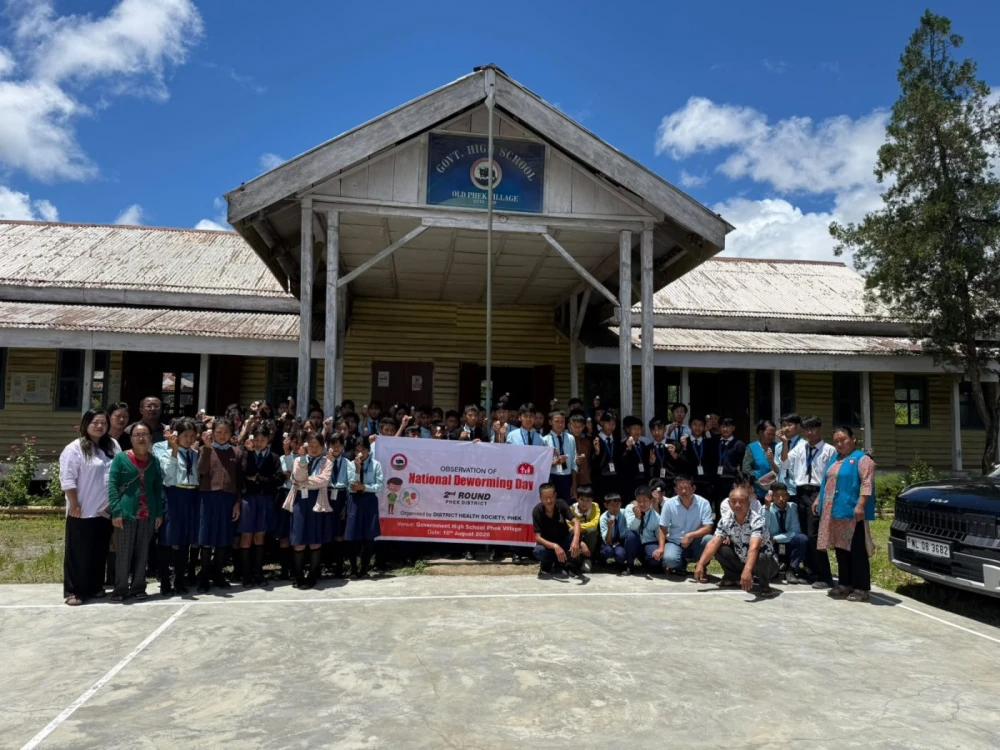
The Phek programme was attended by teachers, District Community Mobiliser (DCM), Block Programme Manager (BPM) and Block Accounts Coordinator (BAC) of Phek Sadar, Auxiliary Nurse Midwives (ANMs), Accredited Social Health Activists (ASHAs) and District Media Coordinator (DMC), along with the health team.
In Mokokchung, the district-level launch was held at Government Middle School, Salangtem.
Dr Limanaro, District Programme Officer (UIP & RCH), sensitised students on the objectives of NDD, saying the programme aims to improve children's overall health, nutritional status, access to education and quality of life while deworming children in the one-to-19 age group.
She said children could be at risk of worm infections due to walking barefoot, open defecation, dirty hands, unclean food and contaminated water.
Limanaro explained the common types and signs of worm infections, including malnutrition, anaemia, lack of appetite, stomach pain or cramps, nausea, vomiting and diarrhoea, tiredness or weakness, weight loss and itching around the bottom area.
She stressed the importance of maintaining cleanliness to prevent and protect children from soil-transmitted helminths.
The DPO also highlighted the benefits of de-worming, including reducing anaemia, improving nutritional status, supporting physical and mental development, improving learning and activity in school, increasing attendance and contributing to a healthy, worm-free community.
Following the launching programme, students were administered Albendazole tablets. The programme was followed by a health check-up conducted by the RBSK team of Mokokchung.
The district-level programmes form part of the state's second-round NDD campaign aimed at reducing worm infections among children and promoting healthier communities through regular de-worming and improved hygiene practices.