NISC questions S C Jamir's remarks on Nagaland's political status. (File Photo)
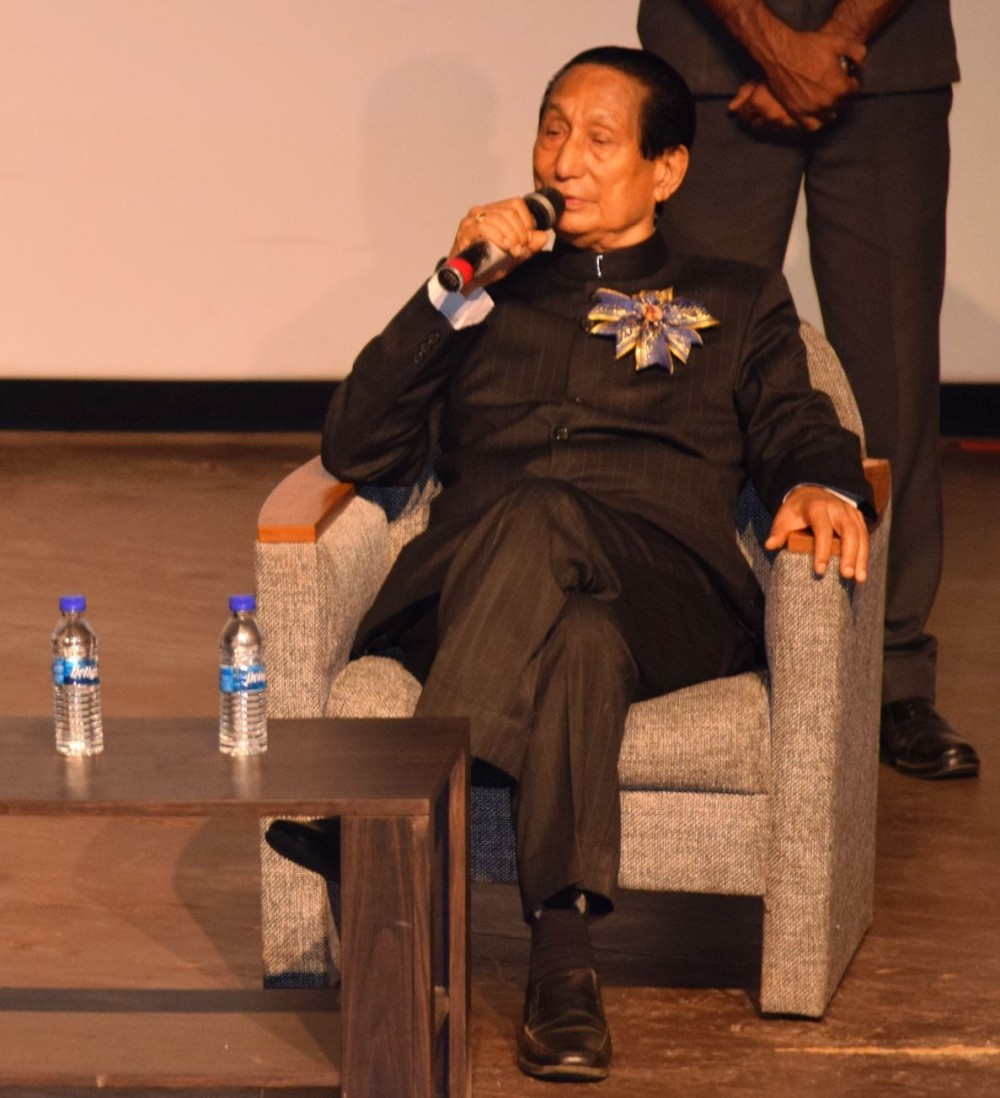
Dimapur, September 25 (MExN): The Naga International Support Center (NISC), a human rights organisation, has criticised former Nagaland chief minister S C Jamir over his recent remarks on the political status of Nagaland and the Naga issue.
In a press release issued on September 24, the NISC said it was responding to the "broad consternation" following reactions to an interview/article by Jamir.
The organisation questioned why Jamir had made the statements "only now", asking whether he had only recently become aware of the conflict between India and the Naga people, which it described as a declared war since 1956.
The NISC, however, said freedom of speech applied to every citizen, including Jamir and his opponents, and that such freedom did not mean that statements could not be criticised.
"Freedom of speech does not mean words cannot be criticized," it said, adding that opponents had the right to express their criticism.
The organisation also questioned what Jamir meant by "Nagaland", claiming that the British had not colonised all Naga areas and that less than 25 per cent of Naga areas had been under British rule.
It asked whether the areas referred to by the British as "unexcluded areas" of the "Free Nagas" were excluded from what Jamir called Nagaland.
The NISC noted that the State of Nagaland was inaugurated in 1963, three years after the Naga People's Convention (NPC), of which Jamir was a member, reached an agreement with the Indian government for the creation of the state.
The organisation claimed that the NPC did not represent the Naga people as a whole.
The NISC further questioned whether Jamir's position that Nagaland should remain part of India implied that the Naga areas outside the state were not part of Nagaland and should not be included in India.
It also questioned whether India could produce documents showing the ceding of Naga areas to India, and whether Jamir had produced any documents showing the ceding of the areas by Britain to India.
The organisation said it had attempted to locate such documents in the British Library but had been unable to find them. It added that it subsequently wrote to the British government seeking the documents but received no response.
The NISC said Jamir had served as chief minister of Nagaland and governor of other states, and questioned whether his views represented less than 25 per cent of the Naga population, referring to areas it claimed had been under British control.
It also said Nagas had differences with India in terms of culture, language, norms and values, including the absence of a caste system, and described the Naga areas as historically free apart from those that had been colonised.
The organisation said Jamir was entitled to express his views in a democracy but was also subject to criticism over what it said he had left unmentioned and his position on Nagaland's relationship with India.
The NISC said freedom of speech also carried responsibility and claimed that Jamir should have explicitly stated that he wanted Nagaland to remain part of India.
It further claimed that "most Nagas" wanted to live in a sovereign state and govern themselves, and said they did not want to be governed by what it described as an "alien culture".