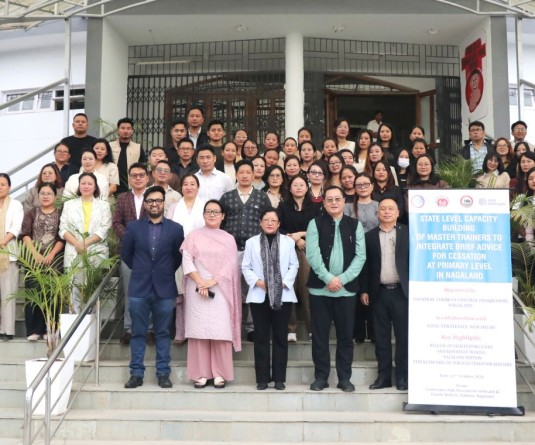
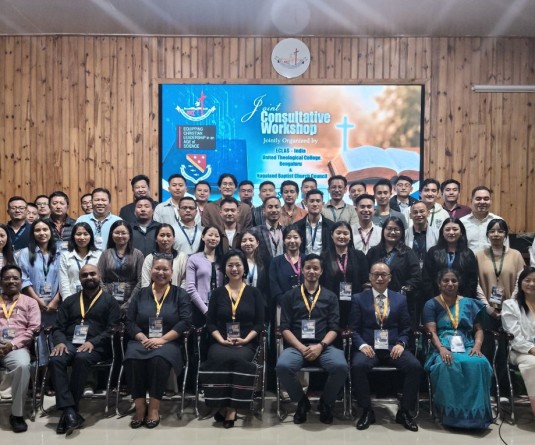
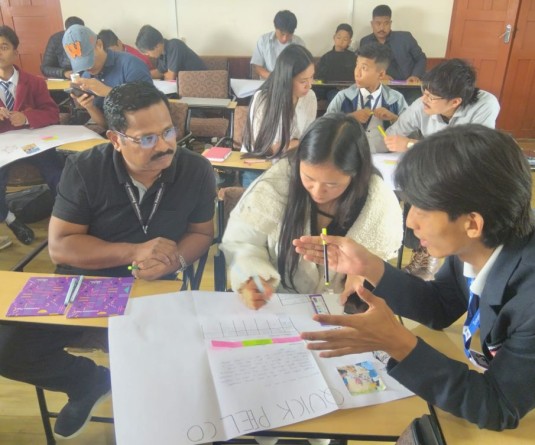
Students participate in the inter-departmental talk organised by the departments of History and Political Science at Patkai Christian College on September 25.
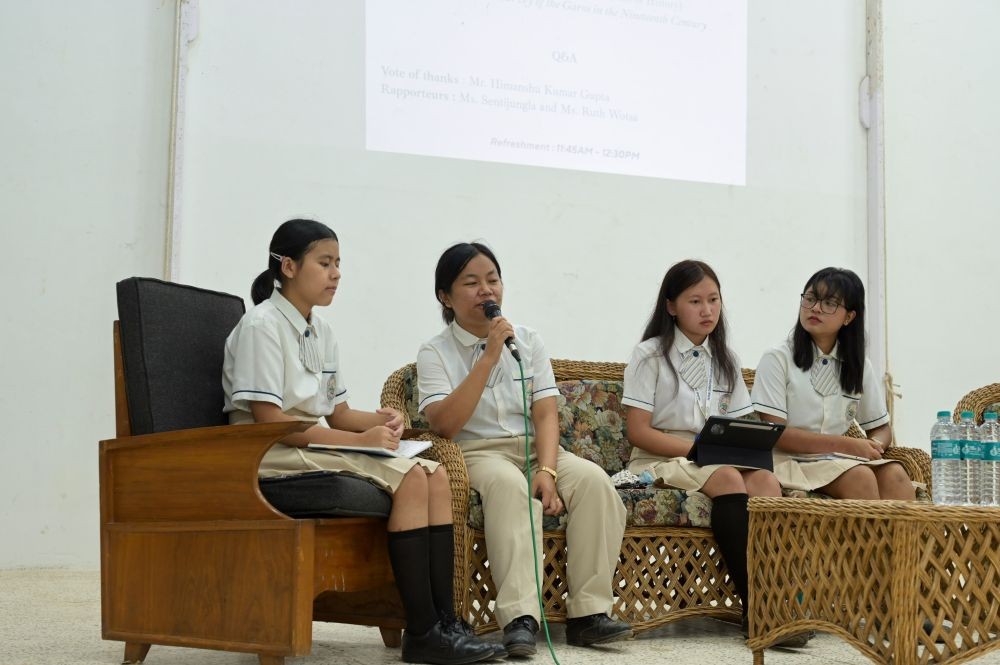
Chümoukedima, September 27 (MExN): The departments of History and Political Science at Patkai Christian College (PCC), Chümoukedima organised an inter-departmental talk on the theme “History, Politics and Representation” on September 25 at Bundrock Chapel Hall.
Elirhoni O Patton from Department of Political Science delivered the first presentation titled “Political Representation in India: Qualifications and Criminalisation,” examining political representation within democratic theory with a focus on electoral qualifications and the criminalisation of politics in India.
The presentation covered the legal framework, the roles of the Election Commission of India, Parliament and the Supreme Court, and the significance of Section 8 of the Representation of the People Act regarding disqualification after conviction. It emphasised the distinction between being accused and being convicted, underscoring the principle of presumption of innocence, and concluded by raising questions about the gap between transparency and accountability in democratic politics.
Akumtemsu from Department of History delivered the second presentation titled “The Inner Line Regulation: A Historical Reflection,” tracing the historical development of the Inner Line Regulation (ILR) in Nagaland. The presentation outlined its origins under colonial administration as a mechanism to regulate movement between the hills and plains, examined its evolution as a protective measure for indigenous communities, and raised questions regarding its ongoing relevance in the post-independence context, particularly in relation to constitutional protections.
D Chiluni from Department of Political Science delivered the third presentation titled “A Feminist Critique of Patriarchy in Indian Society,” examining liberal, Marxist and socialist feminist perspectives on how patriarchy operates through family structures, domestic relations, gender expectations and sexuality. The presentation emphasised that patriarchy extends beyond male authority and is perpetuated through deeply normalised social rules and practices, and highlighted the gap between legal protections and women's lived experiences, particularly in cases of intimate partner violence.
Ajarik Silginchi Marak from Department of History delivered the final presentation titled “A Brief Survey on Garos in the Nineteenth Century,” examining Garo history through oral traditions, historical accounts and colonial encounters. The presentation discussed the traditional Garo account of migration, critically analysed colonial descriptions of the Garos, explored interpretations of Garo raids in relation to authority, taxation and trade, and focused particular attention on the matrilineal system.
The four presentations offered diverse perspectives on democratic representation, colonial regulation, gender relations and indigenous history, demonstrating the value of interdisciplinary approaches to understanding society and politics. An interactive question-and-answer session followed the presentations, stated a press release issued by the Mass Comm PCC.