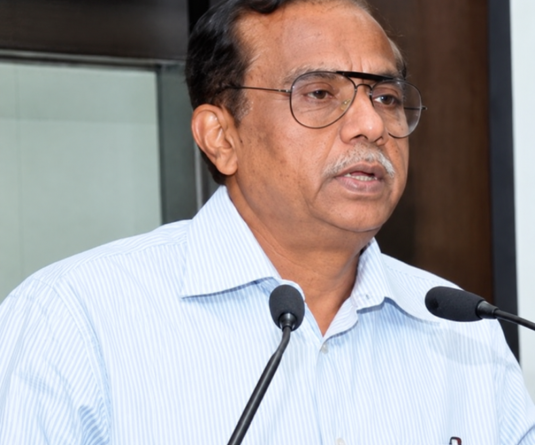
Al Ngullie
Dimapur | July 23
With the backward-reservation clamor getting louder, the Committee for Backwards’ Reservation set up by the state government of Nagaland is faced with a colossal task of compiling relevant information – and a report to that effect. The matter is more pronounced for the committee all thanks to a virtually blank statistics bank.
Relative to this is also serious concerns being raised by highly knowledgeable observers that if the 25% quota demanded by the so-asserted “Eastern” population, is granted, the existing 33% reserved for “Backward” tribes would be disturbed, thus creating further tribal tensions amongst the sensitive Naga communities. The committee’s report is being viewed as the deciding factor to impact “for” or against any future consequences.
Following the demand for a huge 25% job reservation in the government service by the so-asserted “Eastern” districts of Nagaland state, the committee has been given two months to come up with a convincing report. It was informed that the state government had just last week, directed the committee to submit a report within the stipulated timeframe.
In a state like Nagaland so lacking of informed statistics, compiling relevant data to buttress the committee’s report on reservation would be the most formidable problem, said Principal Secretary Banuo Z Jamir. The Principal Secretary is chairman of the Reservation Committee. Committee members are Commissioner for Home, Secretary of DUDA, and Principal Secretary for Personnel & Administrative Reforms and Commissioner & Secretary for Forest.
The members of the Committee will be meeting today to examine, apart from related matter, the demand of the Eastern Naga Students’ Federation (ENSF) for 25% job reservation. The committee, has met twice earlier, and will be meeting regularly.
Elaborating on the technicalities involved, Secretary Jamir said to examine all available government documents and agreements pertaining to quota. The problem is, Jamir said, not so much for compiling the report itself but garnering relevant info from where there is virtually none. “Nagaland is poor in statistics; we don’t have data” she observed. And the issue is sensitive, obviously, she added.
Knowledgeable observers are no more too encouraged by any stretch of imagination either: It is a common view that the last “relevant” population census of 2001 would do no more than feed more controversies. The census itself is controversial, pocked with allegation from many a section that it is ‘biased.’ Secondly, there is the issue of unrecognized “tribes” and “sub-tribes.” The question of what the quota would do for them – or for that matter what consequences would be birthed against them – is as critical as not granting reservation of the “Eastern” populations, an observer said. Besides, the committee is also faced with the onus compiling a report which the government would at best use as a factual reference rather than a reference. This is due to the lack of proper statistics, outdated state data, a shifting population index and worse, the tribal sensitivity of “being an egoistic Naga,” another observer added.
In the face of these glaring inconsistencies, the committee’s report is in considerable risk of being “misunderstood” and “misinterpreted”. As a consequence, lead to fueling of tensions, it was observed.
About 80% of all gazette (group A &B) posts under the state government are reserved for Naga tribes of Nagaland. Out of which 33% is reserved for “backward” tribes. Of the remaining, 47% is open to all other Naga Tribes including Kuki, Kachari, Mikhiri and Garos. There are also concerns being raised that the 25% reservation demanded by the ENSF would unsettle the balance being maintained by the 33% backward quota vis-à-vis the 47% quota.
.jpg)