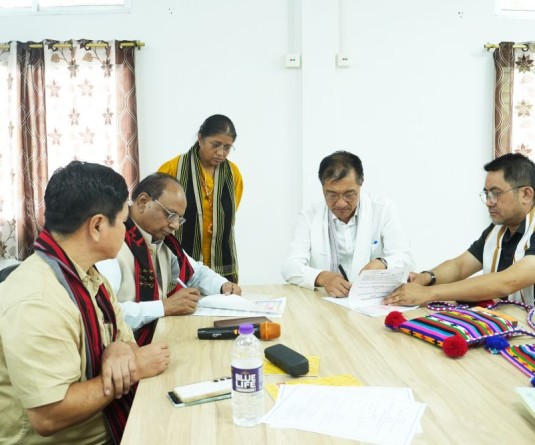
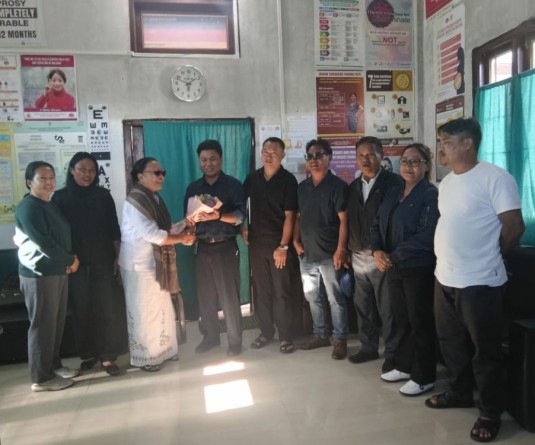
Principal Investigator (PI) Dr Mary N Odyuo along with officials from Agriculture and Horticulture, GON, Noklak districts, with participants from Sanglao Village, Noklak District.
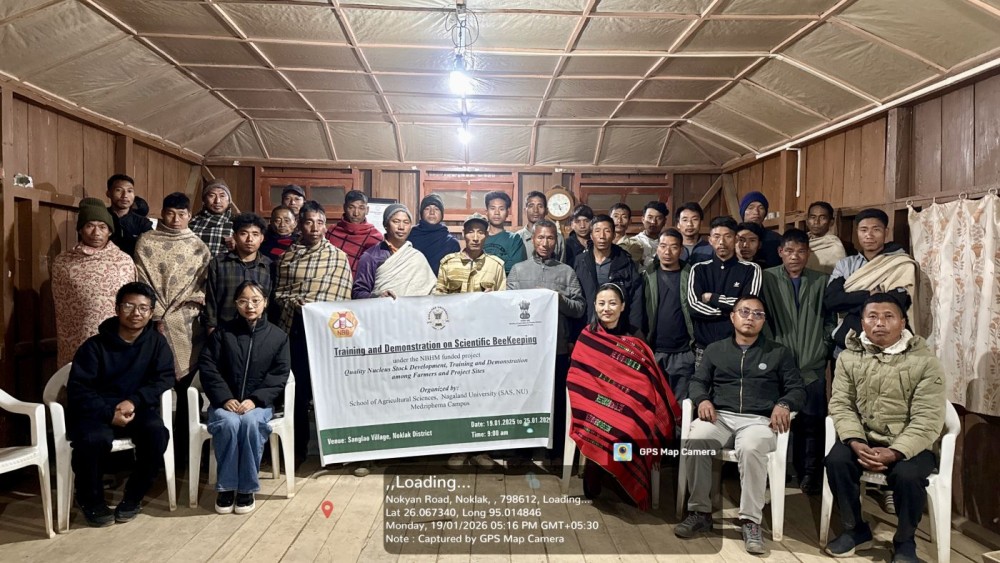
Zunheboto, January 29 (MExN): A series of intensive training and demonstration programmes on scientific beekeeping were conducted across Eastern Nagaland districts under the National Bee Board-National Beekeeping and Honey Mission (NBB-NBHM) with the objective of strengthening farmer capacities, promoting scientific apiculture practices, enhancing livelihood opportunities and improving productivity in oilseed crops through organised beekeeping.
The programme is funded by the National Bee Board (NBB), Ministry of Agriculture and Farmers Welfare, Government of India, under the scheme National Beekeeping and Honey Mission (NBHM) and is being implemented by the School of Agricultural Sciences, Nagaland University, Medziphema Campus. The project is led by Dr Mary N Odyuo, Associate Professor and Principal Investigator (PI) and Dr Avinash Chauhan, Scientist, AICRP on Honey Bee and Pollinators as Co-Principal Investigator (Co-PI), who are also serving as the Course Directors of the training programme.
The training programmes conducted during January 19 to 27 covered villages including Nokyan, Kusong, Sanglao, Pathso Village and Panso Headquarters in Noklak District; Yakor Village, Shamator Headquarters, Sangphur Village and Leankonger Village in Shamator District. This intervention marked the first-ever scientific beekeeping training at village level except for Yakor Village locally known to be the district’s “honey bee village,” where a significant proportion of households are engaged in beekeeping, reflecting strong local potential for apiculture-based livelihoods.
The participants of the programme were primarily members of Farmer Producer Organisations (FPOs) supported by the Small Farmers’ Agribusiness Consortium (SFAC). The programme received technical support from officials of the Nagaland Honey Bee Mission and the training sessions were conducted in the presence of officials from the District Agriculture Offices and District Horticulture Offices of all concerned districts. At Leankonger Village in Shamator District, Bodi Kapfo, SDO (Civil) joined the team for one of the training days.
A defining strength of the programme was its strong emphasis on hands-on demonstrations and practical learning with sessions conducted by scientifically trained bee experts, including State level awarded apiculturists. The demonstrations covered colony inspection, seasonal management, disease identification, swarm control, and value addition. Special emphasis was given to hygienic harvesting of quality honey, highlighting best practices for maintaining purity, improving shelf life and enhancing market value, while also reinforcing lessons on crop pollination and the role of bees in enhancing oilseed pollination.
Farmers across villages expressed their satisfaction with the training programmes and shared that the scientific knowledge imparted had improved their understanding of bee behaviour, colony health, productivity and its importance in oilseed farming. The participants expressed the need for continued training support, access to improved beekeeping equipment and sustained technical guidance to further strengthen income generation and self-reliance.
The significance of the training programme was clearly reflected in the immediate post-training initiatives taken by the participants. Across all villages where the training was conducted, several participants independently began constructing scientific bee boxes using the knowledge gained during the programme. Notably, in Kusong Village, ten participants collectively came together to form a group for joint scientific beekeeping. Each member contributed ₹500 to procure materials for box construction and the group initiated the preparation of scientifically designed eight-frame bee boxes with brood chamber and super chamber.
This collective effort demonstrated strong motivation, mutual cooperation and confidence in adopting scientific apiculture practices. Overall, participants expressed deep satisfaction with the training programme and conveyed a high level of confidence and enthusiasm to begin beekeeping using scientific methods, marking a meaningful transition from awareness to action.
The implementing team expressed gratitude to the National Bee Board, Ministry of Agriculture and Farmers Welfare, for supporting the programme under the National Beekeeping and Honey Mission, noting that such initiatives play an important role in promoting scientific apiculture, strengthening farmer institutions and enhancing sustainable rural livelihoods in Nagaland.