SIR in Nagaland: Uncollectable EFs cross 1.5 lakh, now over 11 per cent of electorate
Morung Express News
Dimapur | September 12
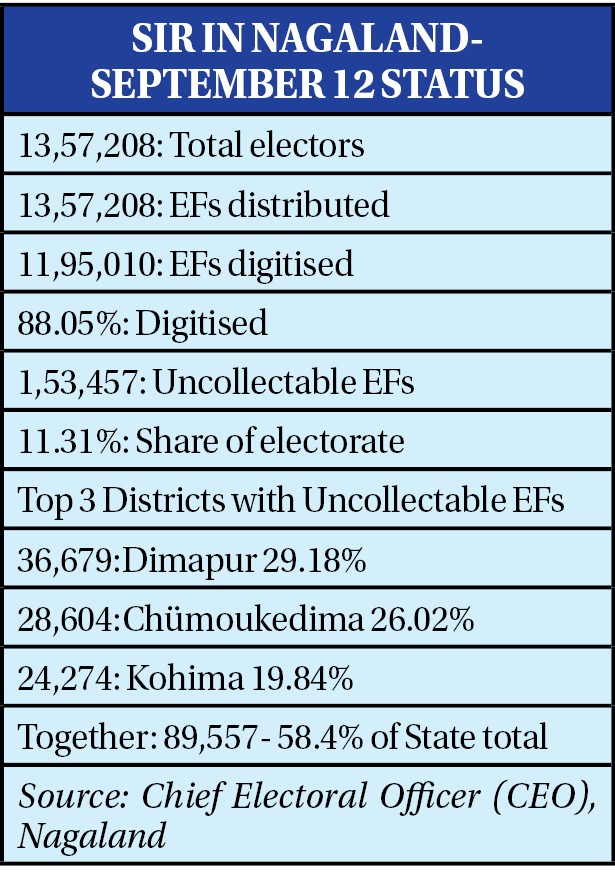
The number of ‘uncollectable’ Enumeration Forms (EFs) under the ongoing Special Intensive Revision (SIR) of electoral rolls in Nagaland has crossed 1.5 lakh, with 1,53,457 forms, or 11.31% of the State’s 13,57,208 electors, recorded in the latest status report of the Office of the Chief Electoral Officer (CEO), Nagaland.
The figure marks a substantial rise from the 1,21,157 uncollectable EFs, or 8.93%, reported as of September 9. In just three days, the number has increased by 32,300.
The latest status report, as of 4 pm on September 12, shows that EFs have been distributed to all 13,57,208 electors, representing 100% distribution.
Of these, 11,95,010 EFs have been digitised, accounting for 88.05% of the electorate, while 966 have been submitted online by electors.
Dimapur recorded the highest number of uncollectable EFs at 36,679, accounting for 29.18% of its 1,25,703 electors.
It was followed by Chümoukedima with 28,604 (26.02%) and Kohima with 24,274 (19.84%).
Together, the three districts account for 89,557 uncollectable EFs, or nearly 58.4% of the State total.
The next highest figures were recorded in Zunheboto (11,571), Peren (8,211), Mokokchung (7,894), Tuensang (8,412) and Wokha (5,977).
At the other end, Shamator recorded 671, Meluri 628 and Pughoboto 664 uncollectable EFs.
The term ‘uncollectable’ does not, by itself, mean that an elector has been removed from the electoral roll or found ineligible.
As explained in the earlier SIR reporting, an Enumeration Form may remain uncollected when an elector is absent, has permanently shifted, is deceased or is already enrolled elsewhere. However, the Nagaland CEO’s status report does not provide a reason-wise breakdown of the State’s uncollectable forms.
However, eligible electors will have an opportunity to seek inclusion through the claims and objections process after publication of the draft electoral roll.
The draft is scheduled for publication on September 20, with claims and objections accepted until October 20.
Disposal is scheduled through November 18, followed by publication of the final electoral roll on November 22.