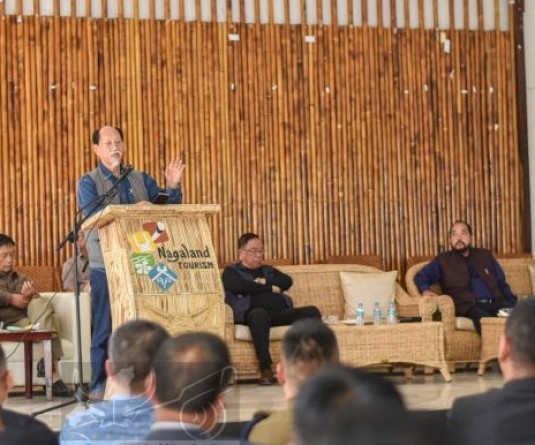
Nagaland Industries & Commerce Advisor Hekani Jakhalu. (DIPR Photo)
Over 48000 MSMEs registered
Our Correspondent
Kohima | March 10
Nagaland Industries & Commerce Advisor Hekani Jakhalu on Tuesday highlighted the crucial role of the Micro-Small and Medium Enterprises (MSMEs) sector in driving the state’s economy and the need for greater policy support and appropriate financial access for small entrepreneurs in Nagaland.
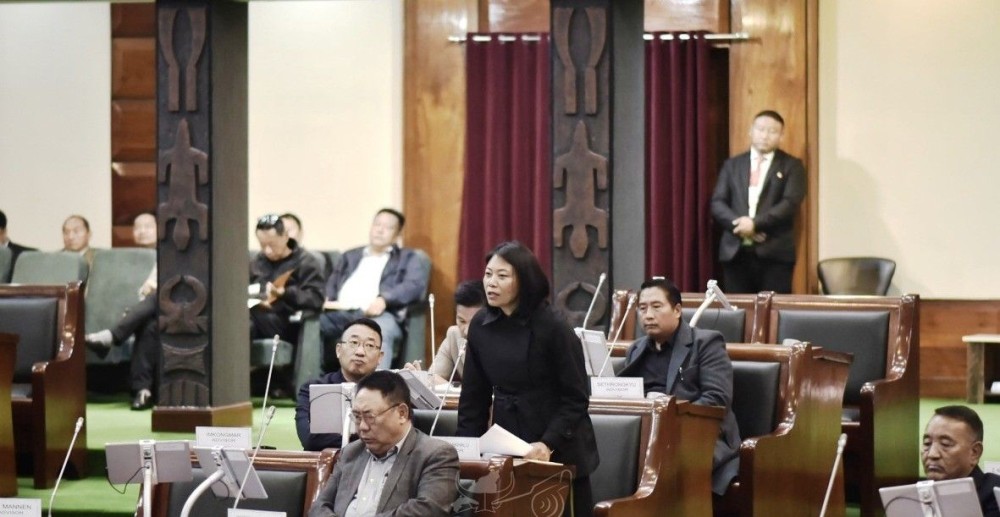
Raising a discussion on the “critical role of MSME in improving Nagaland's economy” as a matter of urgent public importance during the ongoing 8th session of the 14th Nagaland Legislative Assembly (NLA) on March 10, Jakhalu, stated that MSMEs act as the silent growth engine of the state. She noted that they create employment opportunities and contribute significantly to the local economy without relying heavily on government salaries or financial assistance. She described MSMEs as one that quietly sustains livelihoods and generates local jobs across Nagaland.
In 2023–24, Nagaland recorded 27,083 MSMEs under Udyam registration and with the launch of the World Bank-assisted Raising and Accelerating MSME Performance (RAMP) scheme by Chief Minister Dr Neiphiu Rio on August 27, 2024, she said.
The number of registration has reportedly increased to over 48,000, generating thousands of employment opportunities across the state.
According to the available data, the state currently has 267 registered start-ups, including 92 private limited companies. These ventures have generated a revenue of around Rs 74 crore and created more than 1500 jobs during the 2024–25 period.
Despite these achievements, Jakhalu lamented that several challenges continue to hinder the growth of MSMEs in the state.
Among the key concerns highlighted were limited access to finance due to strict collateral requirements and inadequate banking infrastructure. Inconsistent power supply and high energy costs were also cited as major obstacles affecting business operations.
The Advisor also said that poor road connectivity remains another challenge, as bad road conditions increase transportation costs and delay the movement of goods and commodities.
In addition, the issue of multiple or unregulated taxation faced by businesses was raised, with concerns that such conditions discourage entrepreneurship and deter outside investors from entering the state.
Emphasizing the need for a long-term strategy, she suggested that Nagaland must align its development planning with the national vision of Viksit Bharat 2047.
Jakhalu mentioned that particular attention should be drawn to nano-enterprises, which account for nearly 95 percent of businesses in the state.
With targeted interventions and stronger policy support, Jakhalu expressed that MSMEs, entrepreneurs and the youth of Nagaland could play a vital role in building a self-reliant economy and achieving the broader goal of Viksit Nagaland 2047.