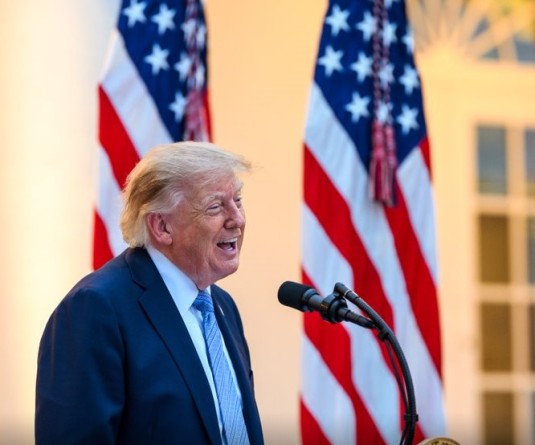
(Photo: X/@WhiteHouse)
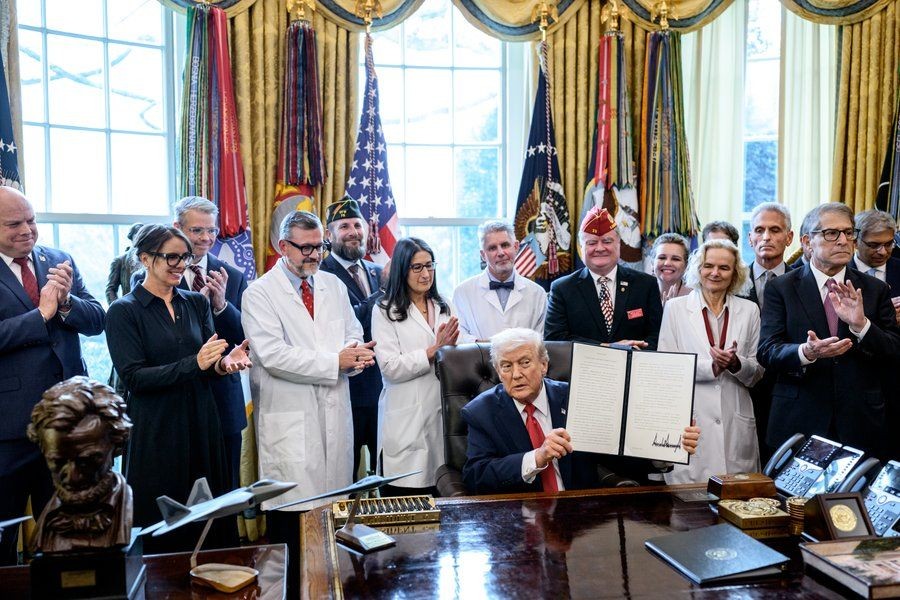
Washington, December 19 (IANS) US President Donald Trump signed an executive order directing the federal government to move marijuana from the most restrictive category of controlled substances, arguing the step would expand medical research and improve access for patients suffering from severe and chronic illnesses.
Calling it “a big day in many reasons,” Trump said the decision would reclassify marijuana from Schedule I to Schedule III under federal law, a shift he said was driven by years of appeals from patients, veterans and medical professionals.
“For decades, this action has been requested by American patients suffering from extreme pain, incurable diseases, aggressive cancers, seizure disorders, neurological problems and more,” Trump said during a White House event before signing the order.
Trump stressed the move does not legalize recreational marijuana. “The order ...is not the legalization or it doesn’t legalize marijuana in any way, shape or form,” he said, adding that misuse of powerful controlled substances remained dangerous.
He argued the reclassification would make it easier to conduct federally sanctioned research into marijuana’s medical benefits and risks, including its potential use as an alternative to opioid painkillers.
“This reclassification order will make it far easier to conduct marijuana-related medical research allowing us to study benefits, potential dangers and future treatments,” Trump said.
Several cabinet members and health officials joined Trump at the event, including Health and Human Services Secretary Robert F. Kennedy Jr., Centers for Medicare and Medicaid Services Administrator Mehmet Oz, and senior researchers from the National Institutes of Health, Dana-Farber Cancer Institute and Duke University.
Kennedy said the decision would help resolve what he described as a long-standing scientific impasse. “This will finally allow us to study this issue and answer these questions for the American people,” he said, noting that past administrations had pledged action but failed to deliver.
Oz said the change would have practical effects for older Americans and veterans. He said Medicare could begin allowing coverage of certain hemp-derived cannabidiol products as early as next year if recommended by doctors.
“At Medicare we cover 68 million Americans,” Oz said, adding that the policy shift could expand treatment options at no cost to patients when prescribed appropriately.
Medical researchers welcomed the move as a breakthrough for clinical science.
Dr. Ilana Braun of the Dana-Farber Cancer Institute said rescheduling would accelerate research into managing cancer-related anxiety, pain and treatment side effects.
Duke University professor David Jonathan Casarett said it would “democratize the research process,” allowing more institutions to participate and enabling large-scale clinical trials.
Veterans groups also voiced support. Dan K. Wiley, national commander of the American Legion, said veterans disproportionately suffer from conditions such as PTSD and chronic pain. “With this reclassification, it will allow research to be conducted with regard to cannabis,” he said, adding it could open new treatment options if proven effective.
Trump acknowledged concerns raised by some lawmakers that the order could encourage youth drug use but said the policy was driven by public demand and medical need. He cited polls showing broad public support and emphasized that the focus was research, not legalization. “It’s also a big part of this is research,” he said.
The executive order comes amid a broader national debate over cannabis policy. More than 40 US states and territories already allow some form of medical marijuana, while federal law has long classified it alongside drugs deemed to have no accepted medical use.
Under the Controlled Substances Act, Schedule I substances face the strictest controls, making research difficult.
Moving marijuana to Schedule III places it alongside drugs recognized to have medical value but subject to regulation, potentially reshaping how US agencies, universities and pharmaceutical firms study cannabis and related compounds.