(Photo: IANS)
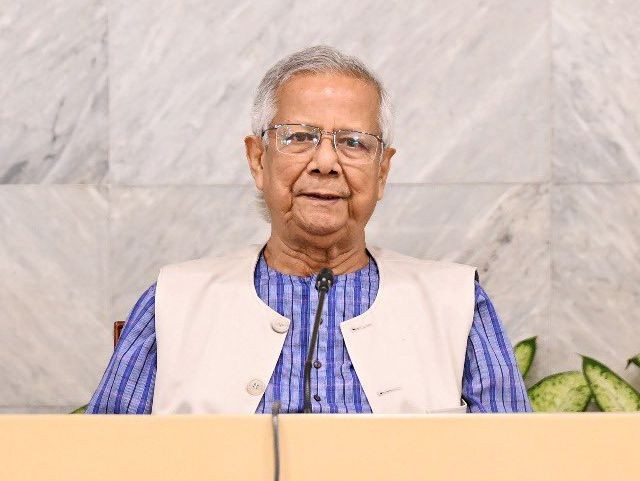
New Delhi, February 10 (IANS) The Muhammad Yunus-led interim government in Bangladesh has given in "meekly to most US demands" on the commercial and economic front in the trade deal while the country continues to face a myriad of issues, according to a new report.
Known as an economist, Bangladesh’s “all-powerful” Yunus and his Advisory Council have added another feather to their list of failures, says the report in digital platform Northeast News.
The fact is that the US reduced the reciprocal tax on Bangladesh by only 1 per cent —from 20 to 19 per cent.
"When added to the existing 15 per cent, the total tax stands at 34 per cent. To achieve the 1 per cent reduction, the government signed a Non-Disclosure Agreement (NDA), effectively trading away the power to make decisions regarding the country's 'economic interests'," the report observed.
The deal includes purchasing 25 Boeing aircraft for BDT 53,000 crore; buying 3.5 million tonnes of wheat from the US over the next five years at one-and-a-half times the market price, and purchasing LNG worth nearly BDT 1 lakh crore over the next 15 years from Excelerate Energy at prices higher than the market rate.
"Furthermore, labour laws were amended to make it easier to form trade unions in factories, even allowing union activities within EPZs (export processing zones)," the report revealed.
The big question is: Why did the Yunus-led interim government feel the need to sign a trade deal with the US toward the end of its term?
Economist Anu Muhammad told BBC Bangla that “This is an interim government whose primary responsibility was justice, reform, and elections. But moving beyond that, they are signing one agreement after another with foreign states. No government other than an elected one has the authority to take decisions on such matters of national importance."
According to the report, there are fears that while these significant state agreements are being signed by the interim government, future political governments will have to bear the burden.
Bangladesh received duty-free benefits in the textile sector on the condition of importing cotton from the US at high prices.
"But in reality, over 200 garments and textile factories have shut down in the last 18 months, and 200,000 workers have lost their jobs," the report revealed.