Dr Nokchur Imchen
MD General Medicine, Consultant, CIHSR
Stroke or Brain attack, is a disease that affects the arteries leading to and within the brain. It is the most common cause of disability worldwide and one of the most common cause of death worldwide (https://www.who.int/news-room/fact-sheets/detail/the-top-10-causes-of-death)
A stroke occurs when a blood vessel that carries oxygen and nutrients to the brain is either blocked by a clot or bursts (or ruptures). When that happens, part of the brain cannot get the blood (and oxygen) it needs, and brain cells die.
What are the types of stroke?
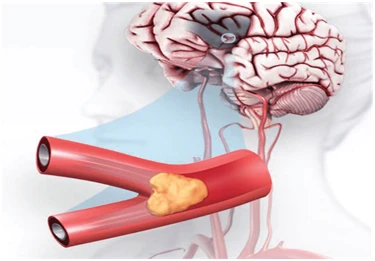
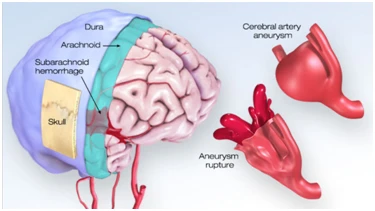
Stroke can be caused either by a clot obstructing the flow of blood to the brain (called an ischemic stroke) or by a blood vessel rupturing and preventing blood flow to the brain (called a hemorrhagic stroke). A TIA (transient ischemic attack), or "mini stroke", is caused by a temporary clot.
1. Ischemic stroke
2. Hemorrhagic stroke
How will you identify stroke?
We can identify stroke by the following Acronym, BE-FAST
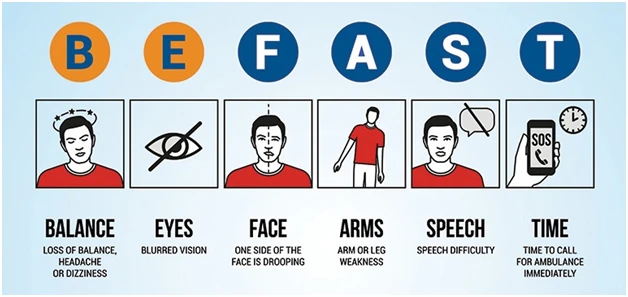
If you identify any of these symptoms in anyone that has developed suddenly, in previously normal person, immediately contact hospital or visit the nearest hospital where CT scan or MRI is available.
Why is it important to identify stroke early?
Time lost equals brain lost. The typical stroke person loses about 2 million neurons (functional unit of brain) per minute in which stroke is left untreated. Once the neuron dies, the function is permanently lost.
What is it important to do immediate CT scan or MRI brain in stroke?
Firstly, to differentiate between ischemic and hemorrhagic stroke. Secondly, in confirmed ischemic stroke, if the person with stroke is within window period, the blocked vessel can be opened either by medication (Thrombolysis) or endovascular surgery (Thrombectomy).
What is “Window period” in Stroke?
In ischemic stroke, Window period is the time period, within which, if identified and treated early, there is a chance that the stroke can be reversed.
For medication treatment (Thrombolysis), Window period is within 4.5 hours
For Surgical treatment (Thrombectomy), Window period is within 6 hours
This means that, if a person with stroke reaches hospital after the window period, thrombolysis and thrombectomy cannot be done.
Who are the risk factors for stroke?
Modifiable risk factors – That we can change/modify
• Hypertension
• Dyslipidemia- abnormal cholesterol
• Diabetes mellitus
• Smoking
• Physical inactivity
Unmodifiable risk factors – That we cannot change/modify
• Older age, particularly age >80 years
• Race and ethnicity, with risk higher for Black than for White patients
• Sex, with risk higher at most ages for men compared with women, except for ages 35 to 44 years and >85 years, where women have a similar or higher risk than men
• Family history and genetic disorders, with a higher risk for monozygotic twins and those with genetic disorders
Learning points:
1. Stroke remains one of the most common cause of mortality and morbidity in our state, nation and world.
2. Early recognition of symptoms (BE-FAST, cited above), and immediate hospitalization for prompt treatment can drastically decrease the morbidity and mortality.
3. Be aware of the “Window period” for ischemic stroke.
4. Visiting local quacks or Prayer center during the window/crucial period is a common practice leading to delay in reaching the hospital. If the window period is missed in ischemic stroke, the disability might not be reversed immediately.
5. Regular monitoring of BP, sugar and cholesterol and avoiding sedentary lifestyle, regular exercise, restricting salt intake and maintaining healthy lifestyle can largely prevent stroke.
6. Regular awareness programme regarding stroke should be encouraged in school, community and Church.