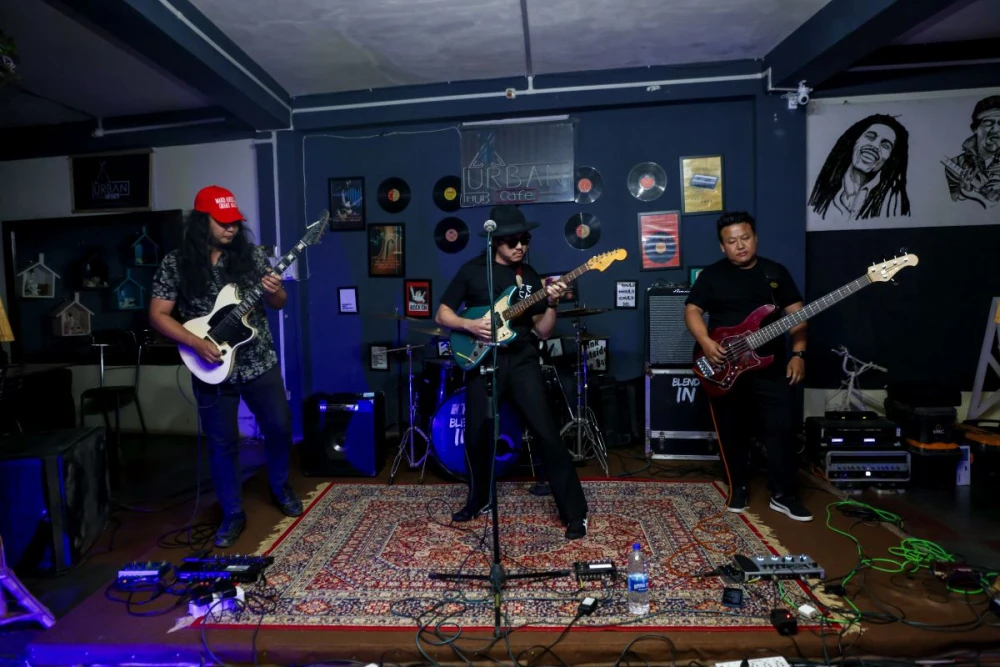
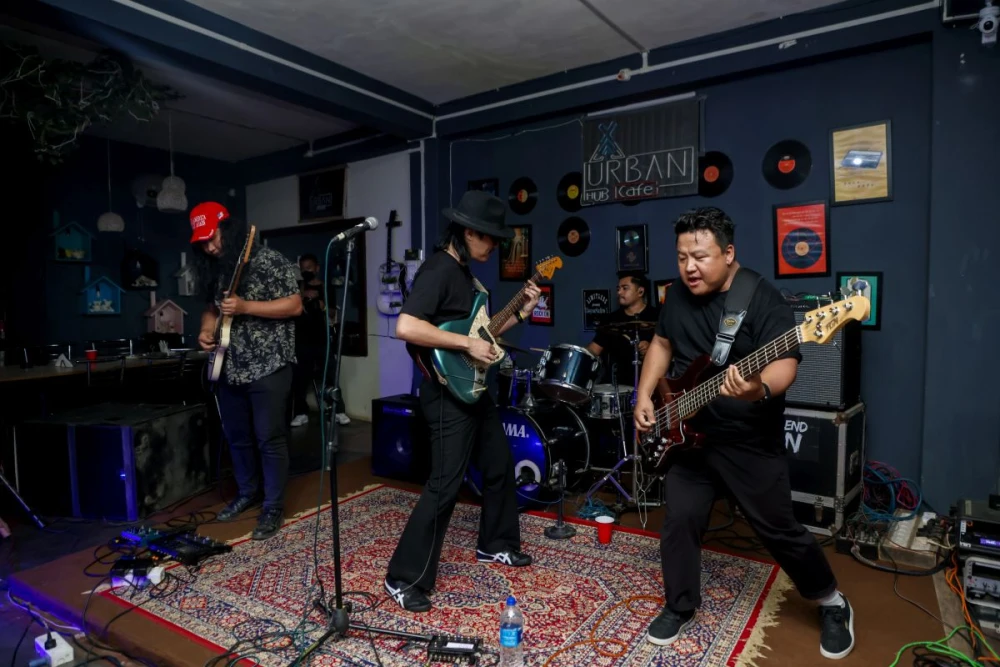
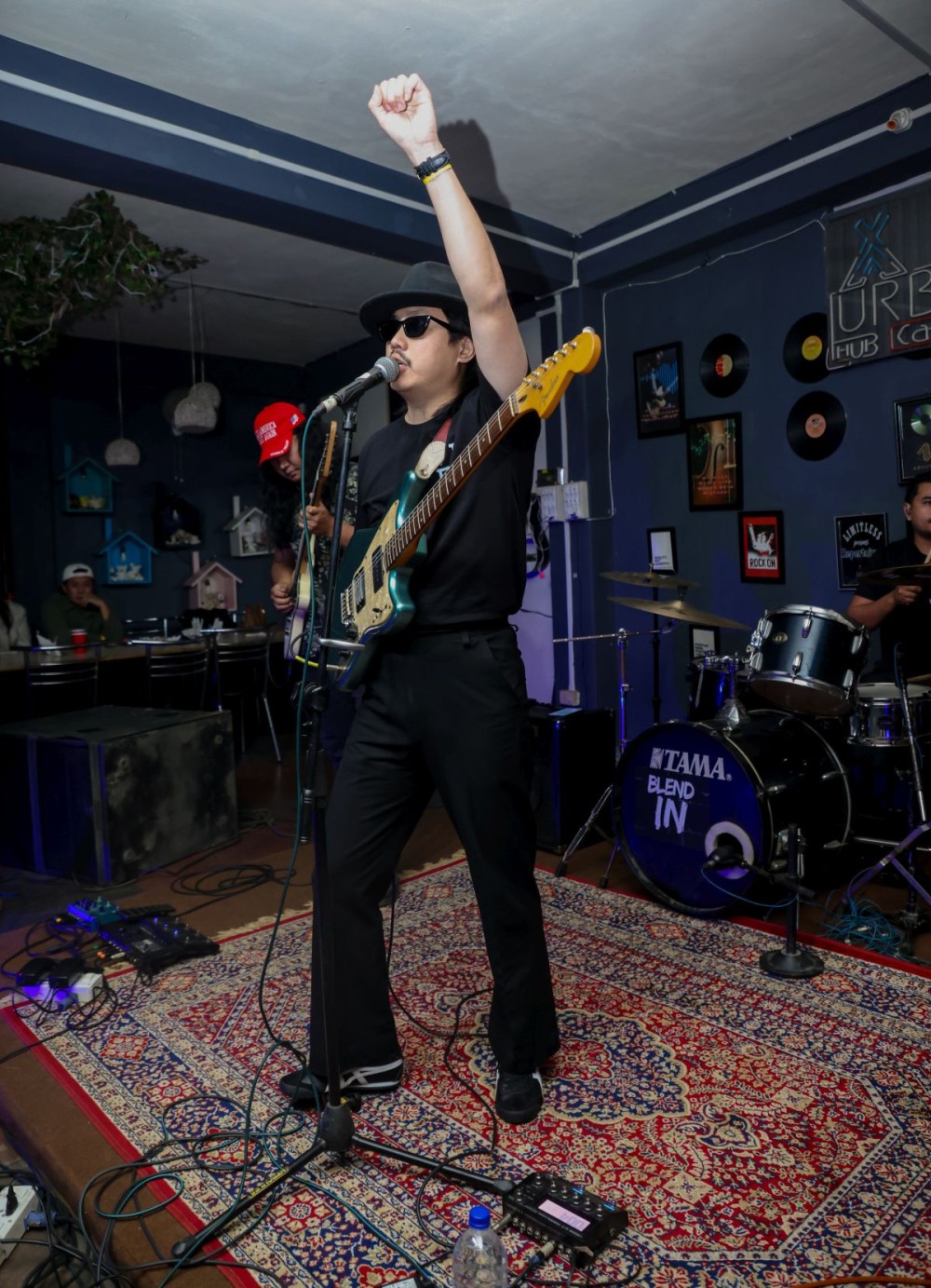
The Electric Cool Kid performed at Urban Hub Café, Mokokchung, on February 27 as part of their ongoing Northeast tour.
The Electric Cool Kid on music, identity and survival in Nagaland’s evolving scene
Morung Express News
Mokokchung | February 28
At a time when Nagaland’s music scene is expanding beyond local stages into a global digital space, independent rock band The Electric Cool Kid (TECK) believes the future of the industry will depend not just on talent, but on sustainability, community support, and a shift in how music is understood — as both art and profession.
In an interaction with The Morung Express in Mokokchung during their ongoing self-funded Northeast tour, the band — comprising Imliakum Aier (vocals), Augustine (bass), Theja (guitar), and Ezra (drums) — reflected on the transformation of the state’s music ecosystem and the responsibilities artists carry in a rapidly changing landscape.
Frontman Imliakum Aier described the present phase of Nagaland’s music industry as one of transition.
“The music scene in Nagaland is still in a phase of transformation and evolution. We are still discovering where we are heading. At this stage, the scene is still in its infancy.”
From passion to profession
According to Aier, one of the most significant shifts in recent years is the growing understanding that music must be treated as a serious profession rather than merely a passion.
“Most people treat music as a passion, but if this is what you are meant to do, you must treat it like a job,” he said, emphasizing discipline, consistency and industry awareness.
With the rise of social media and digital platforms, artists from the region now have unprecedented access to global audiences. Visibility, however, requires more than talent.
“If you know how to market yourself and understand the industry, the possibilities are endless,” he said, adding that musicians must learn to navigate both creative and commercial realities.
The economics of independence
The band’s current Northeast tour, which includes performances across multiple cities and cultural centres in the region, is entirely self-funded — a decision Aier described as both a financial risk and a deliberate learning process.
“Gone are the days of selling cassettes and CDs. Touring and live performances are how musicians sustain themselves now,” he said.
Acknowledging that earning a living through music remains challenging, Aier maintained that opportunities exist for artists who approach their craft strategically.
“Your art is a product, and you need to know how to present and sell it,” he said, stressing the importance of networking, negotiation and audience engagement.
While institutional support mechanisms have improved over time, he noted that artists themselves must take initiative in building sustainable careers.
“Instead of waiting and complaining that nothing is happening, why don’t we take the first step and do it ourselves?” he said.
Grassroots culture and Mokokchung’s musical legacy
Speaking in Mokokchung, Aier also acknowledged the district’s long-standing influence on Nagaland’s rock music culture, describing it as a place with a rich musical heritage shaped by earlier generations of musicians.
While he observed that the local scene today may not be as vibrant as in previous decades, he pointed to emerging contemporary bands and musicians from the district as signs of continued creative potential. He stressed that strengthening grassroots platforms and community participation remains crucial for sustaining such local music cultures across the state.
“Music in Nagaland is a very small community. We need to be there for each other and lift each other up,” he said.
He further described Naga audiences as discerning and highly critical — a dynamic he believes ultimately strengthens artistic standards.
“If you can make it in Nagaland, you can make it anywhere,” he remarked.
Music, identity and responsibility
Beyond industry realities, Aier underscored the cultural and social dimensions of music, stating that his songwriting is deeply rooted in the socio-economic and political landscape of Nagaland.
“Most of my songs are rooted in the socio-economic and political realities of Nagaland,” he said. “I want to write songs that portray hope.”
For him, artists carry a responsibility that extends beyond entertainment.
“Why can we not be the voices of our generation? Our names may be forgotten, but our songs will remain.”
He added that music has the power to articulate experiences that many may feel but cannot express, giving art a lasting role in shaping collective memory.
An industry still finding its shape
While asked to identify structural gaps requiring urgent attention, Aier said it remains difficult to pinpoint a single deficiency, describing the current moment as formative.
“This is a new generation stepping into a new music landscape,” he said. “If progress continues, the gaps will reveal themselves over time.”
Looking ahead, the band plans to return to the studio following their Northeast tour to work on a full-length album. Aier also revealed that his long-anticipated solo project, which has been on hold for two years, is expected to be released in the coming months.
The broader ambition, he said, is to expand beyond the region.
“The next dream is to tour India, and then maybe tour abroad. We want to start small and grow steadily.”
As Nagaland’s music scene continues to evolve, Aier maintained that its future will depend on sustained effort from artists, audiences and institutions alike — a collective investment in both creativity and credibility.
“We are still at the beginning,” he said.