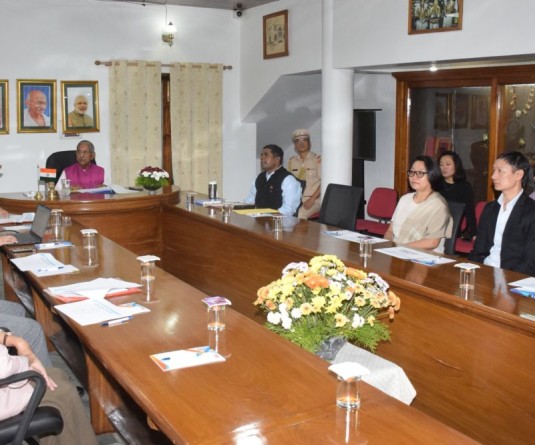
Dimapur, Nov 29 (MExN): With World AIDS Day approaching, a programme was held at IMC Dimapur with Governor of Nagaland Shyamal Datta. The programme was held under the theme “Our progress, our challenge”. Dimapur Deputy Commissioner KN Ngullie who is also the Chairman of Dimapur District AIDS Control Committee, in his keynote address explained the significance of various undertakings and issues related to HIV/AIDS, and the measures to counter it.
Ngullie saidthat “the epidemic has touched individuals and the masses and not just a special particular group.” Program implementation has shown its contribution to prevent AIDS both at the community level and at the environment level, he observed. To have a better understanding of People Living With HIV (PLWAs), to provide proper services for the infected and to ensure that the services are effective and to give awareness through education, were some of the points explained by Ngullie about the undertakings of the committee.
Governor Shyamal Datta, in his speech, said that the occasion was the first time he was being enlightened on the activities of HIV/AIDS-based NGOs. He said that, one should carry on the good work. Datta also urged the people to ‘admire’ and appreciate the work being undertaken by NGOs. Putting himself in their shoes, Datta said that he cannot exert what the organizations have done in the face of constant frustration; he wished that God would bless them for their work for humanity. He said that if “we are infected by HIV then death ends the life but it the stigma attached with it which ends the relationship and the saddest part of human life is that we are not confronted.”
Further, Datta said that “when we look at the profile of HIV there are full lessons and experiences to be had.” Rich countries have not only done well in regard to education but also in treatment related to HIV and that fifty nine percent of HIV/AIDS is in rural areas where there is low growth rate, low income and more poverty and bad infrastructure, he observed. Datta also stressed on the importance of the church playing a more pro-active role and declared that they have important obligations in prevention the disease.