Dipika Das
Dipika Das
You must have read or at least heard the story of The Cap-seller and the Monkeys, where the cap-seller found the monkeys took away all his caps and tricked them into returning the same. But were you aware that there is actually a species of monkey that comes with their natural caps? They are capped langurs (Trachypithecus pileatus), derived their name from the black, cap-like appearance atop their head, which distinguishes them from other primates in the region.
In India, they are found across the states of Assam, Arunachal Pradesh, Manipur, Meghalaya, Mizoram, Nagaland, and Tripura on both the north and south sides of the Brahmaputra River. There are three subspecies of capped langur altogether: T. p. pileatus, T. p. brahma, and T. p. tenebricus.

Capped langurs are social animals. The group usually consists of at least one adult male, two to five adult females, sub-adults, juveniles and infants. They are largely folivorous, but also consume a variety of plant-based foods including fruits, flowers, and shoots. When they are not eating or napping, they spend ample time grooming, hugging, nurturing the fellow capped creatures. They also produce a variety of vocalisations to communicate.
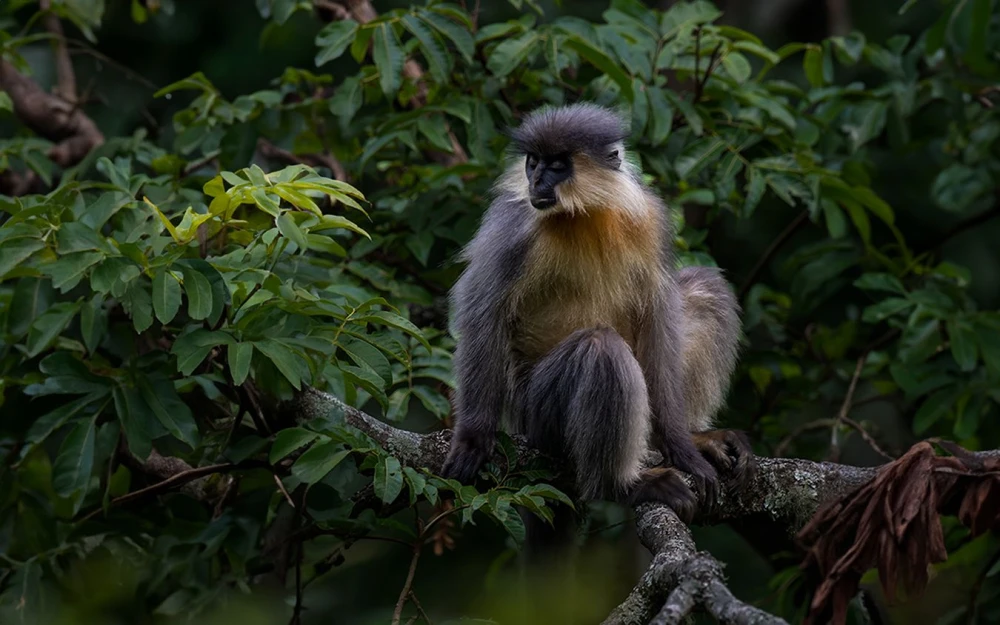
This magnificent species’ population is facing several threats against their survival in the wild. The overexploitation of natural resources by humans is pushing the habitat of these marvellous species to degrade. Logging, slash-and-burn agriculture, encroachment have broken continuous forests into isolated fragments, leaving capped langur groups confined to the few patches that still offer suitable resources. A recent study in Assam found Capped Langurs in 11 surveyed fragments out of 40 in Upper Brahmaputra Valley. Availability of different food trees in the patches was strongly tied to the langurs’ presence. Losing connectivity affects the group dynamics significantly. Isolation does not just meddle with genetic diversity but can also disrupt the group structure. For example, if an adult male gets removed from a smaller group for any reason, the group may have to persist without one for an extended period. Local extinction in the fragments is a great concern for the survival of this species. Another major threat to the species is hunting pressure for the bush meat, fur, ethno medicine and other socio-cultural practices. Accidents are not very uncommon to them either. Electrocution, attack by dogs, falling from the trees are lethal to them.

However, the positive part is that the threats are well-identified, which makes it easier to initiate conservation efforts. Capped langurs are globally classified as ‘Vulnerable’ by IUCN and are legally protected under Indian Wildlife (Protection) Act, 1972 in Schedule I. But legal protection or recognition alone is not enough for the populations’ persistence. A dedicated conservation intervention needs to be implemented immediately. Removing the existing threats is essential. Reforestation, restoration of native plants and habitat, re-establishing the connection would greatly support the meta-population. In severely affected fragments, the population may need support through active translocation. Alongside this, awareness and education are crucial for encouraging community participation and ensuring better conservation outcomes. Lastly, there is an urgent demand for more scientific research focused on understanding the species’ biology and ecology. Despite the challenges, the capped langurs show resilience and adaptability. With effective conservation action, harmonious coexistence between humans and wildlife remains possible and give our future generations the opportunity to continue witness this remarkable primate species thriving in their natural homeland.
Dipika Das is an aspiring ecologist with a strong interest in wildlife and conservation.