Shatilo Kent
Chümoukedima
Today, the 26th of June, we gather not merely to mark a date, but to reaffirm our collective resolve. This is the International Day against Drug Abuse and Illicit Trafficking – a day proclaimed by the United Nations to remind the world that the scourge of drugs is one of the most complex challenges of our time.
But let me be clear: this is not a day of despair. It is a day of celebration – celebration of the lives we have saved, the families we have reunited, and the communities we have strengthened. It is a day to honor the courage of those in recovery, the dedication of healthcare workers, the vigilance of law enforcement agencies, the people committing their day and the night at rehabilitation institutions.
Most of all, it is a day to recommit ourselves to a future free from the grip of addiction and the poison of trafficking.
The Significance of June 26.
Now, let us ask: Why June 26? Why does this date deserve a place on our global calendar?
It was in the year 1987, the United Nations General Assembly made a historic decision. They chose this very day – June the 26th – to declare a united, worldwide war against drug abuse and illicit trafficking. But they did not pick it randomly. This date marks the anniversary of the fall of Lin Zexu in China's fight against opium in the 19th century – a symbolic nod to the fact that the battle against narcotics is not new. It is centuries old. But of Course our resolve must be renewed every single year.
So, what is the true significance of this day?
First, June 26 envelopes every nation – rich or poor, developed or developing – to look in the mirror and ask: How are we doing? It strips away the illusion that drug abuse is "someone else's problem." It reminds us that no country is immune. Whether it is opioids in North America, synthetic drugs in Southeast Asia, or heroin transit routes through our own NorthEast regions – this day the 26th of June says: We are all in this together.
Second, it is a Day of Remembrance.
Behind every statistic on this day is a human face. The teenager who overdosed. The mother who lost her son to addiction. The farmer in a poppy field who has no other way to feed his children. The police officer who gave their life in a raid against cartels. June 26 compels us to pause and honor those we have lost – and those who have sacrificed everything to save others.
Third, it is a Reckoning with Trafficking.
Illicit trafficking is not a shadowy, distant crime. It is a multi-billion-dollar industry – larger than the GDP of so many nations. It fuels corruption, destabilizes governments, and finances terrorism. When we observe this day, we are saying: We see you. We will not turn a blind eye while criminals profit from human misery. It is a day to strengthen cross-border cooperation, intelligence sharing, and legal frameworks.
Fourth, and the Most Important... it is a Day of Hope.
Because while the statistics are grim, the stories of recovery is powerful. June 26 celebrates the addict who became a counselor. The dropout who became a graduate. The broken family that healed. It reminds us that addiction is not a life sentence – it is a detour, and there is always a road back.
Now that we understand the significance of this day, we must ask: What is our response? I believe it rests on two powerful pillars. The Twofold Response – Prevention and Solidarity,
Firstly: Prevention
Prevention is not a slogan we hang on a wall. It is our first and most powerful line of defense. But let us be honest – telling a young person "just say no" is not enough. That approach has failed us. Prevention means we must ask a deeper question: Why does someone turn to drugs in the first place?
Often, it is to numb pain. To escape academic pressure. To fill a void left by loneliness, trauma, or a broken home. Sometimes, it is out of sheer curiosity that spirals into dependency. So, true prevention means addressing these root causes. It means building mental health counselors in every school. It means teaching emotional resilience – how to handle failure, rejection, and anxiety – alongside mathematics and science or other subjects of importance. It means creating safe, judgment-free spaces where our youths can speak their fears aloud.
Furthermore, prevention demands education with empathy. We must give young people the unvarnished truth – not exaggerated scare tactics, but the real, ugly reality of what addiction does. It steals your health, your relationships, your savings, and eventually, your dignity. When we arm our children with facts and self-worth, we make it infinitely harder for drug peddlers to find their targets.
Because a person who loves themselves, and who has a future they are genuinely excited about, will never trade that future for a fleeting high.
Secondly: Solidarity
Now, let us turn to the harder, grittier side of this fight. Illicit trafficking is not a distant problem happening in some far-off jungle or border post. It is a sophisticated criminal network that operates in our cities, across our digital platforms, and increasingly, inside our own neighborhoods. It exploits the most vulnerable amongst us... the desperate migrant, the impoverished labourer/farmer, and the teenager manipulated into becoming a courier for easy money.
Standing in solidarity means we refuse to look away. It means we support our police and border agencies, but also demand they act with justice – targeting the kingpins, not the addicts. It means we advocate for stronger international, national and regional cooperation, because drugs do not respect borders, and neither should our response.
But solidarity also means rehabilitation over punishment. Every person struggling with addiction is someone's child, someone's parent, someone's lifelong friend. When we treat addiction as a health issue – not a moral failing or a crime – we break the cycle of shame. We offer a ladder back into society. And when we reintegrate them as healthy, productive citizens, we weaken the traffickers' business model from the bottom up. We dry up their customer base not through fear, but through healing.
These two pillars – Prevention and Solidarity – are not separate. They are two hands clapping together. One reaches inward to protect our own. The other reaches outward to dismantle systems of exploitation and Together, they form a complete, unstoppable response.
So, today, I ask you to do more than just acknowledge the problem. I ask you to act.
• If you are a parent, talk to your children – not just once, but regularly. Talk about the beauty of a clear mind, the joy of natural highs, and the danger of synthetic escapes.
• If you are a teacher or mentor, look beyond the grades. Notice the quiet student who seems withdrawn. Ask them how they are really doing.
• If you are a young person, be a leader among your peers. Be the friend who says, "I care about you too much to let you destroy yourself."
• If you are a policymaker or a law enforcer, invest in treatment centers as much as you invest in police stations and jails.
• And if you are simply a citizen, fight the stigma. Speak kindly of those in recovery. Welcome them back. Because every recovered life is a victory over the traffickers.
Let me leave you with this thought.
A Vision of Hope
The war on drugs is not won in a single day. It is not won by governments alone. It is not won by arrests or seizures alone, though those matter. It is won in our homes, our classrooms, our clinics, and in our hearts. It is won every time a child chooses to say "no." It is won every time an addict chooses to say "help me." It is won every time a community chooses to say "we will not let you fall."
The real significance of this day is not in grand speeches or official ceremonies. It is in the quiet, personal decision each of us makes. The parent who starts an honest conversation. The student who walks away from peer pressure. The community that opens a rehabilitation center instead of a prison. June 26 matters because we make it matter.
On this 26th of June, let us celebrate not where we are, but where we are going. Let us choose health over numbness. Let us choose connection over isolation. Let us choose courage over silence.
And let us protect one another – not just today, but every single day.
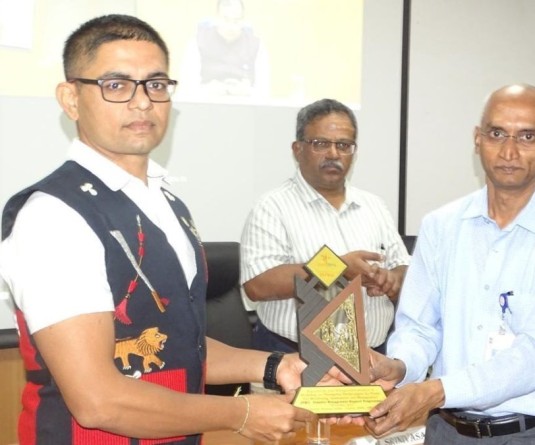
This speech was delivered by Shatilo Kent, Former General Secretary, Rengma Hoho on the occasion of the International Day against Drug Abuse and Illicit Trafficking , organized by Peace haven Foundation and CDUN, Chümoukedima