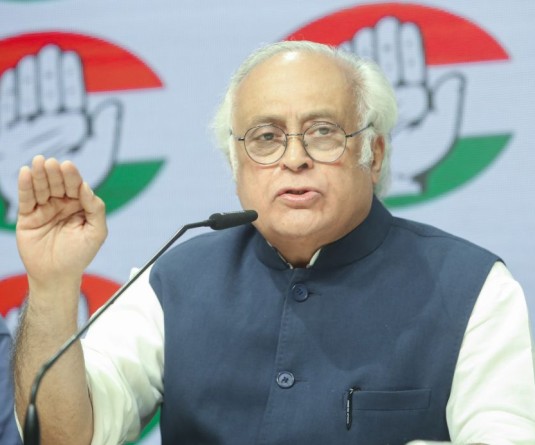
All you need to know about the FCRA Act (Photo: IANS)

New Delhi, July 22 (IANS): The rapid expansion of global financial networks, digital transactions and transnational funding mechanisms has created new governance challenges relating to financial transparency, foreign influence and protection of democratic institutions.
Consequently, regulation of foreign financial flows has emerged as an accepted feature of modern governance in many democracies, according to an official statement issued on Wednesday.
"The Foreign Contribution (Regulation) Act (FCRA) should therefore be understood within this wider international context. Rather than restricting legitimate charitable activities, the Act provides a legal framework that enables genuine international cooperation while ensuring that foreign contributions are received, utilised and accounted for in accordance with Indian law," the statement noted.
The FCRA is the law that governs how Indian individuals, associations, NGOs, trusts and companies may receive and use money, securities or articles sent to them from a source outside India. It is administered by the Ministry of Home Affairs (MHA).
In plain terms, FCRA does three things: It identifies who may accept foreign contributions, and on what conditions. It specifies how that money must be received, accounted for, and reported. And thirdly it restricts a narrow, defined set of foreign-funded activities that could affect India's sovereignty, security or public order.
"What FCRA does not do is forbid Indians from receiving foreign donations or shut down law abiding civil society. Tens of thousands of associations remain validly registered and routinely receive foreign funds for health, education, disaster relief, research and humanitarian work. The law is best understood the way the United States, the United Kingdom, Australia and Canada describe their own equivalent statutes: a registration and disclosure regime for foreign-directed activity -- not a permission-to-exist regime for civil society," the statement said.
"The FCRA is built on a clear and consistent set of principles that have remained unchanged across every amendment since 1976. India's framework for regulating foreign contributions has been continuously refined over five decades by successive governments. Each reform has moved in the same direction: greater disclosure, stronger accountability, and improved governance," the statement added.
"India enacted the first Foreign Contribution (Regulation) Act in 1976 to regulate the acceptance and utilisation of foreign contributions. As international engagement expanded and cross-border financial flows became more complex, Parliament enacted the Foreign Contribution (Regulation) Act, 2010, replacing the earlier legislation with a modern regulatory framework. Since then, the framework has been strengthened through amendments in 2016, 2018 and 2020, while the proposed Foreign Contribution (Regulation) Amendment Bill, 2026, and the notified FCRA (Amendment) Rules, 2026, seek to further improve transparency, governance and regulatory clarity," the statement said.