Operation Sindoor is An Example for Emulation for the World
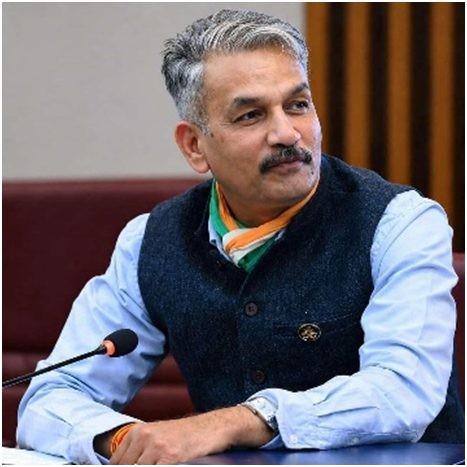
Lieutenant General Devendra Pratap Pandey (Retd.)
The American, Israeli and Russian experiments in warfighting with shifting politico military end states have shown that 21st century wars and conflicts have often drifted into protracted and ambiguous campaigns. The consequences are disastrous for the region and also the initiator that loses the first mover advantage eventually. The Taliban, Iraq, Ukraine, Gaza and now Iran conflict should illustrate that the purpose of military action is not to perpetuate pressure indefinitely. It is to deliver a decisive strategic outcome and then disengage on favourable terms decided by the more powerful military force.
India’s response in Operation Sindoor offers a compelling alternative for internalising by the military powers of the world, particularly the United States of America whose President has claimed misplaced glory for a ceasefire umpteen number of times but could not achieve ceasefire with Iran even after delivering heavy military and economic destruction. Operation Sindoor exemplifies calibrated force application with clearly defined objectives, and disciplined restraint once those objectives are achieved.
Operation Sindoor was launched after a brutal provocation by the Pakistan’s entrenched security establishment in which the terrorists operating under instructions carried out religion-based brutal killings of only male members in front of their family members, wives, children and parents. What followed was not emotional escalation or open-ended retaliation. A structured escalation ladder was rolled out. Each rung deliberate but swift, punishing and damaging calibrated to destroy different target sets. This was signalling both capability and intent and yet a distinct space for de-escalation was maintained. This was not weakness but it was control. Not emotion but ruthlessness that comes from confidence and faith in the “jus ad bellum” and the capabilities.
The most defining feature of Indian approach was the clarity of the politico military objective. The aim was to impose immediate, tangible costs on the infrastructure and actors responsible for cross-border terrorism, and to reestablish deterrence. All within the ambit of the nuclear umbrella and international laws. Once these goals were met through rapid degradation of key assets and the psychological shock delivered to Pakistan’s military leadership, the escalation was halted by India.
Within 88 hours, the Indian Armed Forces delivered the mission objectives to the political establishment that had passed clear and unambiguous directions. Pakistani military establishment that presumed that it could provoke without consequence, sought a ceasefire. They simply kneeled and keeled over with their political leaders clearing scared on the live media and the military commanders in hiding.
This moment was critical. It underscored a structural reality. While Pakistan’s strategic doctrine has long revolved around “bleeding India through a thousand cuts,” it lacks the capacity to withstand a short, sharp, high-intensity response that directly targets its core levers of power. Its dependence on perpetual hostility toward India is not merely ideological but is institutional. The Pakistani military’s dominance over the state is sustained by this very conflict paradigm.
The Indian strategic community understood that expecting Pakistan to fundamentally alter its strategic orientation is unrealistic because the hostility is not incidental but existential. Therefore, Indian response did not attempt to “solve” Pakistan but instead, it imposed immediate costs and restored deterrence without becoming trapped in a cycle of endless escalation. This distinction is crucial. As the Pakistani military’s dominance over the state is sustained by the very conflict paradigm premised on existential threat and religious identity, the strategic maturity was not to change the ideological moorings which is often an impossible task, but in shaping its behaviour through credible, limited, and repeatable actions.
For American planners, this offers a stark contrast to recent military engagements. The United States has repeatedly demonstrated overwhelming military superiority but struggled to translate tactical dominance into concise strategic outcomes. Campaigns, if not controlled, always expand in scope, blur in purpose, and extend far beyond their initial objectives resulting in strategic fatigue, resource drain, and, in some cases, diminished credibility. The same has happened to the US in the instant Iran war. Not new but a repeat of Iraq, Afghanistan and other wars or conflicts US was drawn into.
Consider the hypothetical application of the Operation Sindoor template to the ongoing Iran war as instructive illustration. The focused campaign of targeting nuclear infrastructure, ballistic missile capabilities, and key regime leadership nodes had already been achieved within weeks and defined the strategic success. The decisive blow, clearly communicated and effectively executed, had already degraded Iran’s capacity for escalation. Followed by a declaration of mission accomplishment and a transition to diplomatic and economic engagement, rather than an open-ended military presence, would have achieved the politico military goals. This view was articulated by the author in an Issue Brief 496 published in CLAWS, an Indian think tank, in Mar 2026.
Iran also was looking for a way out very early on but the American goal posts shifted to complete annihilation or subjugation. The alternative was pursued. A prolonged operations aimed at reshaping the entire political landscape that has created second- and third-order consequences that is ultimately damaging the American interests and prestige. Extended military campaigns invite asymmetric retaliation, drain domestic support, and create geopolitical vacuums that are difficult to manage. Iran has followed through in all these measures successfully. Beaten, destroyed and devastated but yet has emerged resilient and victorious. In contrast, a short, sharp intervention anchored in clear objectives would have achieved the desired outcomes and yet preserved strategic flexibility.
Indian approach highlights the importance of escalation control as the modern warfare is not only about the application of force, but about managing perception of both the adversary and the international community. By calibrating its response, India demonstrated resolve without recklessness. It signalled that while it is willing to act decisively, it is equally committed to preventing uncontrolled conflict spirals.
While many armchair commentators wanted continued escalation, Indian leadership did not linger in a posture of confrontation. Instead, it pivoted back to its broader national priorities, particularly its long-term development trajectory. Under the leadership of Narendra Modi, the country has articulated an ambitious vision for 2047, marking the centenary of its independence. Economic growth, technological advancement, and global integration remain central to this mission. The country moved on after the pause button on Operation Sindoor, promising Pakistani military establishment a ruthless revisit if it dares another misstep, towards the long-term goals. By accepting the ceasefire offer and pause, and thus avoiding prolonged conflict, India preserved the bandwidth of economic, political, and social development focus that was mandatory to pursue its long-term goals. In contrast, nations that remain locked in extended military engagements often find their domestic agendas sidelined, their resources diverted, and their global standing complicated by the optics of continuous warfare.
Operation Sindoor is not just a case study in military effectiveness but a lesson in statecraft. It is instructive as to how force can be used as a precise instrument of policy rather than a blunt tool of attrition. It demonstrates that restraint, when paired with capability, enhances credibility rather than diminishing it. And it reinforces the idea that ending a military operation at the right moment is as important as initiating it.
For the international community, the takeaway is clear. In a world of complex, often intractable conflicts, success is not defined by the duration of engagement but by the alignment between objectives and outcomes. India’s measured but effective response shows that it is possible to deliver a decisive punch, compel adversarial recalibration, and then step back on one’s own terms.
Entire structure of Operation Sindoor was not just good strategy but application ofsmart power in its most disciplined form.
The author, Lieutenant General Devendra Pratap Pandey, PVSM, UYSM, AVSM, VSM (Retd.), with more than four decades of service has seven operational tenures in Kashmir, besides Siachen and multiple ones opposite Chinese. He commanded the challenging 15 Corps in Srinagar and was Commandant of the world renowned Army War College. With double Master’s Degree, including from National War College, Washington DC, he is an M Phil in Defence and Strategic Strategy, has authored a book “Reflections on Strategy”, nearly 50 papers and articles in think tanks and other platforms. He has been subject of more than 200 podcast and also the subject of a book “Soldiering with Passion” by Col Ajay Raina. Appears as national security analyst, and gives talks on strategy, geo politics and leadership in various platforms. Followed by youth he has significant following on social media platforms.