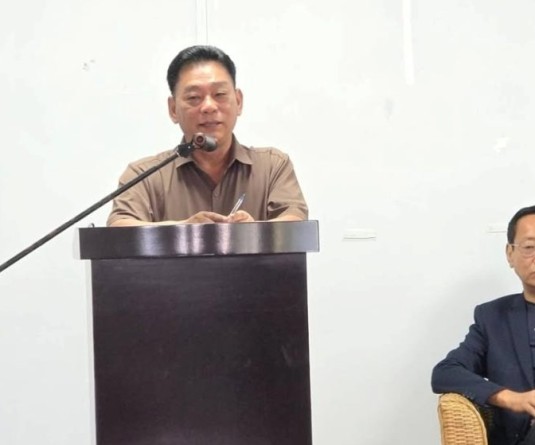
Dimapur, June 9 (MExN): The court holding back the Nagaland Public Service Commission results was the outcome of the Nagaland government arbitrarily muddling the Backward Quota to increase a certain section only to strip other Backward groups of benefit but also reduced their status, the Chakhesang Public Organization reminded today. The CPO issued a statement today responding to the concern raised in the Media over the delay in the declaration of NPSC results. Currently, the NPSC results have been held back by the high court.
The current situation ahs certainly affected all (NPSC) candidates including those from the Chakhesang community, the CPO said. But the organization reminded that the Government of Nagaland had in the most arbitrary manner tried to reduce the reservation benefit of the Chakhesang tribe by categorizing them as “less backward” without even going through the fundamental process of review. Earlier, the state government had conceded a huge 25% of 33% in service reservation to certain Naga sections. “The fundamental right for adequate reservation been illegally disturbed, the present PIL is filed to protect our rights,” the CPO stated.
“We have no objection to the increase in reservation quota provided to a section of the BTs and in fact, they deserve even more. The matter in question here is re-grouping of a homogenous group which is bad in law and deserves the attention of the Court for necessary rectification. We are simply seeking for a clear definition to our status and our legitimate rights provided by law.”
The CPO sought the intervention of Gauhati High Court after public representations and protest failed to yield any positive result to address the Chakhesang community’s grievance. The government’s notification of July 23, 2008 abruptly reduced the percentage of the backward tribe job reservation of the three backward tribes. The decision left the Chakhesang tribe into an undefined status besides stripping the community of all the benefits provided to BTs and backward regions in the state of Nagaland. The benefits include Backward Region Grant fund (BRGF), Border Area fund and various backward-alleviation packages provided through the DUDA.
The CPO’s Public Interest Litigation on February 20, 2010 challenged the report of the Committee on Reservation for Backward Tribes as well as the notification of July, 2008 issued by the Government of Nagaland. “…the Government had in the most arbitrary manner tried to reduce the reservation benefit enjoyed by the Chakhesang tribe by categorizing them as less backward without going through the fundamental process of review. The fundamental right for adequate reservation been illegally disturbed, the present PIL is filed to protect our rights,” the CPO said.
It was informed that whenever the matter was listed, the Government of Nagaland who was required to respond shied away or from producing records. “Altogether 3 to 4 times the government council had taken adjournment in the matter dragging the case thus far. Reducing reservation is an action of the state government and we have only raised our legitimate objection to the action. The Court acknowledges our grievances and put a stay order. Now it is for the state to come up with their response and till the same is not done the matter remain standstill,” the Chakhesang apex said.
On June 3, 2010, the Nagaland government even went so far as to file appeal for vacation of the stay order instead of responding. “The same is purely diversionary tactics to further delay the matter at the expense of the eagerly awaiting candidates in the NPSC recruitment process. The matter is now in the hearing stage and what is required by the court is the Government detail affidavit on the issue raised in PIL. Since the same has not come before the court, the honorable Court has no other option but to adjourn the case beyond 17th June, 2010,” the CPO said.
The CPO regrets that the delay and latches of the government have caused much difficulty to job-seekers in Nagaland. “CPO asserts that justice delay is justice denial and speedy justice depends on the sagacious wisdom of the State Government to enable the honorable Court of law to proceed and dispense justice for all who deserve,” the organization added.