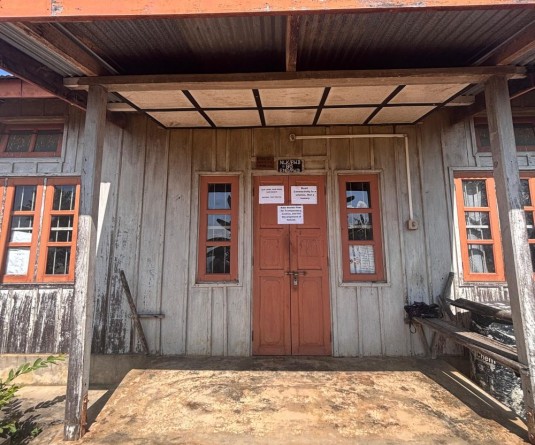
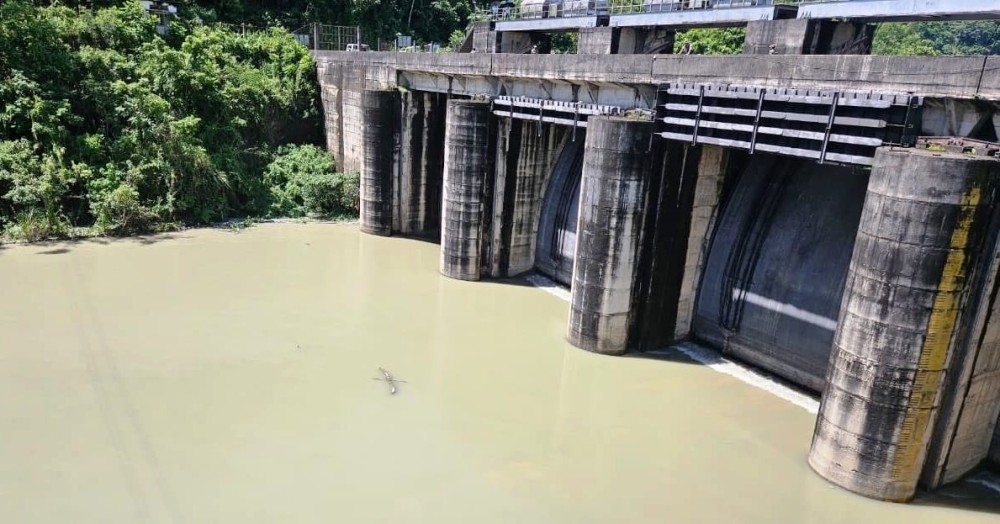
The Doyang Hydro-Electric Plant (DHEP) in Wokha district.
Wokha, August 8 (MExN): The Land Owners’ Union of the Doyang Hydro-Electric Plant (DHEP), Wokha has submitted a representation to the Chief Minister of Nagaland, highlighting multiple unresolved grievances stemming from the 1984 land acquisition and the subsequent operation of the 75 MW project.
In the representation signed by President P Roland Ezung and General Secretary Sorenthung Patton, the union has called for immediate necessary action, asserting that interconnected failures over the last two decades have denied developmental justice to the 17 land-affected villages.
The core of the dispute lies in the alleged violation of the Tripartite Agreement signed in the early 1980s among the landowners, the state government, and the North Eastern Electric Power Corporation Limited (NEEPCO). The union contended that the transfer of NEEPCO’s 100% stake to the National Thermal Power Corporation Limited (NTPC) in March 2020 for Rs 4,000 crore was executed “without the knowledge and consent of Government of Nagaland and the stakeholders of Doyang Hydro-Electric Plant,” directly violating the original terms of the agreement. The landowners stressed that they parted with 8,420.41 acres of land on February 28, 1984, specifically for a Government of India enterprise, and not for any other corporation or private agency. The Doyang Hydro-Electric Plant was commissioned in 2000 and dedicated to the nation on March 2, 2002, after NEEPCO’s 44-year presence in the state.
Unresolved Reservoir water level conflict
A persistent and foundational conflict exists concerning the reservoir's operational water level. According to the union, the project from the day of commissioning has seen much water flow over the issue of water accumulation, with the reservoir level ending at 324 meters above sea level. However, NEEPCO has reportedly claimed that land compensation paid through the government is for 340 meters. The union stated that several correspondences between the state government, NEEPCO, and the landowners have entailed no tangible result till date. This ongoing discrepancy has cultivated a deep-seated mistrust and serves as a primary source of continuous friction, contributing directly to unsafe water conditions that pose a direct and recurring threat to the lives and property of the communities.
Employment and Economic justice
The representation also alleged a systematic disregard for the clause explicitly guaranteeing preferential employment rights to the families of the land-affected communities, particularly pertaining to Grade-D and contractual positions. The union noted that this was established as a crucial compensatory mechanism for the irreversible loss of the community’s agricultural lands and traditional livelihoods. Regrettably, despite vacancies, qualified candidates from land-owning families are consistently overlooked for Grade-D and contractual posts, which the union described as a profound breach of trust and an ongoing breach of the original agreement's essential terms.
Furthermore, the union has appealed to the state government to prioritize the recruitment of qualified engineers (Civil, Mechanical, and Electrical) from the 17 affected villages. They pointed out that the Doyang Hydro Power Station, under Wokha district, is the only running and largest power project in Nagaland, yet NEEPCO and the state government have been unable to create job opportunities for qualified engineers from the local communities.
Demand for LADF from 12% free energy
Highlighting the project's status as a Central Sector Power Project (75 MW – 3x25 MW), the union noted that the state receives 12% of the power generated as free energy, which has made a significant contribution to the power sector and the economy for several decades. Arguing that local communities who sacrificed their ancestral lands and continue to bear the environmental and social impacts have not received adequate developmental benefits, the union has humbly requested the government to earmark a reasonable 4% or 2% of the revenue received from this 12% free power entitlement as a Local Area Development Fund (LADF), exclusively for the development and welfare of the project-affected families and surrounding local areas in Wokha.
The union emphasised that these are not isolated problems but interconnected facets of a single, overarching failure to deliver the developmental justice promised to the people of Doyang. They appealed to the Chief Minister for decisive intervention, stating that the communities have waited patiently for over two decades for these grievances to be addressed and trust in his wisdom and authority to secure a future of justice, partnership, and genuine prosperity.