

1. Introduction
Rice is the principal staple crop of Nagaland and a primary source of livelihood for rural households. However, productivity in many areas remains below the national average due to traditional cultivation practices, low-yielding local varieties, soil acidity, and erratic rainfall distribution. The national average is ≈ 2.7 t/ha whereas it is ≈ 1.7–2.3 t/ha for Nagaland. To address these constraints, KVK Dimapur, ICAR Nagaland Centre, implemented scientific interventions to improve paddy productivity at the farmer’s field level.
2. Profile of the Beneficiary
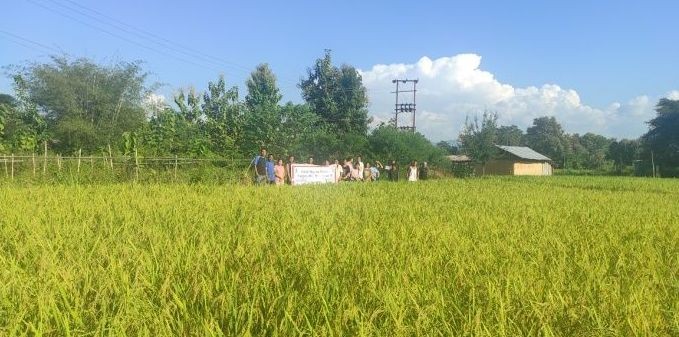
The beneficiary farmer, Shri Cizoto Lohe, is a resident of Diezephe village under Dhansiripar block in Chumukedima district. He possesses a land holding of 0.80 ha under lowland paddy cultivation and has about six years of farming experience. The existing cropping pattern followed by the farmer is Paddy–Fallow.
3. Existing Situation / Problem
Prior to intervention, the farmer cultivated traditional local paddy varieties under conventional broadcasting methods. The major constraints identified were:
• Use of low-yielding local seeds
• Higher use of seed rate (Recommended is 35 - 40kg/ha, he was using 20 kg more)
• High incidence of blast disease
• Low productivity (20 – 22 q/ha)
• Limited awareness of improved crop management practices
The net income from paddy cultivation was insufficient to meet household needs.
4. Technological Intervention
Under the technical guidance of KVK Dimapur, the following improved technologies were introduced:
• Adoption of high-yielding variety RC Maniphou-15 suitable for lowland ecosystems
• Recommended seed rate
• Raising of healthy nursery and transplanting 21–25 days old seedlings
• Line transplanting (20 × 15 cm spacing)
• Integrated Pest and Disease Management (IPDM)
Regular field visits and advisory support were provided throughout the crop season.
5. Outcome and Impact
Particulars | Before Intervention | After Intervention |
Variety | Farmers’ Practice (Ranjit) | RC Maniphou-15 |
Method of Sowing | Broadcasting | Line Transplanting |
Yield | 26.19 q/ha | 30.96 q/ha |
Gross Return | Rs.61920/ha | Rs.52380/ha |
Net Return | Rs.23430/ha | Rs.30220/ha |
6. Key Achievements:
• 18.21% increase in yield
• 29% increase in net income
• Improved grain quality and market preference
• Enhanced knowledge and skill of the farmer
• Spillover effect: 12 neighboring farmers were willing to adopt the technology
7. Economic Impact
The adoption of improved variety and scientific crop management practices significantly enhanced farm profitability. The Benefit–Cost ratio improved from 1.80 to 1.95, making paddy cultivation economically viable.
8. Social Impact
• Strengthened food security of the household
• Increased confidence in scientific farming methods
• Encouraged group formation for quality seed production
• Demonstrated replicable model for lowland rice growers in Chumoukedima district
9. Conclusion
The success of this intervention demonstrates that adoption of improved varieties and scientific crop management practices can substantially enhance paddy productivity and income in the district. With sustained technical guidance and systematic capacity building, such interventions have the potential to substantially strengthen sustainable rice production and enhance farmers’ income in Nagaland, and more broadly across the entire NEH region.
Article contributed by Dr Bendangla Imsong, SMS/CTO (Plant Breeding), Dr Moanaro, Technical Officer, E Lireni Kikon, SMS/ACTO (Plant Protection), Dr Phool Kumari, Senior Scientist cum Head, KVK Dimapur.

