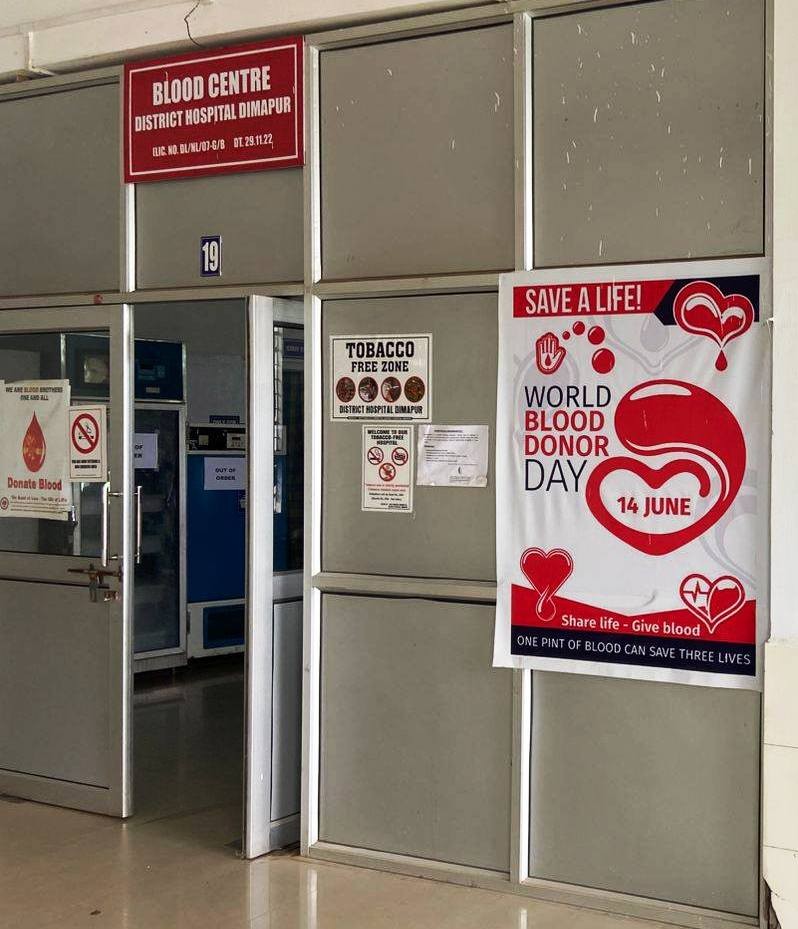
Blood Centre at District Hospital Dimapur. (File Photo)
• Health Dept submits roadmap for expansion of services
• Court closes PIL with directions to State and Centre
Morung Express News
Kohima | June 2
The Gauhati High Court Kohima Bench (GHCKB) has directed the Nagaland Government to ensure that every district in the State has at least one Blood Storage Centre or Blood Bank and to increase the availability of specialists in blood transfusion services.
A Division Bench comprising Justice Devashis Baruah and Justice Yarenjungla Longkumer issued the directions on May 27 while disposing of a Public Interest Litigation (PIL) flagging gaps in blood transfusion services and the absence of blood banks in several districts, particularly in Eastern Nagaland.
The PIL, filed in 2021, contended that the State lacked adequate blood transfusion facilities and that the distribution of blood banks and storage units was inconsistent with the National Blood Policy and National Blood Transfusion Council (NBTC) guidelines, which envisage at least one blood bank in every district.
During the proceedings, the State Government submitted a roadmap for increasing the number of blood transfusion specialists and establishing at least one blood storage centre in every district hospital.
The Court construed the roadmap, submitted through an affidavit filed by the Principal Director, Health & Family Welfare Department on April 1, 2026, as an undertaking by the State Government.
It was also informed that a departmental meeting was held on May 18, 2026 to formulate steps for its implementation and that assistance from the Centre may be required.
Roadmap proposes phased expansion
The roadmap highlighted that expansion of blood transfusion services is constrained by statutory staffing requirements under the Drugs and Cosmetics Act and NACO guidelines, as well as shortages of specialised personnel.
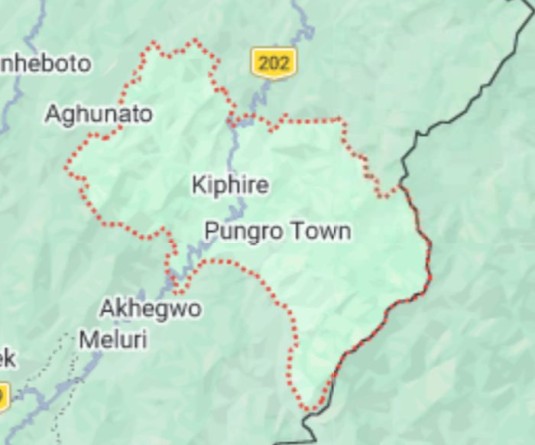
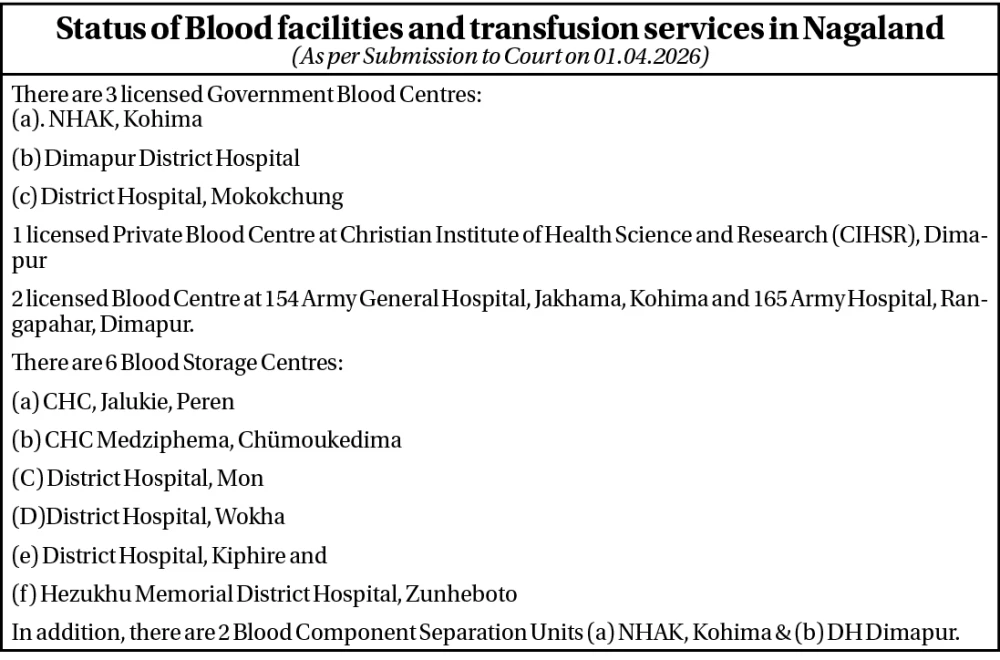
The State informed the Court that, as of April 1, 2026, Nagaland had three licensed government blood centres at NHAK Kohima, District Hospitals Dimapur and Mokokchung; one licensed private blood centre at CIHSR Dimapur; two Army blood centres at Jakhama and Rangapahar; six blood storage centres across Peren, Chümoukedima, Mon, Wokha, Kiphire and Zunheboto; and two blood component separation units at NHAK and District Hospital Dimapur.
Nevertheless, it proposed a phased plan to bridge existing gaps through the establishment of blood storage centres in uncovered district hospitals and First Referral Units, strengthening of existing blood banks and blood component separation units, deployment and training of specialised personnel, and upgrading of infrastructure and equipment.
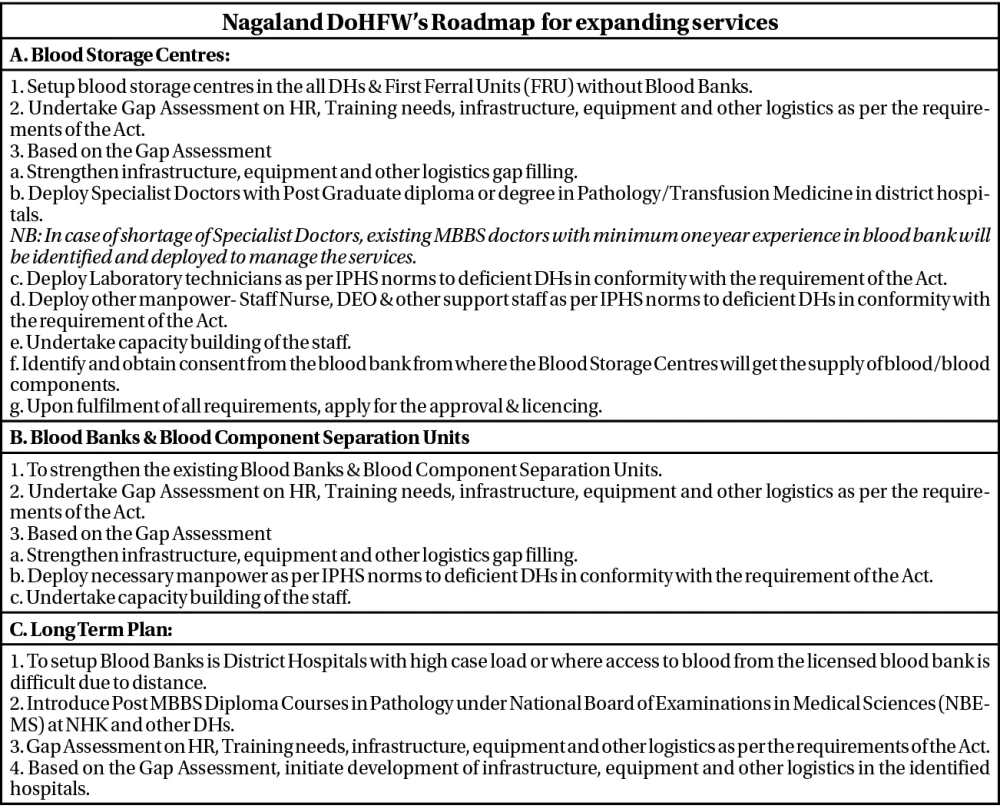
The roadmap also envisages introducing Post-MBBS Diploma courses in Pathology under the National Board of Examinations in Medical Sciences and establishing blood banks in high-caseload districts and areas facing access challenges due to distance.
Access to blood facet of right to life
Noting that blood banks had already been established in Mon, Peren, Kiphire and Tuensang with support from the Government of India, the Court observed that Nagaland still does not have blood banks or blood storage facilities in all its districts despite the PIL having remained pending since 2021.
The Bench held that every citizen is entitled to basic medical amenities as part of the right to life under Article 21 of the Constitution.
“Availability of blood and technicians to administer blood transfusion fall within the category of basic medical facilities,” the Court observed. Referring to a recent Supreme Court judgment recognising trauma care as a facet of the right to life, it further held that access to blood for persons in need is also a facet of that right.
The Court noted that Nagaland's terrain and transportation challenges make timely access to blood particularly critical, observing that delays in obtaining blood or trained personnel could result in loss of life.
While acknowledging that health is a State subject, the Court observed that the Union Government cannot "shy away" from providing financial assistance and technical expertise where resource constraints hinder the creation of essential healthcare infrastructure.
Directives
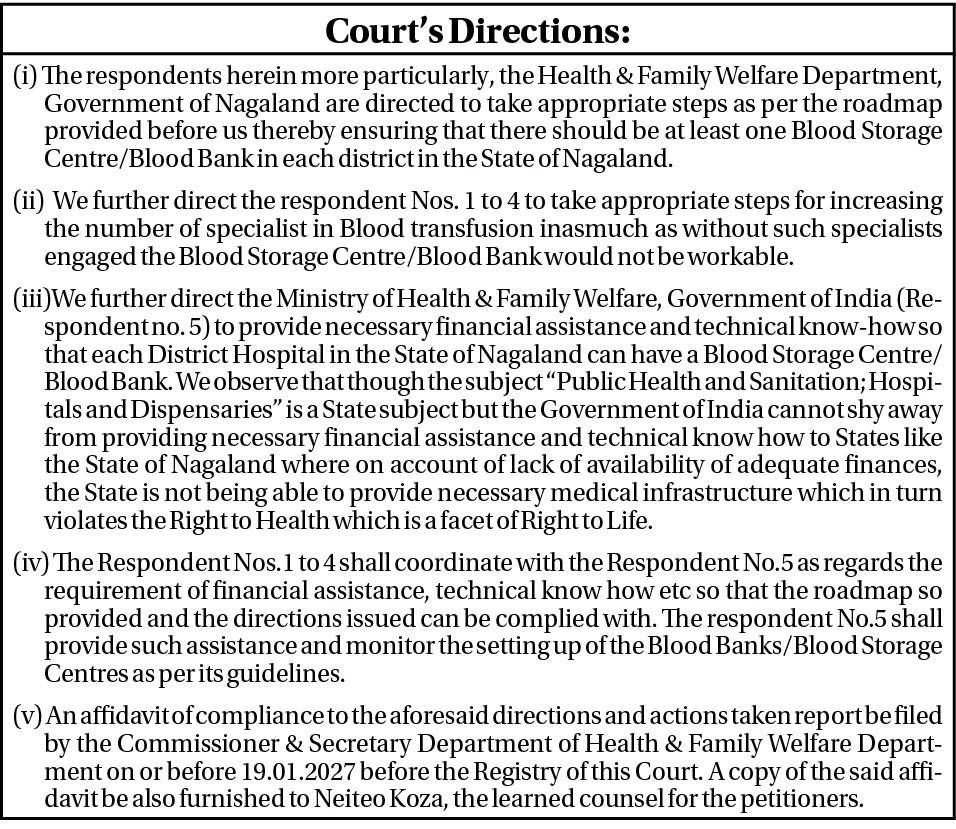
Accordingly, the Court directed the Health & Family Welfare Department to implement the roadmap and ensure the establishment of at least one Blood Storage Centre or Blood Bank in every district.
It also directed the State authorities to increase the number of blood transfusion specialists.
The Ministry of Health & Family Welfare, Government of India, was directed to provide financial assistance and technical support to facilitate the creation of blood storage and blood banking facilities across the State.
The Court further directed the State and Central Governments to coordinate on funding, technical requirements and implementation, while requiring the Centre to monitor the establishment of blood banks and storage centres in accordance with national guidelines.
The Commissioner & Secretary, Health & Family Welfare Department, has been directed to file an affidavit of compliance and an action taken report before the High Court Registry on or before January 19, 2027.
Although the PIL has been closed, the Court clarified that the petitioners or any public-spirited person may approach the Court again after January 2027 if the directions are not implemented.