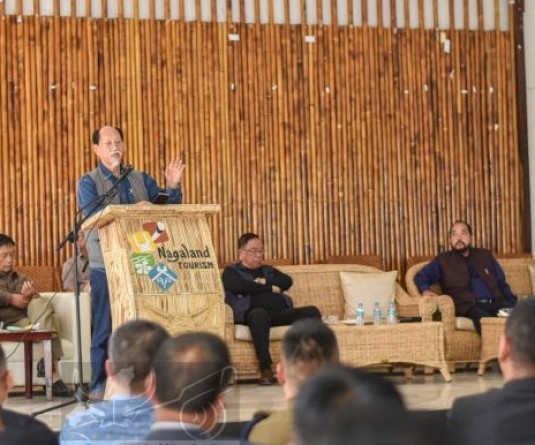
AKMWC has demanded urgent action to fix forensic ‘systemic collapse.’ (File Photo)
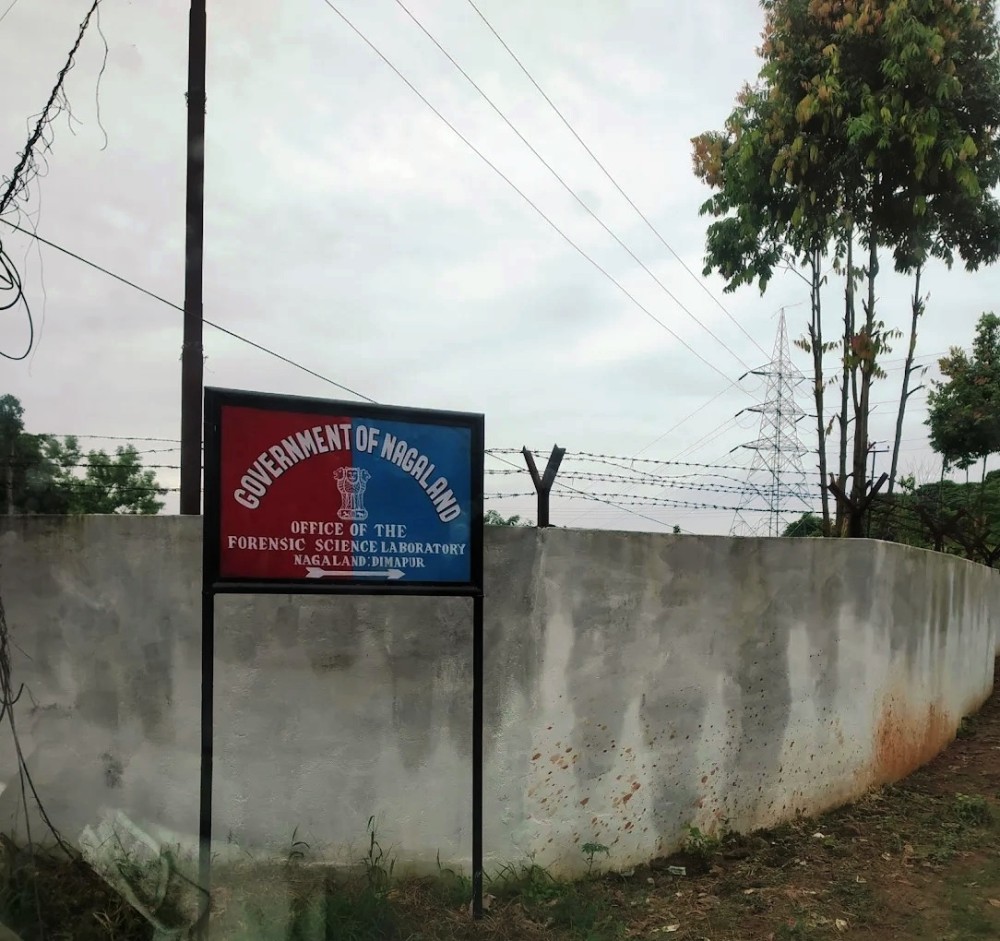
Demands Chief Minister to rectify ‘systemic collapse’
Kohima, January 23 (MExN): The Association of Kohima Municipal Wards Council (AKMWC) on Friday issued an urgent appeal to Nagaland Chief Minister Dr Neiphiu Rio demanding immediate intervention to rectify what it called a “systemic collapse” in the state’s forensic science capabilities.
The council, representing all 19 wards and 44 colonies within the state capital, said the reported breakdown was leading to compromised criminal investigations and a denial of justice.
In its statement, AKMWC President, Thejao Sekhose and General Secretary, Hukato Chishi highlighted that despite repeated representations, public appeals and documented availability of infrastructure, Nagaland’s forensic capabilities and response mechanism remains “indefensibly inadequate.”
The council’s appeal follows a representation dated October 29, 2025, formally addressed to the Home Commissioner, Nagaland, with copies endorsed to the Chief Secretary and the Director General of Police, highlighting the critical gaps in forensic response and capacity. The representation was published in leading local dailies in the interest of public awareness and accountability, it stated.
A systemic collapse
The AKMWC cited two recent high-profile cases in Kohima to exemplify the crisis. On September 24, 2025, a police constable was found dead from a gunshot injury at the Lerie helipad around 6:23 AM. “…yet forensic investigators arrived only late in the afternoon, leaving the crime scene exposed and uncontrolled for several critical hours,” it alleged. Barely a month later, on October 25, 2025, following the brutal murder of a young woman at Old Ministers’ Hill Colony, the incident was reported to police at 7:00 AM, “but forensic personnel had to be mobilised from Dimapur and reached the scene only after 2:00 pm.”
“These were not remote or inaccessible locations but serious crimes occurring within the State capital itself. In both cases, families and the public were subjected to prolonged uncertainty and trauma solely because Kohima lacks any functional forensic unit and the Forensic Science Laboratory at Dimapur remains crippled by chronic staffing failures,” it stated.
The council asserted that such delays in forensic response in two grave deaths “directly undermined the integrity of the investigation, violated basic principles of criminal justice and amounted to a serious human rights violation of the victims and their families, exposing a systemic collapse in the State’s forensic and investigative infrastructure.”
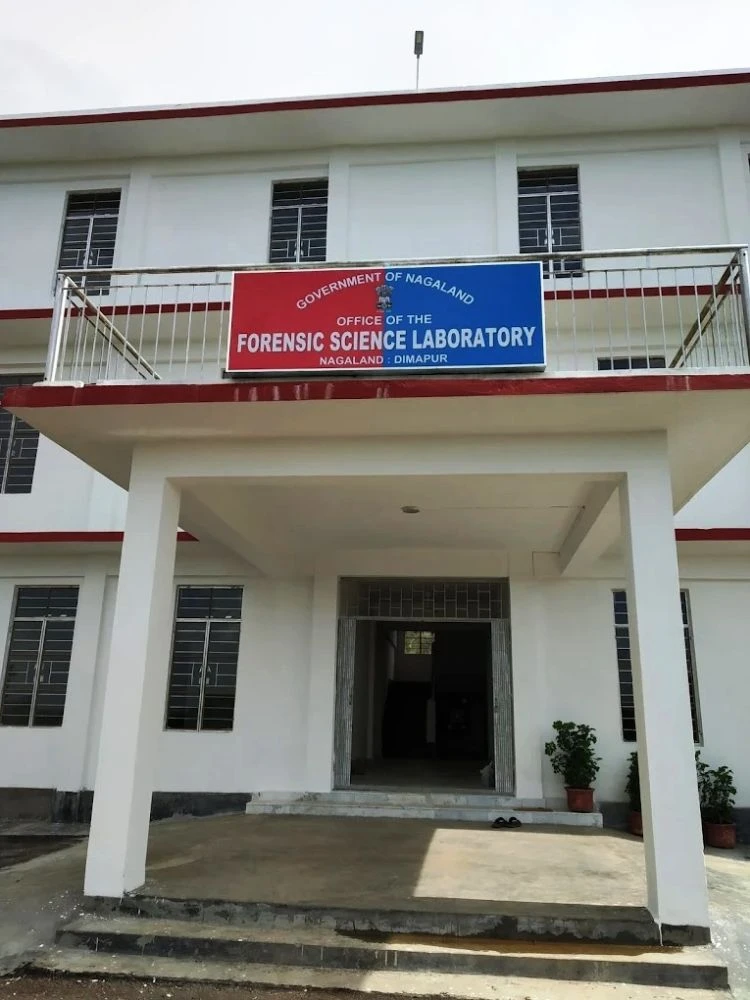
Dimapur forensic lab non-functional
The AKMWC criticised the state of the “upgraded” Forensic Science Laboratory in Dimapur, inaugurated with much-publicity in September 2018. Despite repeated claims of “creating nine scientific posts, not a single regular Scientific Officer or Scientific Assistant has been recruited to this day,” it claimed.
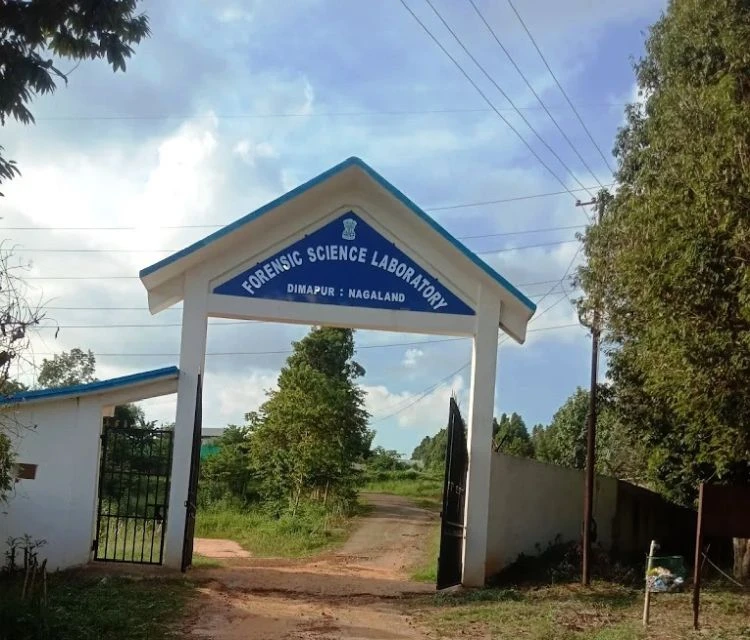
“Nearly eight years later, the laboratory survives on deputed personnel, with core forensic divisions crippled or non-functional, and costly equipment lying idle, unusable for want of qualified operators,” the council noted. This paralysis exists despite the availability of qualified Naga forensic professionals—from diploma holders to PhDs, many forced to work outside the state or pushed into overage while public-funded equipment gathers dust and becomes obsolete, it added.
It termed this a “textbook case of administrative apathy,” resulting in delayed investigations, denial of forensic support to the justice system, denial of much needed employment opportunity to the youth, and “a continuing hemorrhage of public money, an embarrassment repeatedly documented by the Naga Forensic Science Association and exposed in the local press.”
Forensic gap risks justice
The enforcement of the new Bharatiya Nagarik Suraksha Sanhita (BNSS), which mandates forensic involvement in crime scenes for offences punishable with seven years or more, has added statutory urgency. “Nagaland lacks the trained manpower and institutional capacity to comply with this legal obligation. Continued dependence on sending exhibits to other States causes inordinate delay and exposes evidence to degradation, contamination, and potential miscarriage of justice,” the AKMWC remarked. “More alarming is the absence of any functional forensic facility at Kohima, the administrative and judicial headquarters of the State.”
“How many crime scenes have been compromised, evidence lost, and offenders benefited?” it questioned while adding, mobile forensic vans, while useful, are not a substitute for a properly staffed laboratory supported by trained scientific personnel. “Without on-site forensic capacity, investigations begin handicapped, are overburdened, and public confidence in the justice system steadily erodes.”
KMC Heist: proof of forensic failure
The AKMWC pointed to the June 2025 heist of Rs 2.97 crore from the Kohima Municipal Council office as a glaring example. The crime unravelled into a chain of serial thefts exceeding Rs 21.5 crore across colleges, private premises, showrooms, government offices and KMC itself.
“Modern investigation depends on forensic linkage, digital correlation, financial trail analysis, and pattern recognition… None were proactively linked despite reported availability of CCTV footage and transactional data,” it argued. “How many such thefts were never connected or detected at all? How many offenders walked free simply because no forensic capacity existed to connect the dots in time?”
Referring to Union Home Minister Amit Shah’s January 4 announcement of a Rs 30,000 crore investment to build a nationwide forensic network by 2029, the AKMWC asserted, “Forensics is no longer optional. It is foundational. But Nagaland cannot wait until 2029.”
“How many robbers, rapists, murderers, and repeat offenders have escaped detection or conviction due to compromised evidence and delayed forensic response? How many victims were denied justice not by law, but by administrative inertia?” the appeal asked.
The council urged to build in-state forensic capability, staffed by trained scientific personnel, to enable early crime linkage, real-time digital and financial analysis, CCTV correlation, and asset recovery. “Until then, serious crime in Nagaland will continue to be investigated blindfolded, and justice will remain delayed, diluted, and denied.”
Call for time-bound intervention
Therefore, AKMWC called upon the Chief Minister to “personally intervene and direct time-bound measures” including immediate full operationalisation of the Forensic Science Laboratory at Dimapur through expedited recruitment against sanctioned posts; establishment or revival of a functional Forensic Science Laboratory at Kohima with dedicated scientific staff; institutionalisation of district-level forensic response; and fixed accountability timelines for the Home Department to ensure compliance with statutory forensic requirements.
“AKMWC remains committed to advocating for the strengthening of forensic science capacity in Nagaland as a core requirement for credible policing and justice delivery,” it reiterated.