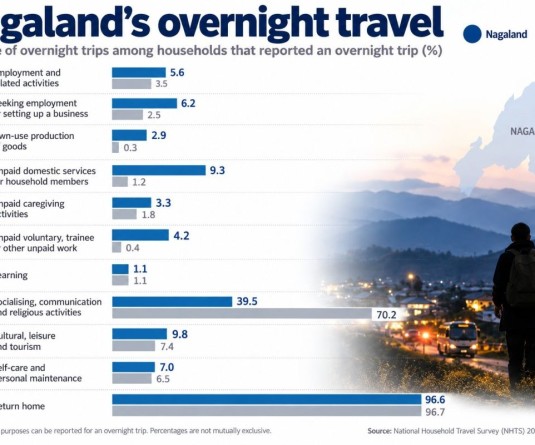
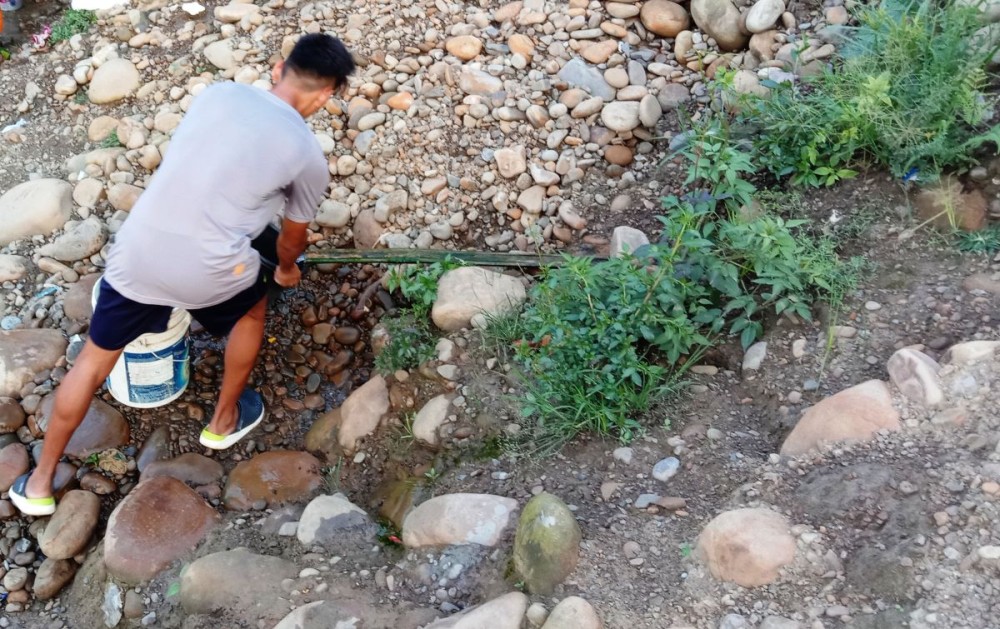
A man collects water in Chümoukedima. (Morung Photo)
Morung Express News
Dimapur | January 25
Water scarcity remains a critical and recurring challenge in Nagaland. The crisis intensifies during the dry months, typically starting from early October and lasting through March, when springs, streams and rivers are considerably parched. This seasonal water stress disrupts daily life, agriculture and health, creating a continual pattern of hardship.
As the state grapples with low-water season, The Morung Express public poll has identified rainwater harvesting as the primary sustainable solution. The approach aligns with monsoon patterns and promotes community ownership. Supporting measures include forest rejuvenation, reviving traditional water bodies, public education and improved governance.
The respondents placed ‘Encourage Rainwater Harvesting’ as the leading option with 32%, followed closely by ‘Reviving Traditional Water Bodies and Ponds’ with 26%, and ‘Public Education on Water Conservation’ with 18% votes. A significant number of respondents 23% offered other solutions.
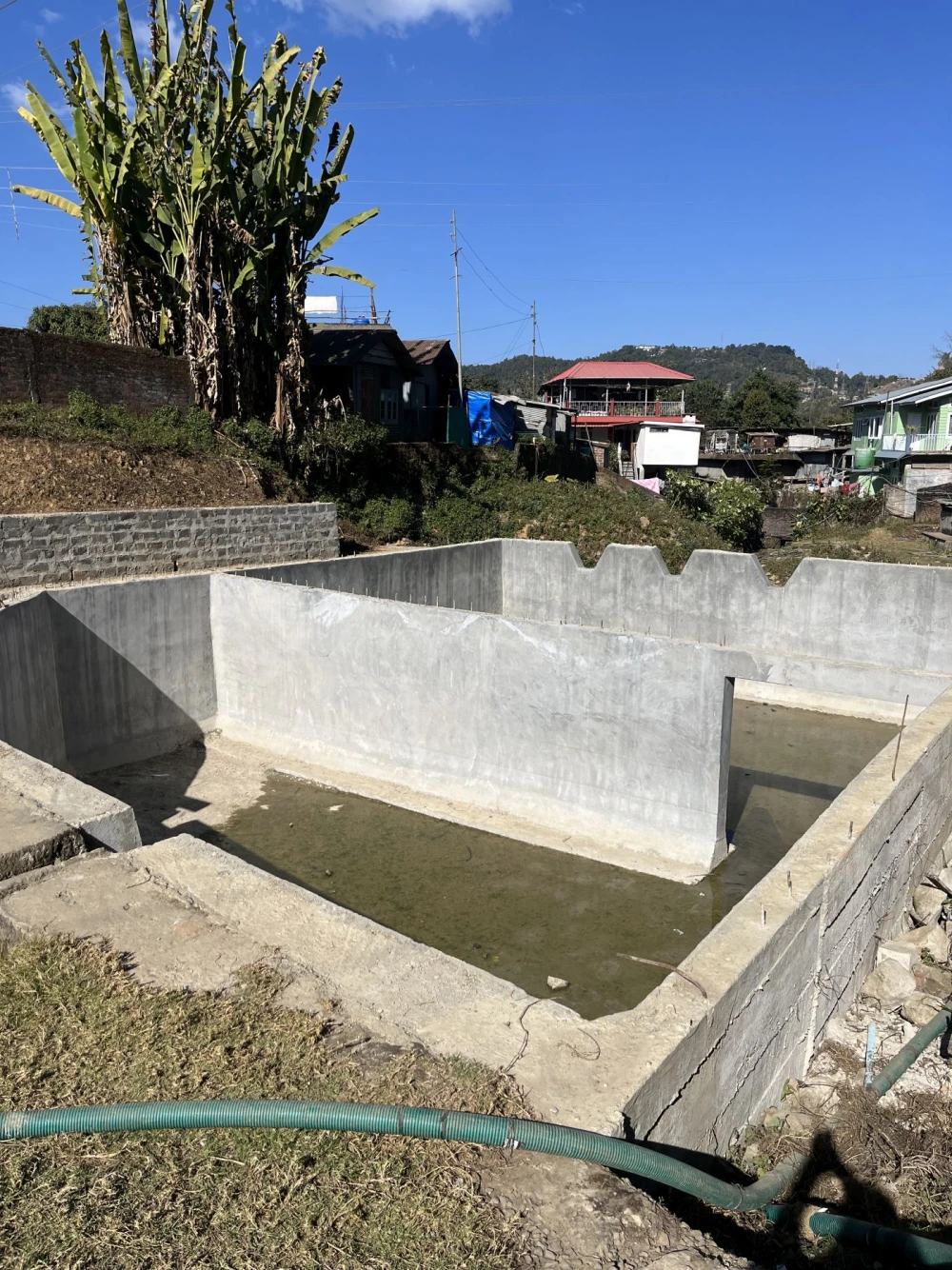
Why rainwater harvesting
A respondent underscored its urgency of scaling up rainwater harvesting, stating, “Need of the hour is rainwater harvesting. Build, stock and survive.” Another citizen noted, “I think the rainwater is best for us if we storage from the month of August and September.”
One recommended for a comprehensive model that combine modern techniques with aquifer recharge. “The best option would be to harvest rainwater to the maximum. Also recharge the aquifer level by harvesting rainwater from maximum standing buildings including government infrastructure so as to raise the underground water table.”
A participant highlighted that rainwater harvesting aligns with the state’s heavy monsoon pattern and traditional practices. It was noted that the most effective method to address this is a community-driven, integrated approach centered on rainwater harvesting, especially rooftop and traditional systems — combined with spring revival, watershed management, and sustainable land practices. “This aligns with Nagaland's topography, abundant monsoon rainfall, and cultural strengths.”
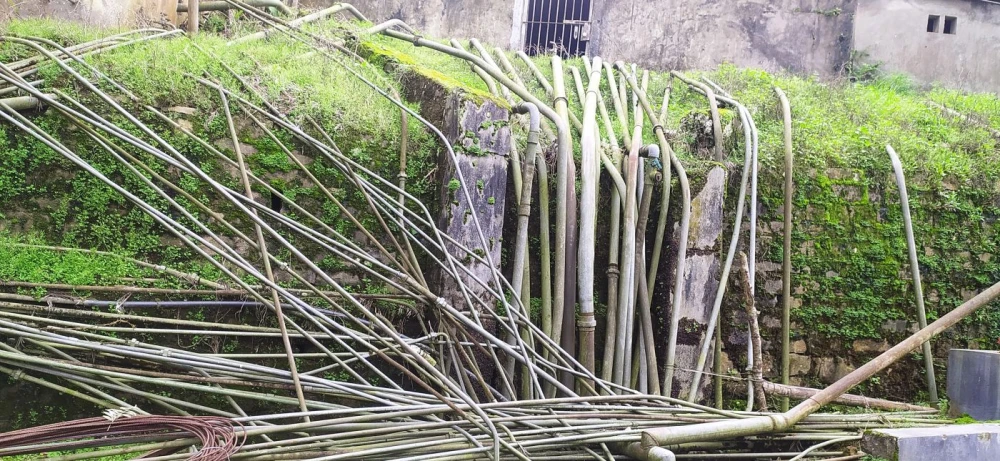
The participant explained, “Rainwater harvesting blending modern rooftop systems with indigenous practices like Ruza, is currently the most effective, scalable, and sustainable solution for Nagaland water scarcity. It directly tackles the mismatch between seasonal abundance and dry-season shortages while being climate-resilient and community-owned.”
“Scaling this through government schemes (like recent 2025 watershed missions) and local action can significantly alleviate the crisis.”
Reviving traditional water bodies and ponds
Those who voted for reviving traditional water bodies and ponds argued that this approach is the most sustainable and culturally aligned solution for the state.
“In non-urban areas reviving traditional water bodies and nature conservation effort should start, otherwise the ones we have are already vanishing, before we reach an imbalance, time to bring traditional sustainable practice,” one stated.
While acknowledging the potential of the state’s rivers, a participant stressed, “Nagaland's countless number of streams and rivers can provide water for the entire population forever, so installation of water filters near them is necessary.”
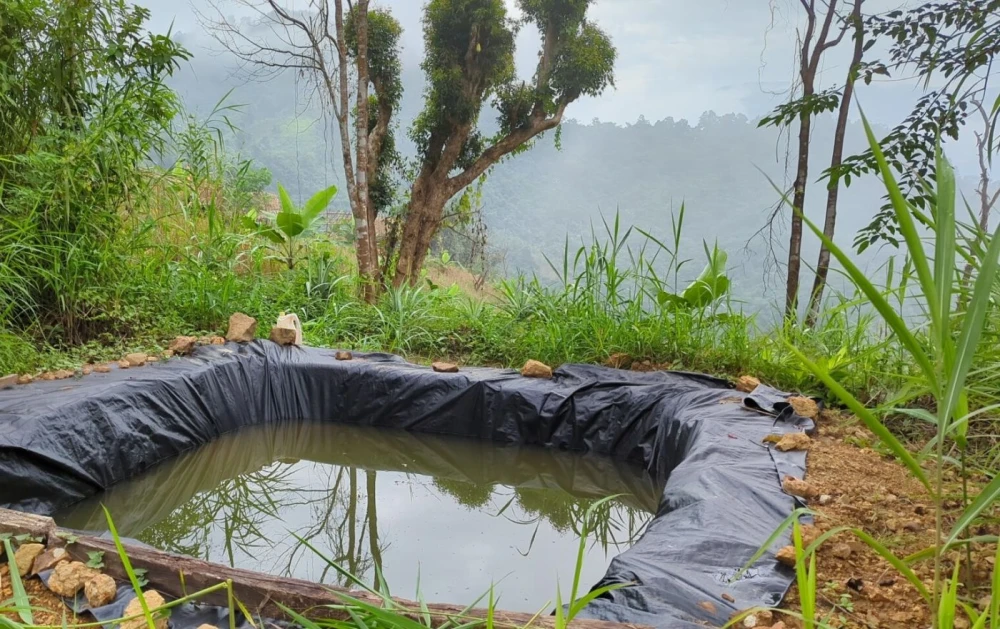
“One river is enough to meets the shortage of water if the Government shows seriousness in building better connectivity and storage facilities,” another citizen added.
Infrastructure is not enough
Few noted that while initiatives like rainwater harvesting and reviving traditional ponds are vital, their impact remains limited without widespread community awareness and participation. Merely having traditional water structures will not help if people are not educated on how to consistently conserve water, one observed, highlighting a gap between infrastructure and public practice.
Concerns were also raised about uneven water use, with reports of wastage in some villages leading to shortages in towns, underscoring the need for uniform sensitization across rural and urban areas.
“Time has come to educate and sensitize Nagas on a large scale from rural to urban hubs in Nagaland. Climate change is real and is happening. We need to wake up,” emphasised a respondent.
Governance gaps
The ‘Others’ category revealed frustration with implementation and governance. While solutions like large-scale tree plantation, fixing leaky pipelines and regulating borewells were suggested, the call for accountable governance and effective execution of existing schemes was clear.
Multiple respondents pointed to the Jal Jeevan Mission, stating that if implemented with sincerity, it could suffice to address the crisis.
There were calls for building proper water supply infrastructure from the state’s plentiful rivers and for political will to replace “corruption” with “wholehearted service.”
One comment said, “Change the politicians.” Another asserted, “The best solution is if the government can build proper infrastructure in place to supply water… We have sufficient or more than sufficient source. The government just needs to do their duty and there will be no shortage.”
The road ahead
Concerned citizens called for stringent regulation over taxation to address the crisis. One person emphasised that “taxing is no longer the best option,” and instead “Regulate borewell rigorously especially to the private business people be it individual flat owners, business, community activities anything that runs by Borewell water sources.”
“Law and order is the only option when unprecedented digging and extracting natural sources for private gain. Water and air are common good and therefore public must value these free gift.”
Another participant pointed to the untapped potential of the rivers in the state, claiming, “There are water sources (rivers) in Nagaland, which has capacity to supply 2-3 crore litres in a day.”
Urging the PHED with Government to build supply and distribution from these sources, the participant noted the availability of international financing, mentioning that institutions like the BRICS New Development Bank provide subsidised loans for such projects, provided they are economically viable and environmentally sustainable.