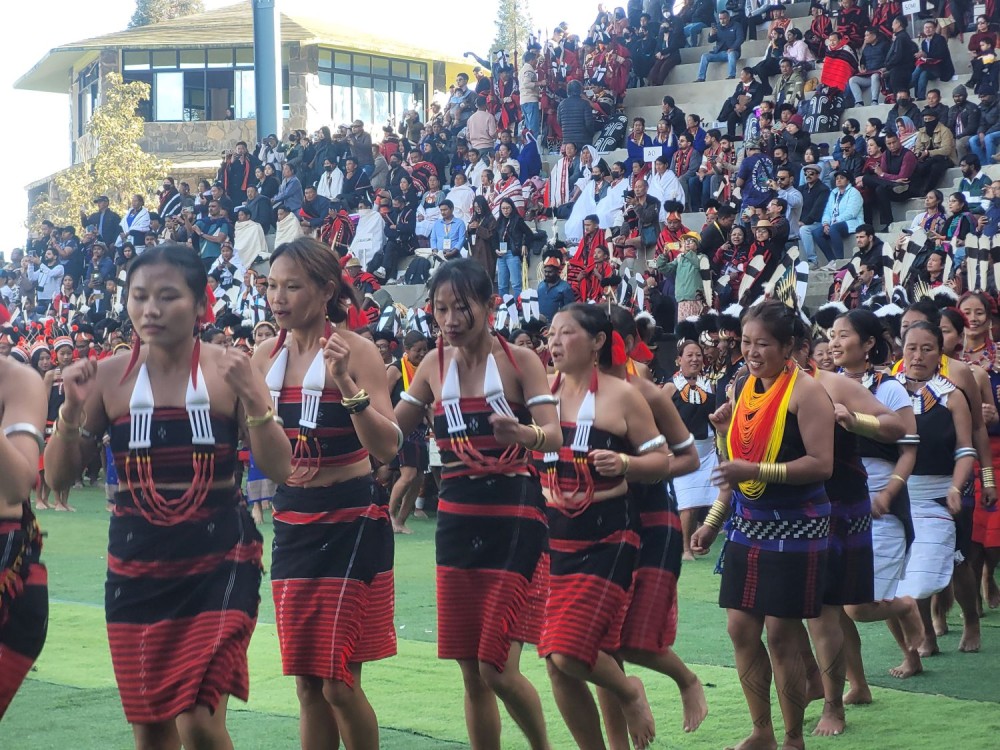
Unity Dance on the closing day of the 26th edition Hornbill Festival 2025 at Naga Heritage Village, Kisama on December 10. (Morung Photo)
Attendance jumps to 2,14,493
Our Correspondent
Kohima | December 10
The 26th Edition of the Hornbill Festival 2025 culminated this evening at Naga Heritage Village, Kisama, attracting an impressive 2,14,493 visitors over ten days of celebrations featuring culture, traditions, music, food, fashion, crafts, sports, art, partnerships, and networking.
Of the 2,14,493 visitors, local attendees were the largest group at 1,55,535, followed by domestic tourists at 56,431 and foreign visitors at 2,528.
The final day of the Festival on December 10 registered the highest number of visitors at 33, 535 (see box).
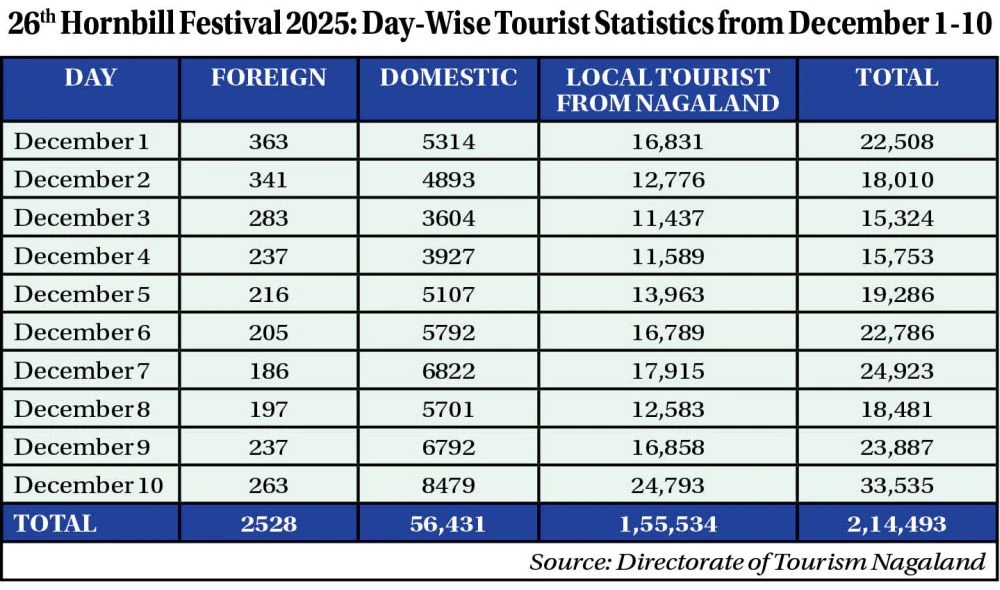
The 2025 figure marks a modest 4.1% increase from last year’s 2,05,968; the highest in six years, but still below the pre-pandemic highs of 2.82 lakh in 2019 and 2.51 lakh in 2018.
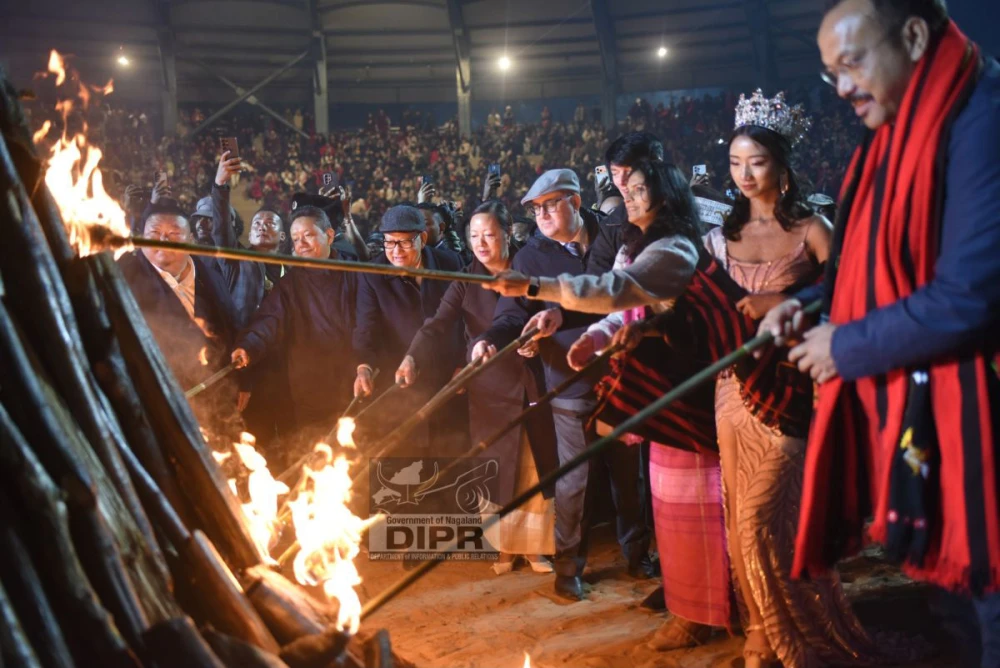
Miss Nagaland 2025 Linoka K Achumi lighted the bon fire, marking the grand conclusion of the ten days Hornbill Festival 2025 at Unity Plaza, Kisama.
“As the Hornbill Festival 2025 concludes, I extend my sincere thanks to our partner countries, partner state and sponsors for making the “Festival of Festivals” a grand success. Grateful to our guests, and visitors for enriching the festival. We look forward to welcoming you again,” Nagaland Chief Minister Dr Neiphiu Rio later posted on X.
‘Cultural soft power’
Gracing the closing ceremony, Deputy Chief Minister TR Zeliang said that Hornbill Festival has offered “our tribes, villages, craftsmen, entrepreneurs, and youth a meaningful platform to present our magnificent diversity and talents to the world.”
He described the festival as a meeting ground where cultures intersect, generations connect, and aspirations take shape as well as testament to the people’s pride in their heritage, confidence in their identity, and hope for the future.
“Let this spirit of togetherness not remain confined within the boundaries of Kisama village, but extend into our daily lives,” he added.
Zeliang further asserted that the Hornbill Festival has become a powerful ‘cultural soft power’ of Nagaland, placing the State prominently on the world map.
The misgivings about Nagaland and Naga people, often shaped by distance and misunderstanding, are now being dispelled as visitors experience their warm hospitality, kindness and rich cultural tapestry, he maintained.
He urged all the visitors to bring more people to experience the beauty, diversity and traditions of the Naga people.
‘Window to North-East’
Meanwhile, Arunachal Pradesh Tourism, Education, Parliamentary Affairs & RWD Minister Pasang Dorjee Sona, speaking as a special guest, lauded the organisers, the people of Nagaland, the Chief Minister, and all those involved in making the festival a success.
He emphasised that the festival has provided the world a window to the North-East, particularly Nagaland, showcasing its art, culture, indigenous lifestyles, vibrant traditions, and the colourful spirit of its people, creating significant national and international exposure.
Sona also noted that a partnership agreement between Nagaland and Arunachal Pradesh had been signed and expressed hope that it would elevate both States to greater heights.
The collaborations in sectors such as music, art, tourism, horticulture, industries etc would strengthen and help both States advance in every field, he added.
‘More than a celebration’
‘The Hornbill Festival is far more than a celebration; it is a declaration of identity, creativity, and cultural confidence,’ noted Raymond Mullen, Deputy Ambassador, Embassy of Ireland, India, adding that the Embassy entire team was deeply moved by the generosity, friendship, and warmth shown by the people of Nagaland.
For Ireland, being a partner country at the festival has been both an honour and a great source of pride, he said, adding that the country has learnt much from Nagaland about resilience, identity, and the transformative power of cultural pride.
Mullen said that Ireland look forward to building friendships with Nagaland’s youth, whose talent and ambition are evident, and to fostering deeper collaboration in education, research, tourism, culture, sport, entrepreneurship, agriculture, and, most importantly, people-to-people exchange.
The Naga people and the Maltese people share many similarities, highlighted Reuben Gauci, High Commissioner of the Republic of Malta to India, adding that Nagaland holds a special place in his heart, after experiencing the warm hospitality.
He also brought along a Maltese poem that conveyed the message of love and praise for the State and thanked the festival organisers.
Gauci also expressed hope that this would not be Malta’s last participation in the vibrant and remarkable festival.
Local stage,global audience
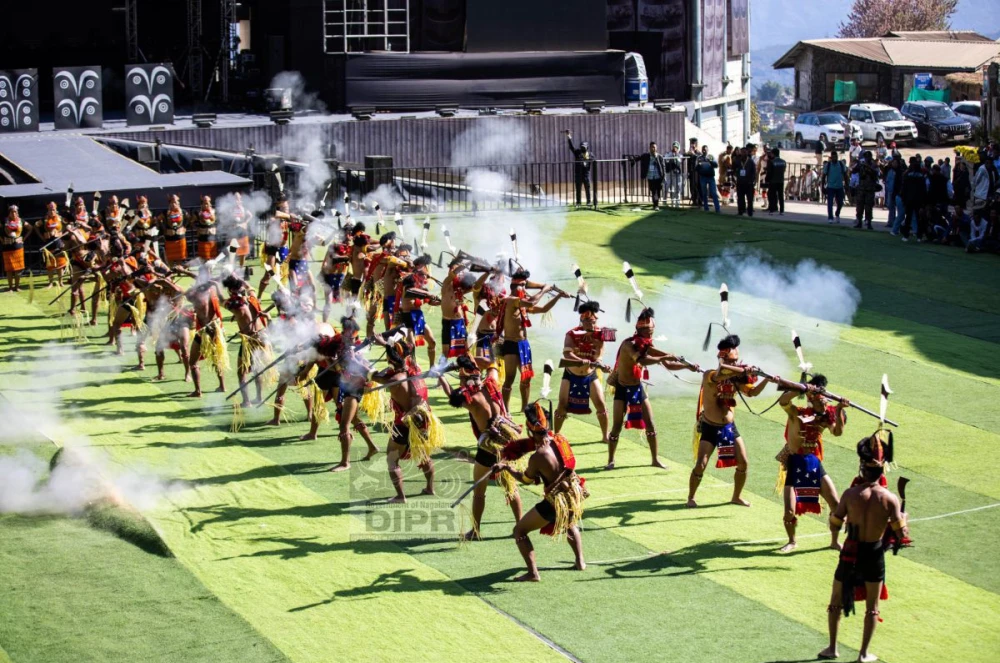
“Hornbill Festival has become the stage, and the world its audience,” Nagaland Tourism and Higher Education Minister Temjen Imna Along said in his closing address, expressing gratitude to friends, well-wishers, and tourists for coming and sharing the vibes and experiences of the Naga people.
The artists and performers, both traditional and contemporary, were also acknowledged for their resilience in showcasing the rich culture and traditions of the Nagas to the world.
Appreciating the Country and State Partners, Along expressed hoped that the collaborations forged through the festival would endure for a lifetime. The leadership of Arunachal Pradesh was acknowledged for sending performers and actively participating throughout the festival.
The Minister also reiterated that Hornbill Festival brings different tribes of Nagaland to a common platform, where the vibrant Naga culture and traditions along with contemporary music, songs and dances resonate, thereby manifesting unity over ‘isms’ and differences.
He hoped that the friendships, relationships, and unique bonds formed during the festival would leave a lasting impression.
The closing ceremony also featured powerful performances from the Task Force for Music and Arts (TaFMA).
(With inputs from DIPR)