Meyu Changkiri
Some stories from the past are worth remembering because they tell us where we came from. Others remain meaningful because, even after many years, they continue to speak to questions that concern us today. The story of Longjanglepzük of Merangkong, an Ao Naga village in Mokokchung district of Nagaland in Northeast India, is one such story.
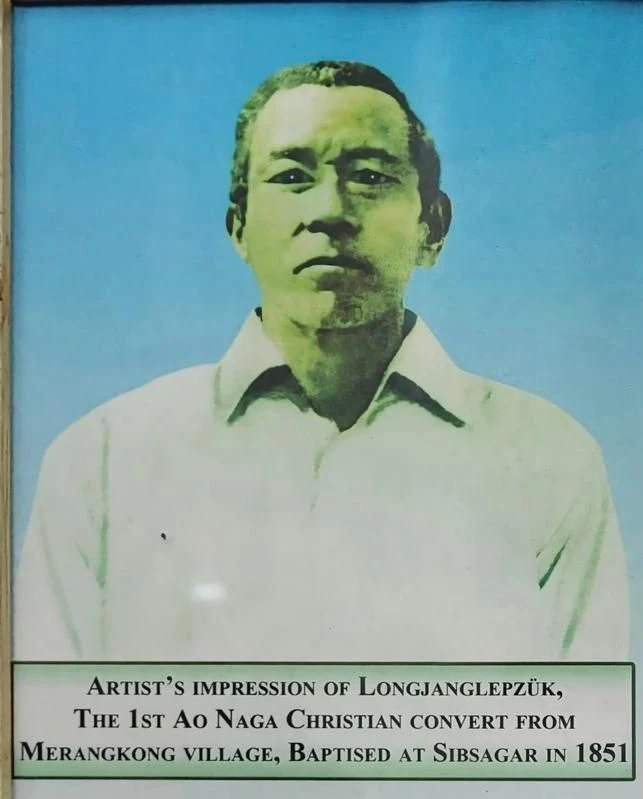
Longjanglepzük is remembered as the first known Ao Naga from Merangkong to accept Jesus Christ. He was baptised at Sibsagar Baptist Church in Assam on September 7, 1851. His life was brief, but his journey of faith, his return to his people and the circumstances of his death have remained part of the Christian memory of the Ao people.
I first came across Longjanglepzük's story in the late 1990s, when I began my theological studies at Eastern Theological College in Jorhat, Assam. At that time, it was one of the accounts I encountered while learning about the beginnings of Christianity among the Nagas. I did not know then that, many years later, I would have the opportunity to spend a night in Merangkong and listen to his story again, this time in the place where his life had unfolded.
On Thursday evening, March 23, 2023, my wife and I stayed overnight at the Merangkong Baptist Church guest house. We had intentionally stopped at Merangkong to spend some time in prayer and to learn more about Longjanglepzük before continuing our journey to Konyak country, where I was to speak at a Pastors Conference hosted by the Konyak Baptist Church Council.
Pastor Nükshi Yaden and his family welcomed my wife and me with great warmth. Their hospitality remains a cherished memory. During our stay, I had the opportunity to speak with Pastor Yaden and listen to his account of Longjanglepzük in greater detail - his family, his years in Assam, his encounter with the American Baptist missionaries, his baptism, his return to Merangkong and the circumstances surrounding his death.
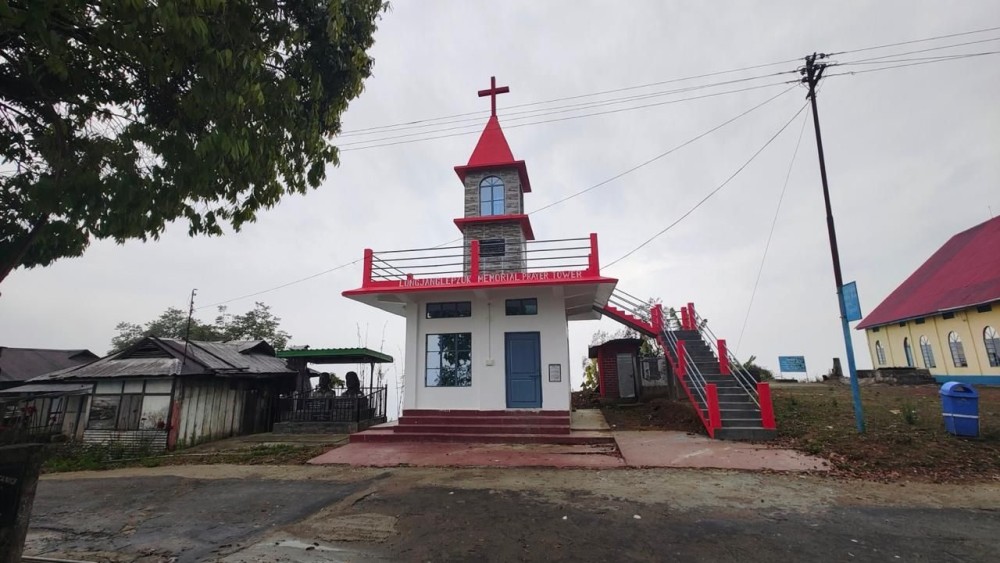
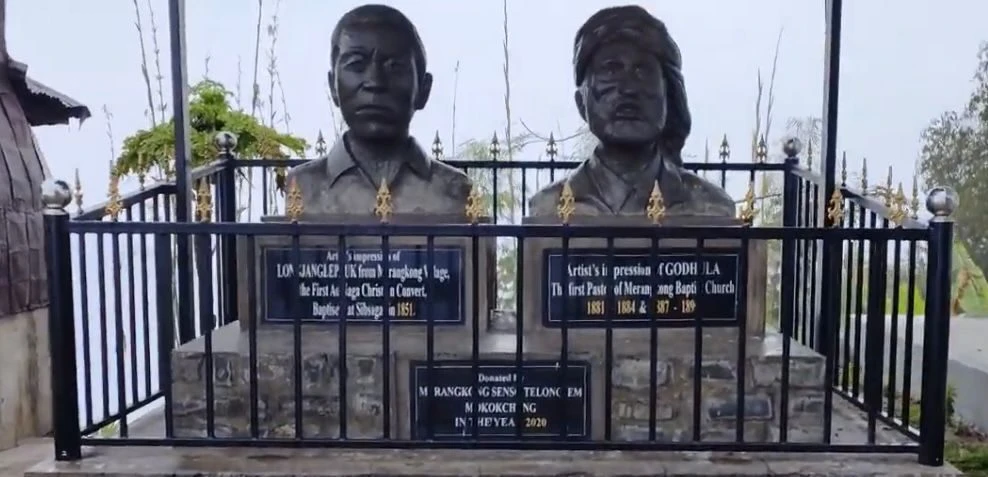
During that visit, I also noticed two reminders of how Merangkong continues to remember its Christian heritage. Beside the Baptist Church stands the Longjanglepzük Memorial Prayer House. Nearby is another structure where statues of Longjanglepzük and Godhula Brown have been erected. I found this deeply meaningful. History is not preserved only in books and archives; it is also carried in the memory of communities, in their places of worship, memorials and stories passed from one generation to another.
That evening in Merangkong, a story I had first encountered as a student became much more real to me.
A Young Man Encounters Christ
According to the traditional account preserved in Merangkong, Longjanglepzük was born around 1830. His father was Makatoba and his mother was Sosangkasü. He was the youngest of three siblings.
As a young man, around twenty years of age, he went to Assam, where he worked and earned his living. There he came into contact with American Baptist missionaries. Through their friendship with him, the missionaries learned more about the Naga Hills and particularly about Merangkong.
For Longjanglepzük, the encounter became more than an opportunity to tell the missionaries about his homeland. He came to know the Christian faith and willingly accepted Jesus Christ. On September 7, 1851, he was baptised at Sibsagar Baptist Church by Rev. S. W. Whiting. The ministry of the early missionaries, including Mr. Bronson, also contributed to his Christian journey.
After his baptism, Longjanglepzük continued as a member of the Sibsagar church and lived and worked with the missionaries for about two years. They saw in him someone who could become a bridge between the Gospel and his own people. When the possibility of marriage was discussed, Longjanglepzük reportedly expressed his desire to return to his native village and marry someone from his own community.
.webp)
He returned in 1853, but he came home at a difficult and tragic moment.
It is difficult for us today to imagine the world into which Longjanglepzük returned. Headhunting was practised among several Naga communities and was connected with a wider social world of warfare, courage, honour, protection and community identity. We should understand that history in its own cultural setting without reducing our ancestors to simplistic descriptions. At the same time, we need not romanticise practices that involved the taking of human life. Both the historical context and the human cost deserve to be remembered.
When He Returned Home
In 1853, Merangkong was attacked by a combined force from nine neighbouring Konyak villages. According to the traditional account preserved in Merangkong, Longjanglepzük went towards the conflict and pleaded with the attackers to stop. He spoke of the God he had come to know and insisted that fighting and bloodshed were not the will of God.
We can only imagine what that moment must have been like. Here was a young man who had recently embraced a new faith, returning from Assam to his own village. Violence had come to Merangkong, yet instead of joining the fight, he pleaded for peace.
In a world accustomed to hunting for heads, Longjanglepzük was, in a profound sense, hunting for peace.
According to the account preserved in Merangkong, he was wearing the white dhoti in which he had returned from Assam. The attackers reportedly mistook him for the Merangkong tsüngrem, or spiritual guardian of the village. He was pierced with a spear from behind and subsequently killed.
His life ended there. He did not return to Sibsagar. He did not have the opportunity to establish a church or undertake a long missionary ministry. Whatever hopes the missionaries may have had for his future were not realised. Yet his life should not be measured only by what he did not have time to accomplish. He accepted Christ, returned to his people and, when violence came, stood for peace.
That makes me think about courage. The faith he had embraced did not make him less courageous; it gave his courage a different direction. In the world from which he came, courage could be demonstrated in warfare. After encountering Christ, he demonstrated courage by standing in a place of danger and pleading for the fighting to stop.
Generations later, the Christian journey of Merangkong also took another direction. Having received the Gospel, the church began to look beyond itself and to share it with others.
When the church celebrated its centenary, the Merangkong Godhula Mission became part of that wider missionary vision. In 1983, Rev. P. Pona Ao and his wife, Theresa Marak, were commissioned to serve among the Amri Karbis of Assam. They lived among the people, learned their language, built relationships and served through education and Christian ministry. On August 7, 1983, forty people from thirteen Amri Karbi villages were baptised in the Digaru River near Rongphar village.
This part of the story is particularly meaningful to me. I later had the privilege of being invited as the Guest Speaker at the 40th anniversary of the first baptism of the Amri Karbis, celebrated at Rongphar by the Amri Karbi Baptist Churches Association.
Looking at these stories together, there is a quiet continuity. A young Ao man encountered Christ in Assam. The Christian faith took root among his people. Generations later, the church in Merangkong became involved in carrying that faith to another community in Assam. Those who had received were now becoming people who gave.
What Are We Hunting For Today?
Perhaps this is where the story of Longjanglepzük becomes a question for our own time. Imagine his world again. He lived in a setting where headhunting was part of the reality of inter-community conflict. Now imagine a young man who had encountered Jesus Christ returning to that world and choosing not to hunt for a head, but to hunt for peace.
What would that mean today?
Our world is very different from the one Longjanglepzük knew. We have education, modern institutions, laws, technology and countless ways of communicating with one another. Yet the forces that divide us remain familiar. Fear can become suspicion, suspicion can become hostility, and grievance can harden into resentment. The identities that give us dignity and belonging can also become boundaries that make it difficult to see the humanity of those on the other side.
Northeast India knows some of these wounds. We have seen conflicts between communities, disagreements within communities, intertribal tensions, interstate issues and other struggles that have tested relationships and weakened trust. Beyond our region, our country and the wider world continue to face conflict, division and uncertainty.
We may have moved far beyond the world of headhunting, but we have not moved beyond the temptation to define ourselves against others.
This is where Longjanglepzük's choice speaks to us. When he returned to Merangkong, violence was a reality of the world he knew. Yet when confronted by conflict, he did not add his strength to the violence. He stepped into its path and pleaded for peace. His faith had changed not only what he believed, but also what he understood courage to be.
Our circumstances are different, but the choice remains. When our identity is threatened, when old wounds are reopened, or when we believe we have every reason to be angry, do we deepen the divide or do we find the courage to interrupt it?
Can we disagree without becoming enemies? Can we defend what matters to us without denying the dignity of others? Can we remember painful history without allowing it to dictate the future? Can we seek justice without surrendering ourselves to revenge?
These are not questions only for Christians. They are questions for every community and every society that hopes to live with difference without allowing difference to become a source of violence.
We may no longer hunt for heads, but there are other things we can hunt for—victory, recognition, control, vindication, or the satisfaction of seeing the other side defeated. We can turn history into a weapon, identity into a wall and grievance into an inheritance handed down to the next generation.
I do not write this story because I belong to Merangkong. I do not. I write as an Ao Naga from Northeast India who first encountered this story as a student and, many years later, had the privilege of listening to it more deeply in Merangkong. To me, this is more than the story of one village. Some parts of our history belong to a much wider human story than the community in which they began.
Longjanglepzük's place in Ao Christian history and in the history of Christianity in Northeast India is important. But his significance need not be limited to those who share his faith. There is something deeply human in the choice of a young man who, having encountered a new conviction, returned to his own people and, when confronted by violence, chose to plead for peace. Whatever one's religious convictions may be, that kind of courage deserves reflection.
Longjanglepzük could not have known what would follow his death. He could not have imagined the churches, missions and communities that would emerge in the generations after him. He simply faced the moment before him and acted according to the conviction he had received. Perhaps his memory has endured not because his life was long, but because his choice was clear.
For Christians, his witness recalls the words of Jesus: “Blessed are the peacemakers, for they shall be called children of God.” For others, his life may raise a broader human question: what kind of courage enables a person to step away from retaliation and make room for reconciliation?
Peace does not begin with others. It begins with the choices we make when disagreement becomes difficult, when old wounds are reopened and when blame, exclusion or retaliation seem easier than understanding.
In Longjanglepzük's time, the challenge was to move from hunting for heads to hunting for peace. Our challenge is different, but the deeper question remains the same: What are we pursuing when fear, pride, identity or grievance begin to govern our relationships?
And so I am left with one question:
What are we hunting for today?
Perhaps our answer will determine not only how we remember the past, but also the kind of future we leave to those who come after us.