Source: ‘Survey Report on Employment, Unemployment, Skill and Migration in Nagaland 2025,’ Directorate of Economics & Statistics, Nagaland
Moa Jamir
Dimapur | January 11
Migration in Nagaland appears to be largely stable and long-term, with most migrants reporting improved earnings, satisfaction and a preference to remain in their current place of residence, according to official survey data.
Findings from the 'Survey Report on Employment, Unemployment, Skill and Migration in Nagaland 2025,' conducted by the Directorate of Economics and Statistics (DES), showed that migration in the state is predominantly rural to urban, and a significant majority of migrants have been residing in their current settlement for over five years.
As per the survey, the “movement of people from one place of settlement to another settlement for various reasons is considered as migration.” Though not stated explicitly, it is understood to refer to intra-state migration or within the state.
Earnings improve after migration
The survey report pointed out that migration is associated with positive economic mobility, reflected in a clear shift in income levels.
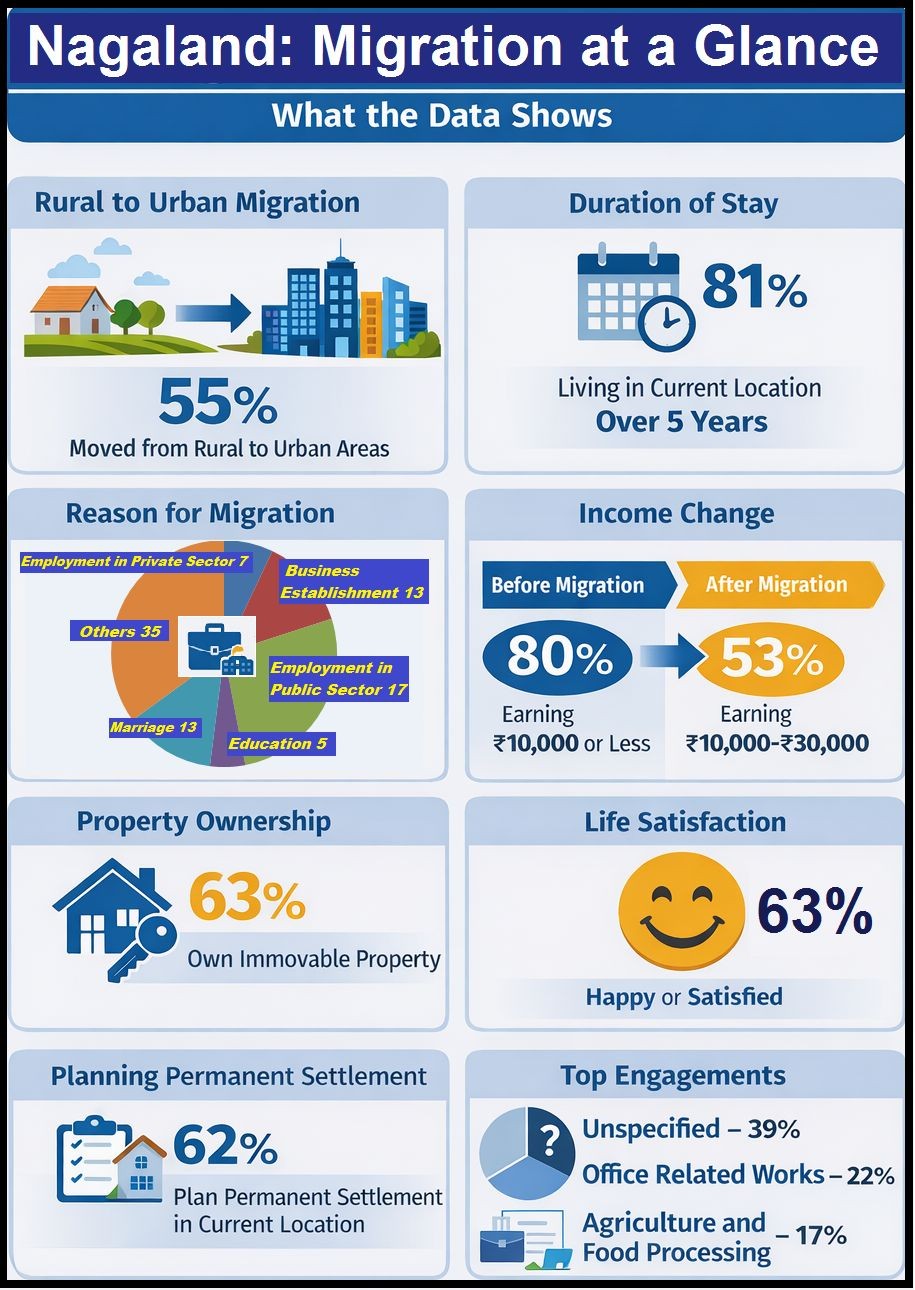
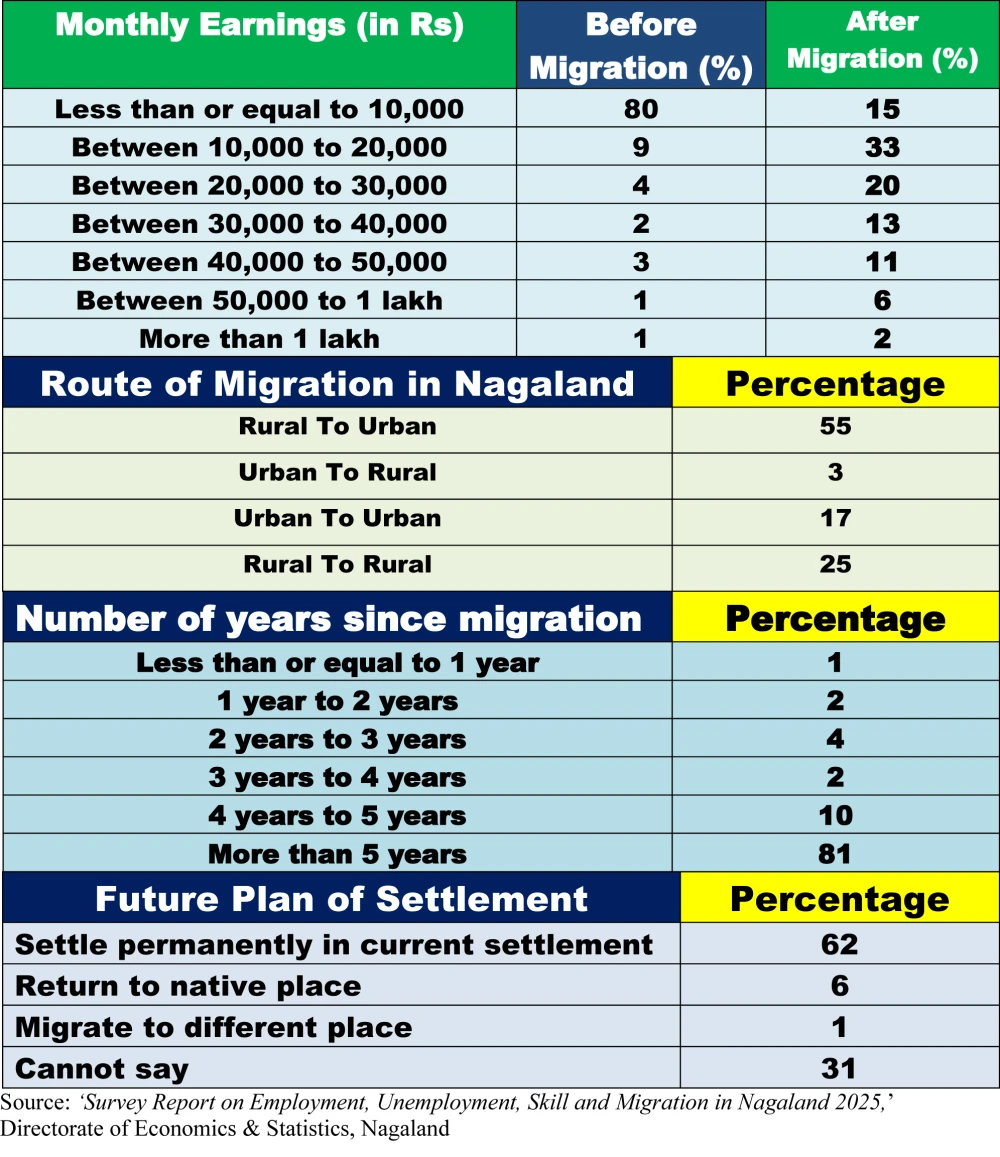
Prior to migration, 80% of migrant respondents earned Rs 10,000 or less per month. Post-migration, this figure dropped sharply to 15%, while income levels improved across higher earning brackets.
The largest share of migrants (33%) reported monthly earnings between Rs 10,000 and Rs 20,000, up from 9% before migration. Those earning Rs 20,000 to Rs 30,000 increased from just 4% to 20% after migration.
Even higher income groups showed improvement, with those earning between Rs 50,000 and Rs 1 lakh rising from 1% to 6%, and those earning more than Rs 1 lakh increasing from 1% to 2%.
Overall, migration is associated with better earnings and upward economic mobility.
Majority satisfied, plan to stay
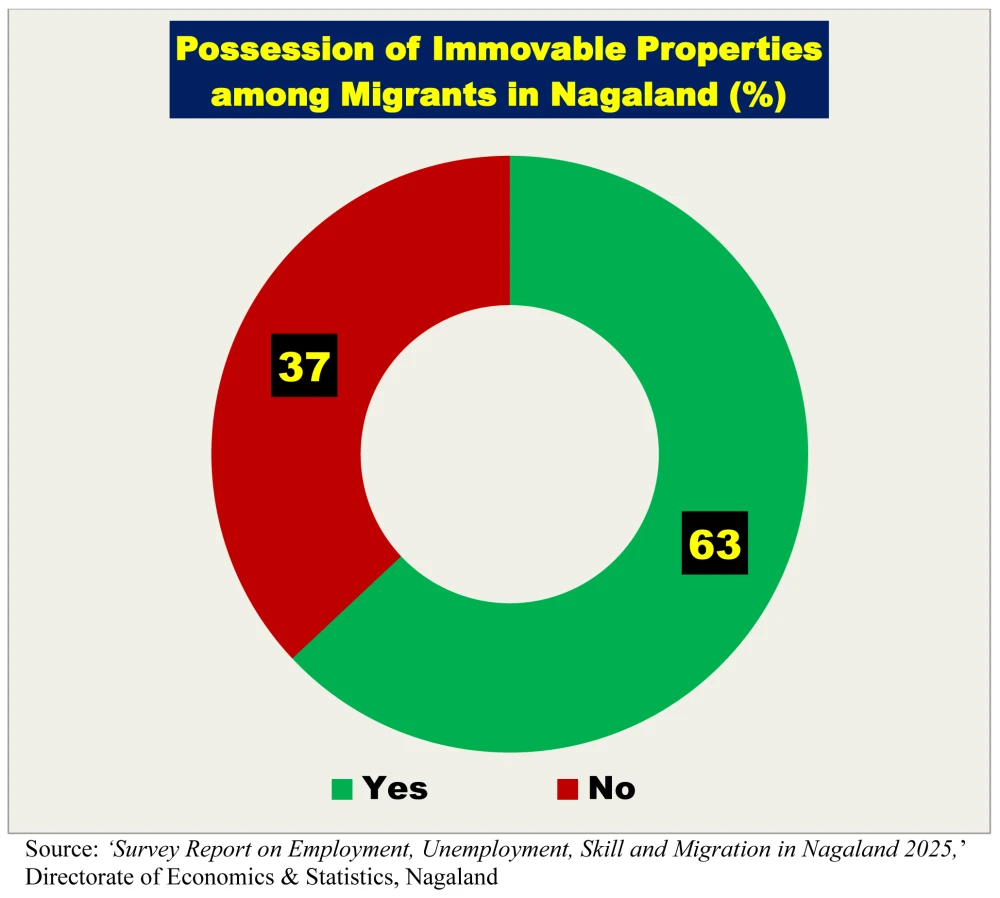
The survey also indicated a degree of settlement stability among migrants, with 63% reporting possession of immovable property in their current settlement.
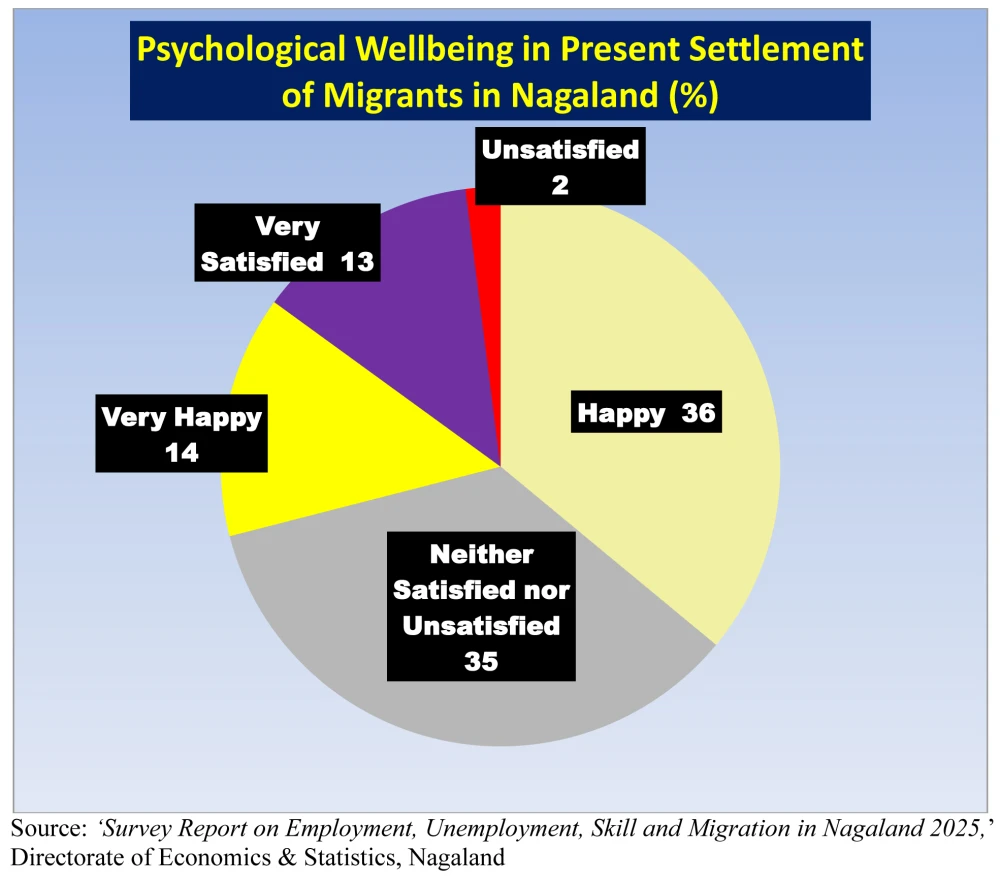
In terms of psychological wellbeing, 36% reported being ‘happy’, while 14% said they were ‘very happy’ and 13% ‘very satisfied’. Another 35% described themselves as neither satisfied nor unsatisfied, while 2% reported being unsatisfied.
Looking ahead, 62% of migrant respondents indicated plans to settle permanently in their current settlement. Only 6% planned to return to their native place, while 1% expressed intentions to migrate elsewhere. A further 31% said they could not say.
Migration largely long-term
Meanwhile, the survey highlighted that migration is not a short-term phenomenon for most respondents.
As many as 81% of migrant respondents reported that they had been residing in their current settlement for more than five years, suggesting that migration is predominantly settlement-oriented rather than seasonal or temporary.
Further, 10% reported residing in their current location for four to five years. Only 1% had migrated within the last year, while 8% had moved within the past three years.
Rural–urban movement dominates
The most common route of migration in Nagaland was from rural to urban areas, with 55% of the respondents reporting such movement.
Economic mobility is also apparent, as urban-to-urban migration accounted for 17%, while 25% reported rural-to-rural migration.
Conversely, only 3% reported moving from urban to rural areas, indicating that migration is largely directed towards urban centres, although intra-rural migration also forms a notable share.
Public sector a key driver
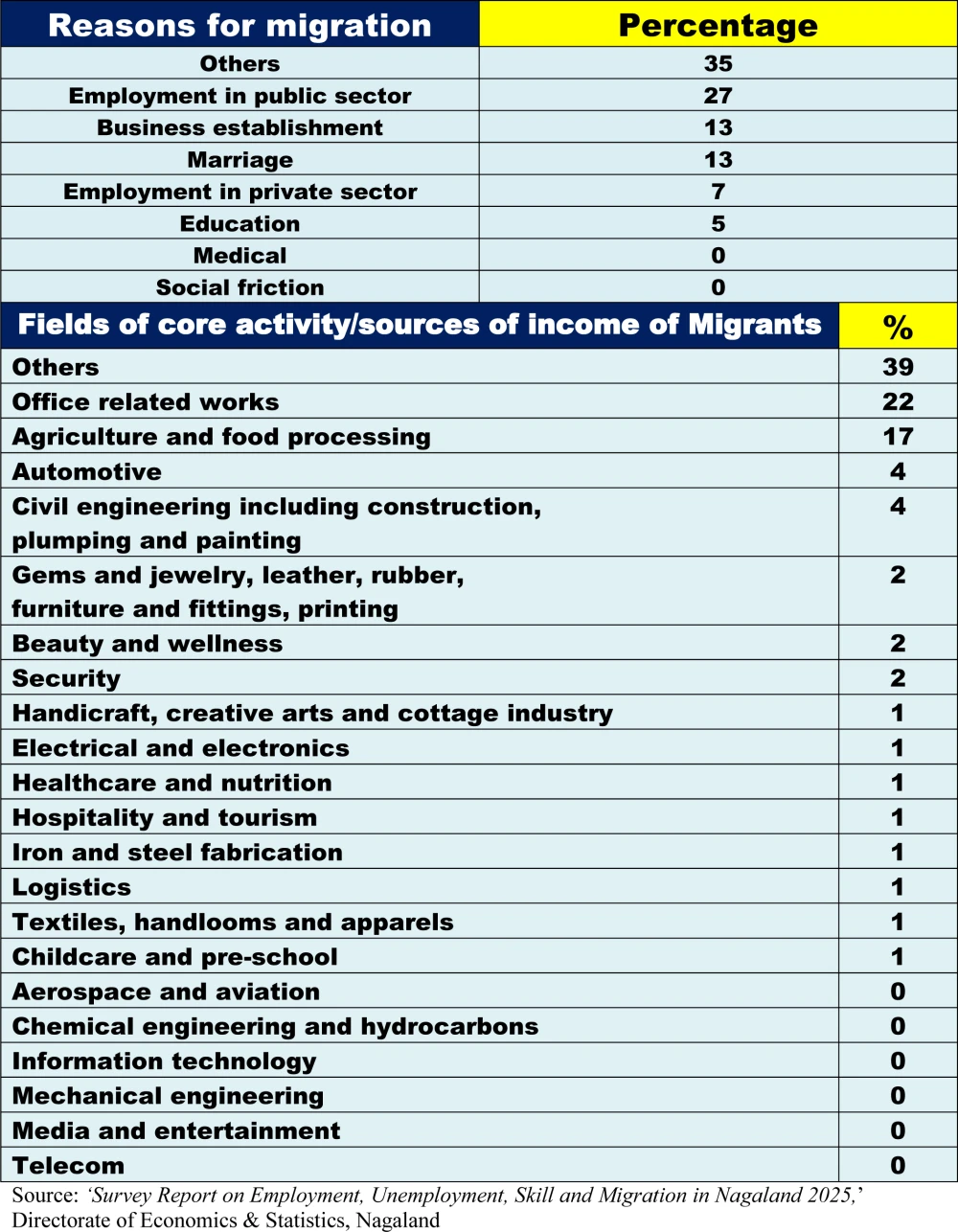
In terms of reasons for migration, the largest share of migrants (35%) cited ‘other’ reasons, while 27% reported migrating for employment in the public sector.
Migration for business establishment and marriage each accounted for 13%, while 7% migrated for private sector employment and 5% for education. No respondents reported migrating for medical reasons or due to social friction.
Accordingly, the main driver of migration appears to be economic, with employment—particularly in the public sector—emerging as a major identifiable reason.
With regard to current activity, 39% of migrant respondents were engaged in unspecified ‘other’ fields, followed by office-related work (22%). Agriculture and food processing (17%) also accounted for a notable share.
Smaller proportions were engaged in automotive work, civil construction, security, and other service-related activities, while several technical sectors recorded minimal or no participation.
Overall, the findings suggest that migration in Nagaland is not primarily distress-driven, but represents a response to opportunities, offering better earnings, greater contentment and long-term settlement for many, even as broader constraints in skills, employment quality and sectoral spread persist.
This report is the Part V and final of a series based on findings from the 'Survey Report on Employment, Unemployment, Skill and Migration in Nagaland 2025,' conducted by the Directorate of Economics and Statistics, Government of Nagaland.