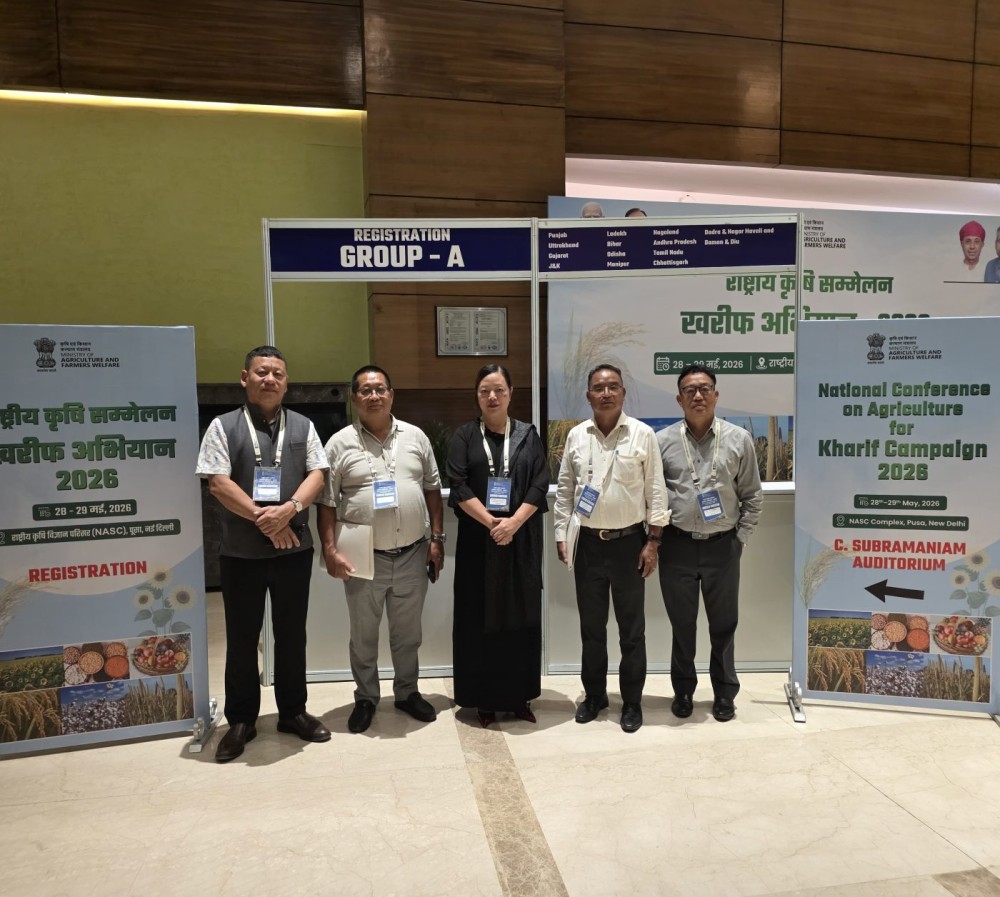
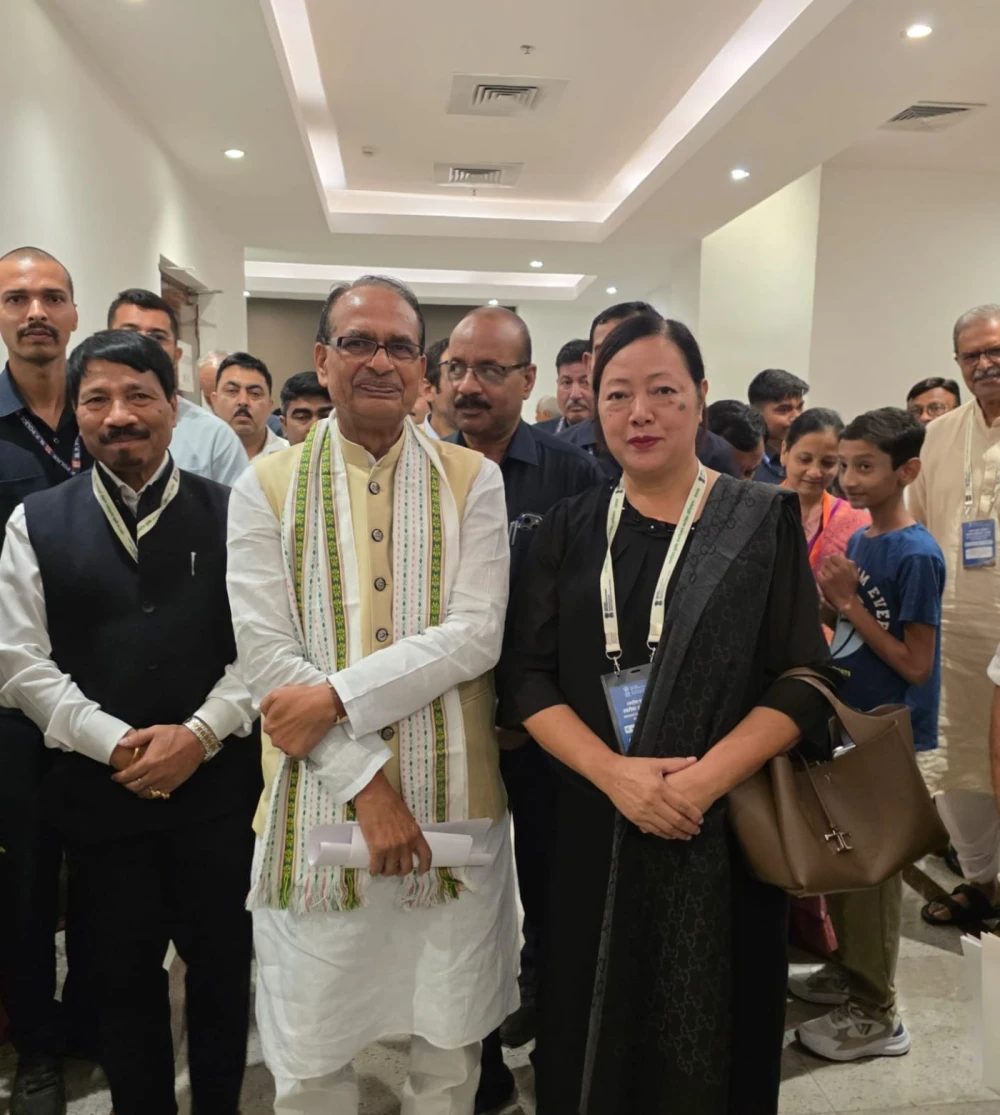
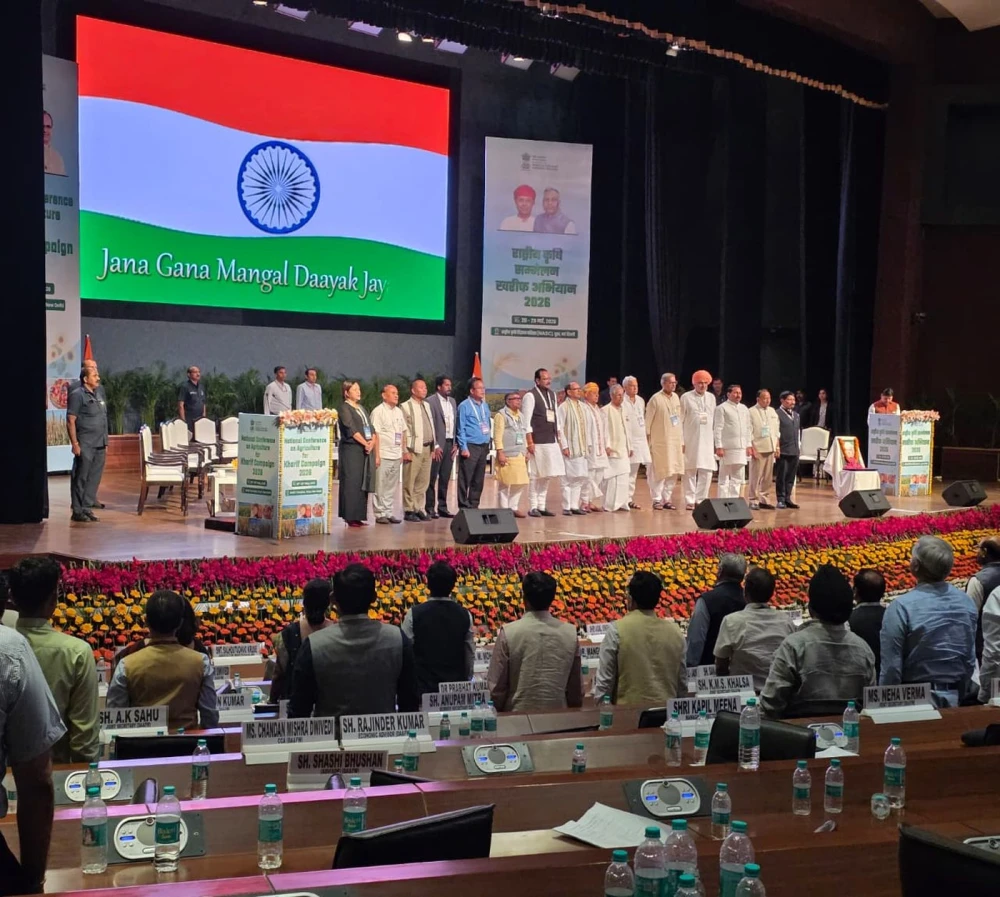
Minister Salhoutuonuo Kruse with others at the National Conference on Agriculture for Kharif Campaign 2026 at NASC Complex, Pusa, New Delhi held on May 28-29.
New Delhi, May 29 (MExN): Nagaland Minister for Horticulture and Women Resource Development, Salhoutuonuo Kruse, on Friday called for greater investment, hill-specific agricultural policies and sustained Centre-State collaboration to unlock the agricultural and horticultural potential of Nagaland and the Northeast region.
Speaking at the National Conference on Agriculture for Kharif Campaign 2026 held on May 28-29 at NASC Complex, Pusa, New Delhi, Kruse thanked the Ministry of Agriculture and Farmers’ Welfare for organising the event and for its continued support. She also expressed appreciation to Union Minister Shivraj Singh Chouhan for his efforts in strengthening the agriculture sector through various schemes, stated a press release received here.
The Minister highlighted that initiatives such as MIDH, PMKSY, RKVY and MOVCD-NER have played a key role in improving rural livelihoods, building infrastructure, and promoting sustainable agricultural and horticultural development in Nagaland.
Over the last five years, more than 4.2 lakh hectares have been brought under horticulture crops, including fruits, vegetables, plantation crops, spices, medicinal plants, flowers and post-harvest activities, she said, adding that the shift of farmers towards high-value crops reflects the state’s natural advantage.
Stating that nearly 70% of Nagaland’s population depends on agriculture and allied sectors, Kruse said horticulture has become a major pillar of rural livelihood and economic transformation. She pointed to rich biodiversity, traditional chemical-free farming, GI-tagged products and favourable agro-climatic conditions as unique strengths.
Products such as Naga Mircha, large cardamom, kiwi, pineapple, mandarin orange, rajma millet, black and brown rice, agarwood, and wild rambutan have strong market potential, she noted. “With the right support, Nagaland can position itself as a premium horticulture hub for niche and export-oriented products,” she added.
Kruse also spoke about the state’s internationally recognised Alder-based farming system, which integrates alder trees with crops to improve soil fertility naturally, reduce dependence on chemical fertilisers, prevent erosion, and retain soil moisture. “Nagaland doesn’t need to go organic, it already is,” she remarked.
However, she highlighted several challenges, including climate change-induced unpredictable rainfall, soil erosion, and landslides, and called for climate-resilient technologies and real-time advisory systems for hill agriculture. On jhum cultivation, she said any transition must be gradual, community-driven, and backed by financial support and scientific inputs.
Poor infrastructure remains a major bottleneck, she added, urging the Centre to invest more in cold storage, processing, branding, and market linkages to reduce post-harvest losses.
Calling the Northeast a region capable of leading an “Evergreen Revolution”, Kruse said the region needs focused, flexible, and sustained support tailored to hill agriculture, not uniform policies designed for the plains. “The next step is to go commercial without losing the organic ethos,” she said.
She expressed confidence that with strong Centre-State partnership, Nagaland could emerge as a model for horticulture and agriculture-led growth in the country.