Dimapur, April 22 (MExN): Educational institutions across Nagaland observed Earth Day with the global theme “Our Power, Our Planet: Integrating Science, Society and Policy for Sustainable Futures” on April 22.
Nagaland University: The Department of Geography, Nagaland University, organised a two-day Earth Day programme. The event commenced on April 21 with a drawing competition for Kendriya Vidyalaya students on renewable energy and climate change, followed by a plastic waste removal drive. The collected waste was weighed, documented and disposed of appropriately.
Day two, April 22, began with a rally from Rajiv Gandhi Park to the department. Prof Sangyu Yaden (HoD I/C) welcomed the resource person, Dr Rasik Ravindra, former Director of NCPOR, and other dignitaries. An Earth Day pledge was led by Dr Manasi Debnath, Convenor and Assistant Professor, who highlighted that the first Earth Day was observed in Chicago in 1970 and stressed that the Ministry of Earth Sciences acts as the scientific backbone for climate resilience.
Delivering the keynote, Dr Rasik Ravindra, Chairman of SaGAA, warned that anthropogenic activities are accelerating environmental degradation and noted that ocean circulations are slowing due to global warming, necessitating research in the Antarctic, Arctic, and Himalayan regions.
Prof MS Rawat of Nagaland University spoke on “Recent Impact of Unprecedented Changes in Climate and the Role of Artificial Intelligence,” citing the Dharali disaster and noting that 2024 was India’s hottest year, with a rise in forest fires, floods, and cloudbursts. He underscored AI’s role in refining Glacial Lake Outburst Flood (GLOF) projections for early warnings.
Vice-Chancellor Prof Jagadish Kumar Patnaik, in his address, said universities must act as catalysts for sustainable development, adding that environmental progress is sustained by daily actions of communities and families. The programme concluded with prize distribution, a plantation drive, and the reaffirmation that environmental action cannot rest on governments alone.
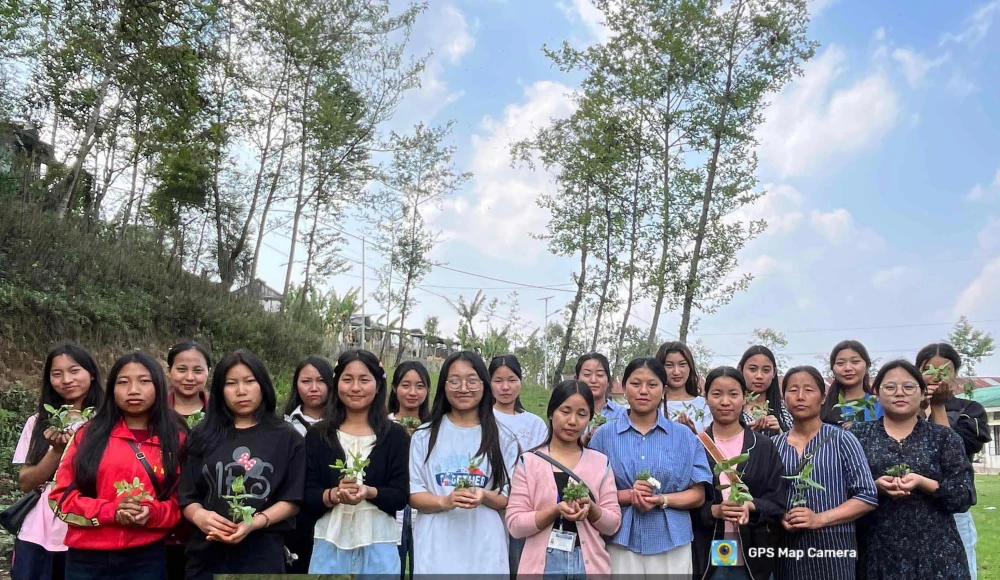
Sao Chang College: To support biodiversity and a healthy environment on campus, Department of Environmental Science, Sao Chang College worked together with Floriculture students to start a pollinator garden project. As part of the activity, students planted Zinnias and Marigolds, which are known to produce a lot of nectar and attract bees, butterflies, and other important pollinators. During the programme, students learned useful gardening skills such as improving soil with organic materials and planting seedlings at the right distance for better growth. This hands-on activity helped connect classroom learning with real environmental action and showed the importance of protecting pollinators, which are essential for food production.
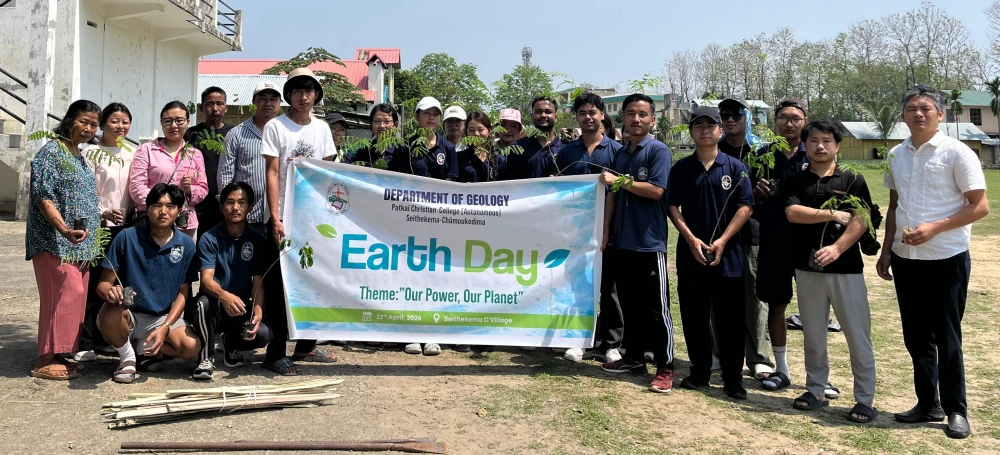
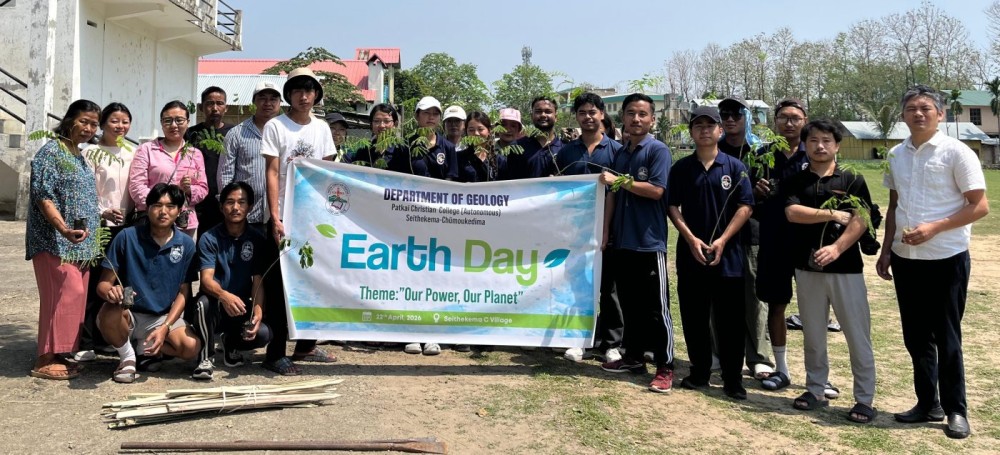
Patkai Christian College: The Department of Geology, Patkai Christian College (Autonomous) organised a Plantation Drive at Seithekema ‘C’ Village under the global theme “Our Power, Our Planet.” A total of 27 participants, comprising 20 students and 7 faculty members, took part in the initiative. The saplings were provided by the Department of Environment, Forest, and Climate Change, Chümoukedima. During the drive, participants planted 100 saplings of indigenous, shade-giving species, including Ajar, Gulmohar, Indian Beech, and Rain Trees, around the village's local ground. Bamboo fencing was installed to protect the young plants from grazing animals, and watering was carried out to ensure healthy growth. Members of the Village Council also extended support by assisting in demarcating the plantation site.
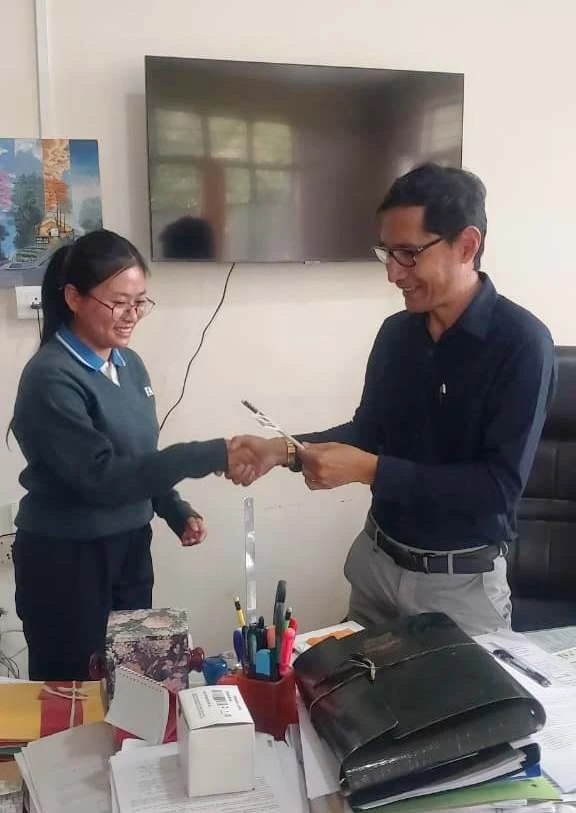
Fazl Ali College: A signature campaign was organised by the Eco Club of Fazl Ali College, Mokokchung, urging all departments to observe Earth Day through eco-friendly activities. Responding to the call, various departments undertook multiple initiatives. The Ao and Chemistry Department conducted a ‘One Minute Pledge’ to protect nature, alongside a motivational talk on environmental conservation. Botany Department organised a pledge programme centred on the theme ‘Our Power, Our Planet’. In the English Department, every student wrote a letter under the theme ‘My Promise to Earth’, pledging to be conscious, gentle and committed to making the earth a better place. The Functional English faculty conducted a Group Discussion as part of practical exams on topics such as integrating climate education into school curriculum and making campuses and towns more sustainable through individual and local actions by young people. Geography Department distributed eco-friendly seed pencils to faculty members and students appearing for practical exams as a symbol of growth and sustainability under the theme ‘Share a Seed, Grow a Future’. Meanwhile, the History, Commerce and Mathematics Departments conducted ‘Thought for the Day’ sessions sharing environmental pledges, organised essay and slogan writing competitions, classroom cleaning drives, and speeches related to Earth Day.
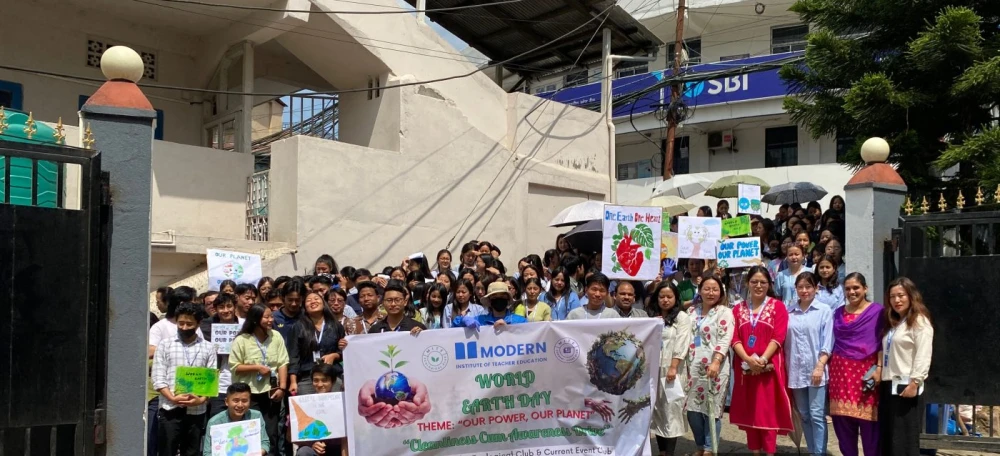
MITE: The Ecological and Current Event Clubs of the Modern Institute of Teacher Education (MITE) observed Earth Day at the institute’s auditorium, featuring a poignant poetry reading by Pulovi M Swu that reflected on the beauty and fragility of nature. Mudotalu Kezo highlighted the theme “Our Power, Our Planet,” stressing that environmental protection is a collective responsibility and offering practical strategies to drive sustainable change. Following the formal session, student-teachers were mobilised into six groups for a cleanliness drive across Porterlane, A.G. Colony, Mohonkhola, Lerie Area, and the MITE Campus. Faculty members provided guidance and logistical support, reinforcing the institute’s commitment to community service and ecological mindfulness.