Ashraf Rehman
Meribeni T Kikon
Wokha | July 3
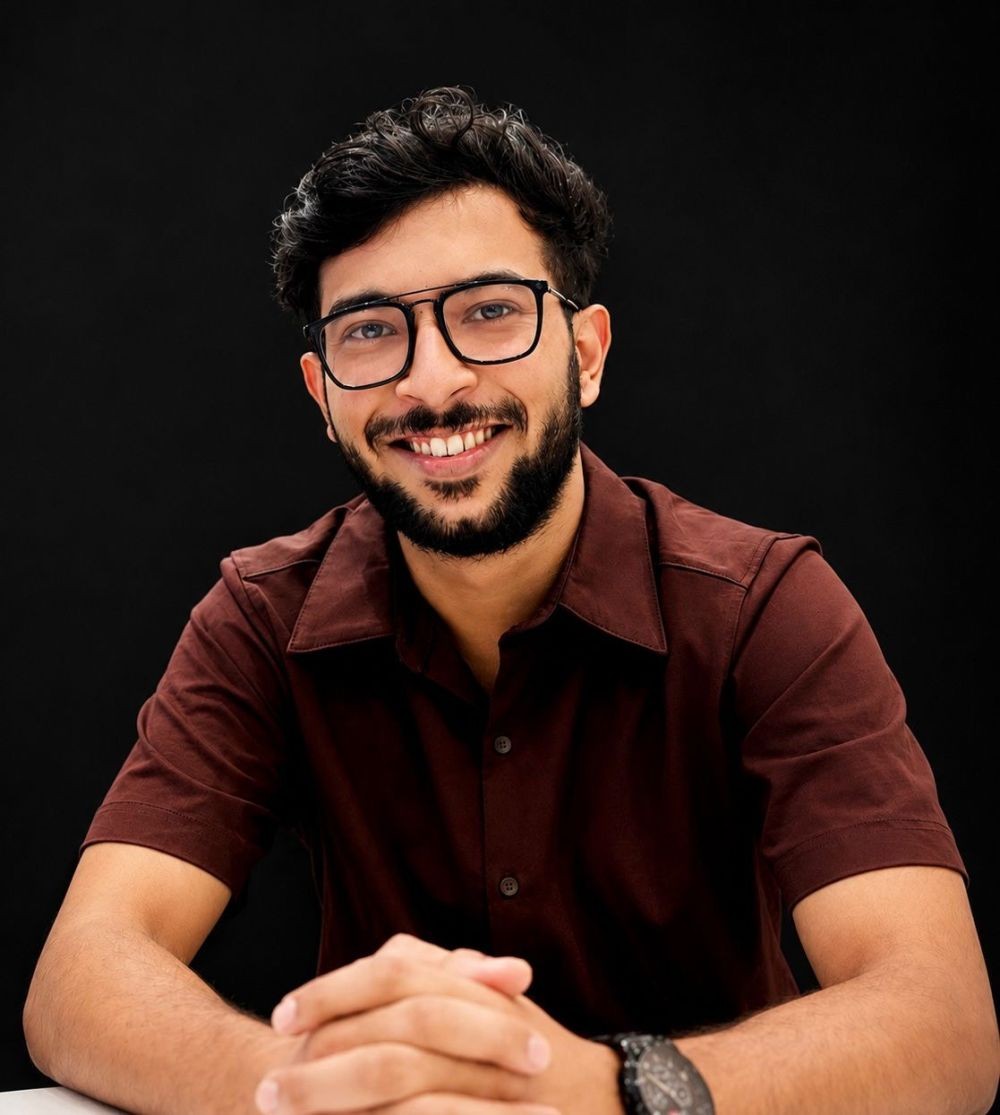
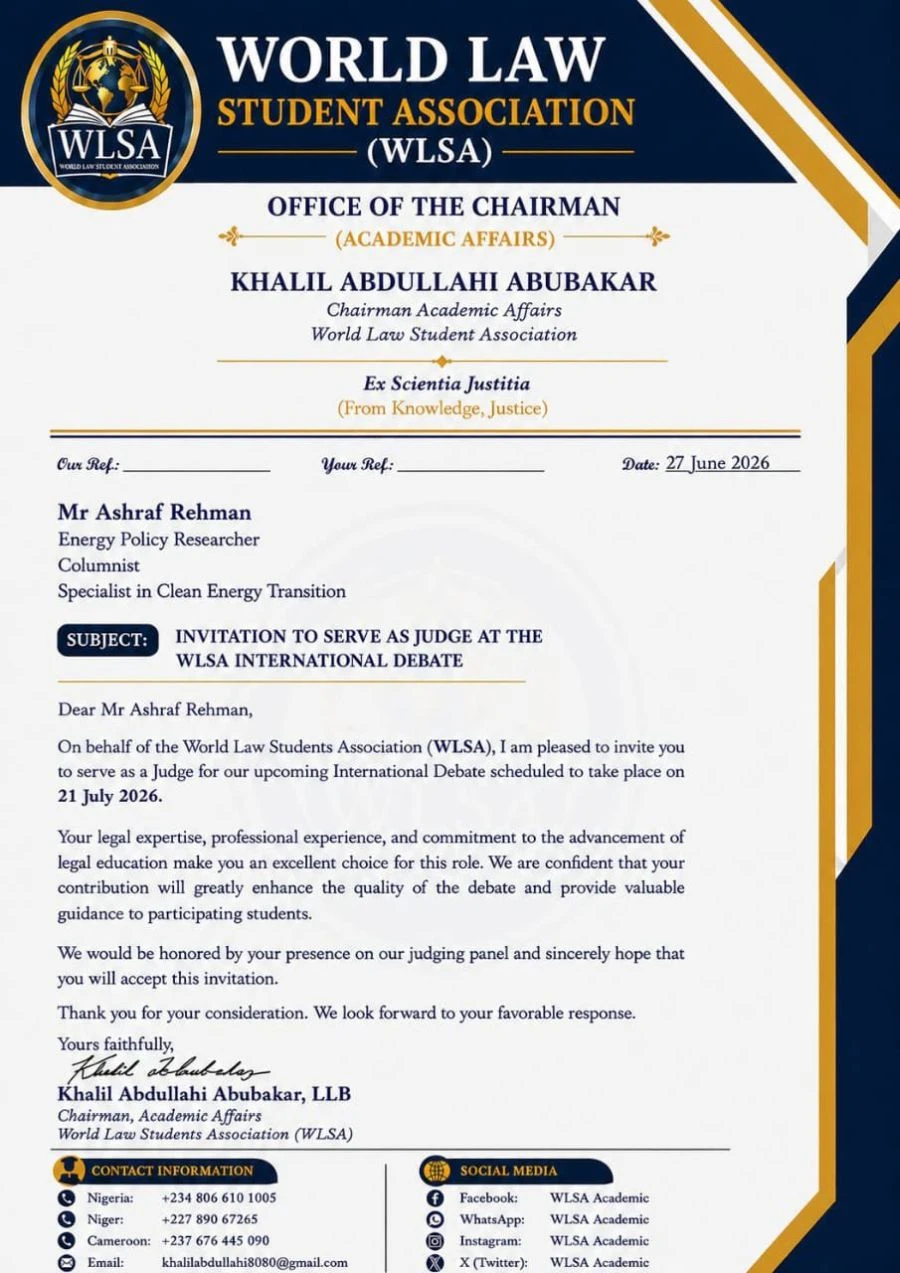
Policy researcher and columnist Ashraf Rehman from Dimapur, Nagaland has been invited to serve as a judge at the World Law Student Association (WLSA) International Debate 2026, reportedly becoming the “first” from Northeast India to receive such an appointment.
The official invitation, issued June 27 by the WLSA Office of the Chairman (Academic Affairs), asks Rehman to adjudicate the international debate on July 21, 2026. It cites his expertise, experience, and dedication to legal education, noting his participation would elevate the competition.
For Rehman, though, the invitation is more than an honor, it marks the culmination of a journey that began with a nervous schoolboy barely able to say “Good morning” in his first debate.
“I was truly happy and blessed to be honoured with this opportunity on an international platform,” Rehman said in an interview with The Morung Express.
He explained that the invitation was not the result of a nomination but of years of work in both competitive debating and public policy research.
A former state and national-level debater, Rehman won Best Debater at the NIT Nagaland English Oculus Debate in 2015 and claimed several university and regional titles. He continues to serve the debating community, most recently as a judge for the Authors' Conclave National Debate 2026.
Beyond debating, he is an energy policy researcher and development columnist who applies data-driven analysis to grassroots issues. His work has appeared in The Policy Edge, Asian Confluence, Forum for Integrated National Security (FINS), Mainstream Weekly, and Policy Circles; his empirical research on Nagaland was published in Sage's Journal of Development Policy and Practice.
As a Green Fellow, he advocates for cleaner energy adoption through research and policy engagement. His contributions earned him selection as a delegate to the North East Youth Leaders Conclave 2023, co-funded by the European Union and NEIMUN, under the auspices of the National Foundation for India.
“I personally believe all these experiences and opportunities led to this international recognition,” he said.
Rehman described becoming the first individual from Northeast India to judge the WLSA International Debate as both humbling and deeply meaningful. “Above all, the mercy of Almighty God is the core reason for this opportunity,” he said.
He believes the achievement is not merely personal but symbolic of the region’s intellectual potential.
“North East India in general and Nagaland have abundant intellectual human resources. I believe this is a small beginning for many more great opportunities in the region and for the rising intellectual minds.”
Headquartered in Nigeria, the WLSA is a global nonprofit that connects law students and professionals through academic collaborations, competitions, and international dialogue.
For Rehman, the association's international debate stands out for bringing together participants from diverse legal specialties to discuss complex global issues through legal reasoning. “The platform bridges academic understanding with practical arguments, making it one of the prestigious international debating platforms,” he noted.
This year’s debate is expected to feature discussions on International Law versus Customary Law. While participating countries are yet to be officially announced, Rehman revealed that contestants will primarily be assessed on their knowledge of law, analytical reasoning, and rebuttal skills.
As a member of the judging panel, Rehman said his responsibility would be to evaluate participants according to established guidelines alongside fellow judges.
Personally, however, he will be looking beyond confident public speaking. “A person speaking with confidence but possessing shallow knowledge is an average debater. Confidence supported by deep analytical and critical thinking is what distinguishes an exceptional debater,” he observed.
The appointment is a full-circle moment for Rehman, who never imagined his school-era debating journey would lead him back to the same arena, now as an international adjudicator.
“It feels like going back to where it all started, only in a different role. I am humbled and honoured.”
He credits his alma mater, Christian Higher Secondary School, for laying the foundation that shaped him as a debater, researcher, and person.
“My schooling left a deep psychological impact on my development, not just professionally, but also in teaching me humility and empathy,” he reflected.
Despite today’s achievements, Rehman’s journey was far from effortless.
Growing up in a modest family in Dimapur, he recalls standing frozen during his first school debate, unable to speak beyond his opening greeting.
“For five long minutes I was blank and numb. It was embarrassing,” he admitted.
Remarkably, the following year he returned to win the school’s Best Debater award, a turning point that would shape his future.
Rehman believes scholars from Nagaland and the Northeast remain underrepresented internationally, not because of a lack of talent but because opportunities remain limited.
“Nagaland’s students are exceptionally good researchers provided they are given the right opportunities. We have some of the best minds in the country.”
He hopes his appointment encourages young people across the region to pursue debating, research, law and public policy with renewed confidence.
“I pray this inspires the youth of Nagaland to participate in debates, conduct meaningful research and become active voices in policy.”
His advice to aspiring students is straightforward, “Have faith in Almighty God. Trust the process and give your best. Tables do turn, and your turn will come.”
Looking ahead, Rehman says his ambition remains rooted in public service.
“My aspiration is simple to serve my nation, my state and the region by contributing to research and suggesting better policies for a better Northeast and Nagaland.”
His message to the youth is equally uncomplicated yet profound, “Work hard with honesty, and things will be great.”