

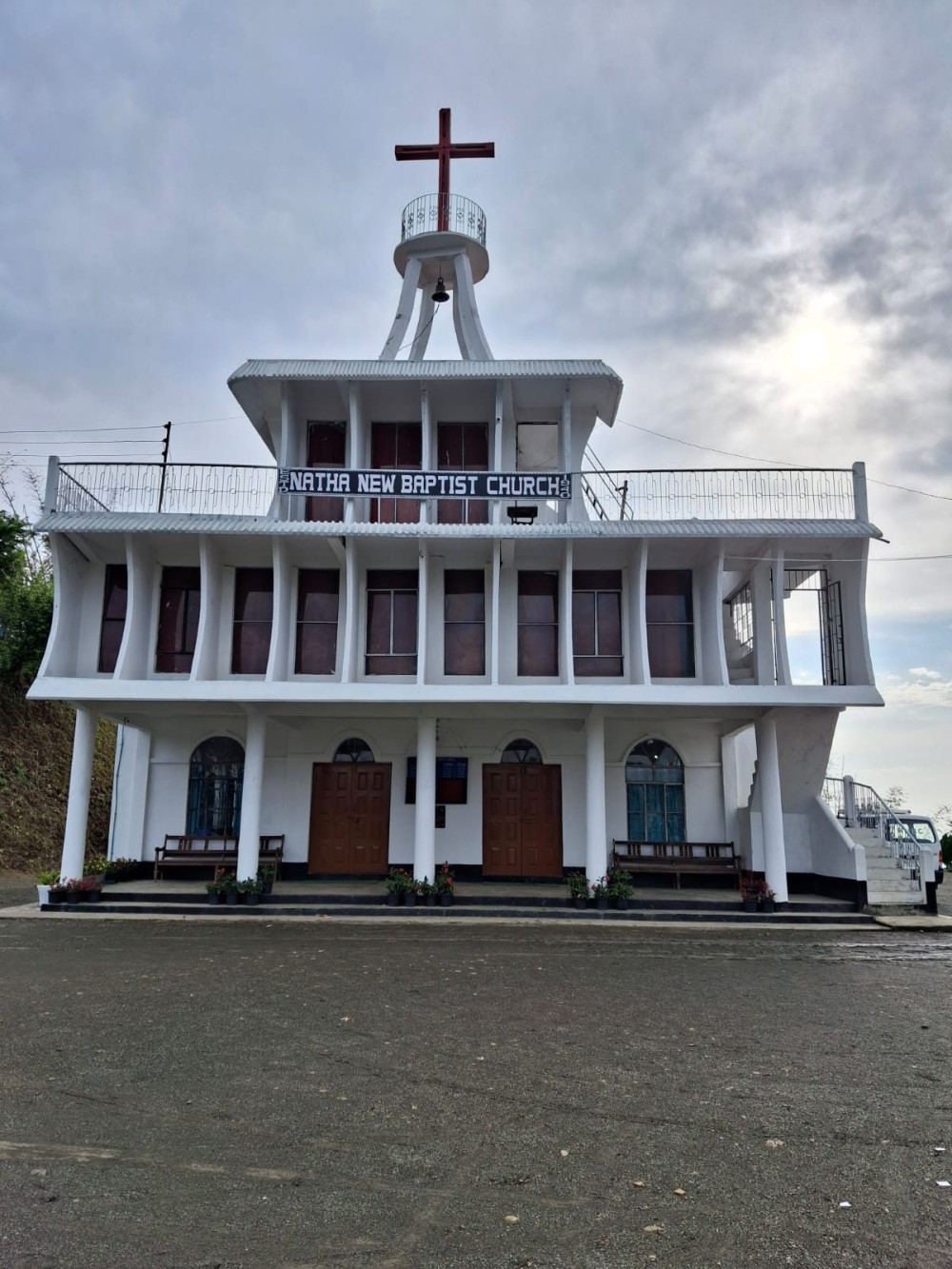
Clean Election is not merely an aspiration: A view of the church in Natha New village under Zunheboto. (Morung Photo)
Morung Express News
Kohima | August 28
The experience of Natha New village under Zunheboto has emerged as an encouraging example of how collective community action can help make elections cleaner, fairer and more democratic.
Sharing the testimony at the launching of the Clean Election Movement (CEM) on August 28, Ghunato Assumi, Associate Pastor of Sumi Baptist Church, Zunheboto, said the village had taken a number of deliberate steps during the last election to protect voters’ freedom and reject money-driven politics.
He said the initiative was a collective effort involving church leaders, the village head and residents, who came together with the intention of making their village a model that others could learn from.
Assumi observed that elections in Nagaland are often associated more with money than with candidates’ manifestos, ideologies or political programmes.
“The only thing that lingers in our mind is money,” he said, questioning how often voters actually discuss what candidates stand for, what they promise to do and how they intend to govern.
Against this backdrop, he described Natha New village experience as “a source of hope” for the Clean Election Movement.
According to the testimony gathered from the village pastors and leaders, the community adopted several measures to ensure a free and fair election.
First, voters were given complete freedom to exercise their franchise. Eligible voters were encouraged to make their own choices without pressure, influence or coercion. No one was instructed whom to vote for or how to vote, he informed.

The village, he stated has banned intoxicating substances within its jurisdiction during the election period, prohibiting their sale, consumption and distribution while political posters, flags and banners were not allowed within the village, and candidates and political workers were also prohibited from conducting door-to-door campaigning, inducement or direct solicitation of votes.
Another significant decision, Assumi said, was the rejection of money and material inducements. Residents agreed not to accept cash or other benefits from candidates or political parties in exchange for their votes.
Assumi said the effort was reinforced by the church through prayer, counselling and awareness programmes. For two to three months before the election, pastors and church workers conducted door-to-door prayer meetings and discussions, focusing on accountability, justice, fairness, righteousness, godly governance and community building.
The most important factor, however, was the collective commitment of the entire village, he said. “It was not just the church leaders nor the village head, but everyone came together,” Assumi said, recalling their shared resolve to make the election free and fair.
He said the village’s experience demonstrated that clean elections were about more than rules and restrictions; they required a change in the mindset of voters, candidates and communities.
By rejecting money, intoxicants, inducements, pressure and excessive political influence, the people of Natha New affirmed the dignity and independence of voters, he said.
Assumi said the experience also showed how faith could be translated into action, making democracy more meaningful when citizens were free to choose leaders based on vision, integrity, leadership, development, welfare, accountability and the common good.
“Natha New village has therefore become more than a village that conducted an election differently. It has become a story of possibility,” he said.
He expressed hope that the experience would encourage more villages and communities across Nagaland to pursue elections that are cleaner, transparent, peaceful and genuinely democratic.
“A Clean Election is not merely an aspiration. With collective conviction and courage, it can become a reality,” Assumi said.
.JPG)

