.jpg)
Maligaon, February 5 (MExN): Northeast Frontier Railway (NFR) has reported significant progress in renewable energy adoption, electric traction infrastructure and operational safety during the current financial year, highlighting its focus on sustainable, efficient and safe rail operations.
According to information released by NFR, a total of 9.27 MWp of rooftop solar power plants have been commissioned across its network up to December 2025 during FY 2025–26. This represents an increase of 373 per cent compared to the corresponding period of the previous financial year, FY 2024–25, and is the highest rooftop solar capacity added in a single financial year since 2011–12.
With the latest additions, the cumulative installed rooftop solar capacity over NFR has reached 18.4 MWp as of December 31, 2025. The railway stated that this expansion has resulted in substantial energy savings and a reduction in carbon footprint.
In the area of electric traction, Trip Inspection sheds at New Jalpaiguri and Dibrugarh were commissioned on August 20, 2025, and November 27, 2025, respectively. These facilities have been set up to enable electric locomotive trip inspections and to improve operational reliability.
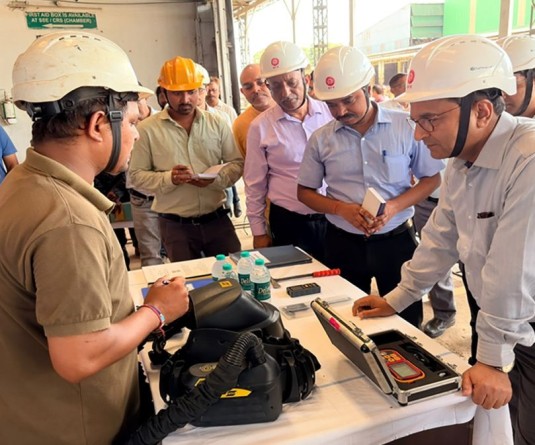
To further strengthen train safety, the indigenous Automatic Train Protection system, KAVACH, has been fitted in 81 electric locomotives out of NFR’s total fleet of 285 electric locomotives.
As part of its transition towards cleaner traction, NFR has converted 31 pairs of trains from diesel traction to end-to-end electric traction. This conversion has led to the saving of 26 diesel locomotives and has improved energy efficiency and operational sustainability.
In the field of training and safety awareness, a working model of the Automatic Block System has been developed and installed in the New Bongaigaon lobby to enhance the working knowledge of train crew. In addition, sectional videography during night hours has been introduced in the Katihar, Alipurduar, Rangiya and Tinsukia divisions to improve route learning and situational awareness among running staff.