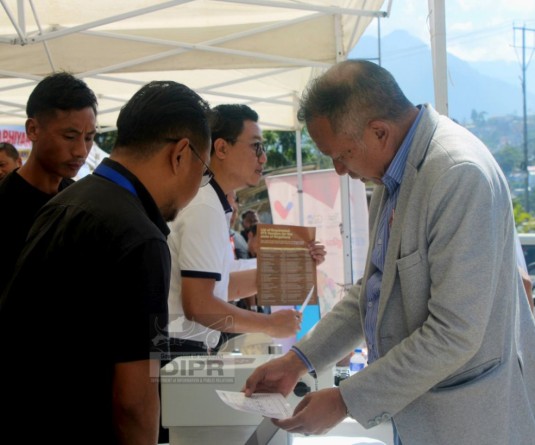
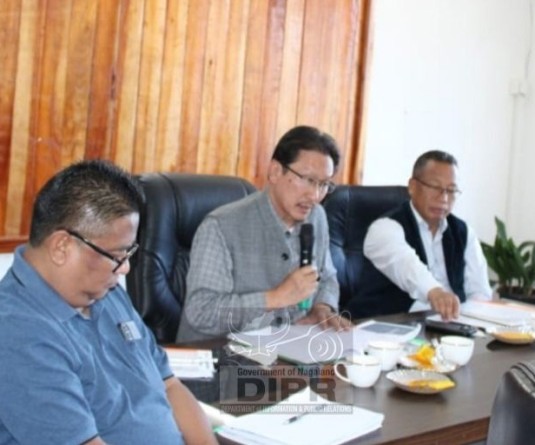
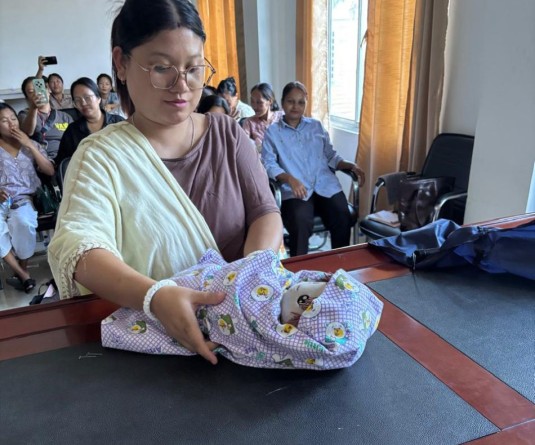
SANKALP – District Hub for Empowerment of Women, Social Welfare Department, Noklak, organised an event to mark International Girl Child Day 2026 at White Hall, Noklak, on October 14. (Morung Photo)
Morung Express News
Noklak | October 14
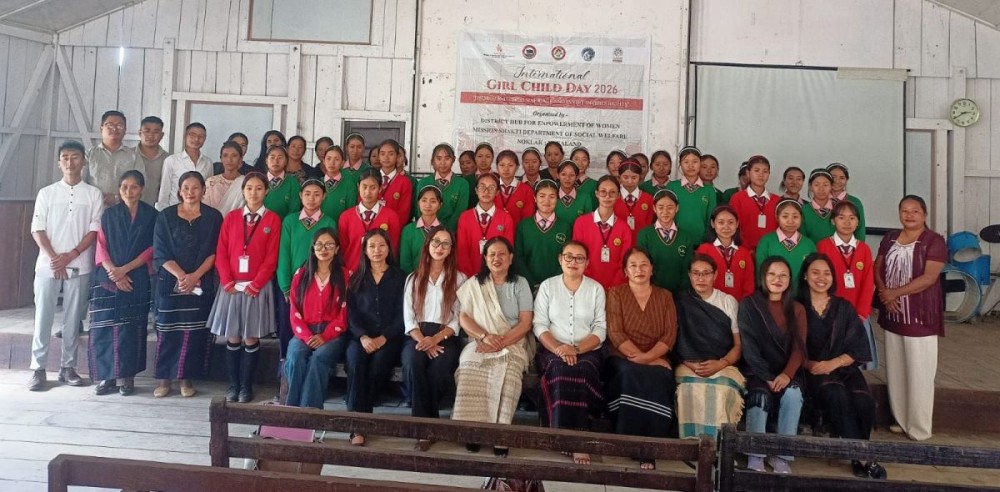
SANKALP – District Hub for Empowerment of Women, Social Welfare Department, Noklak, organised an event to mark International Girl Child Day 2026 under the theme “End Child Marriage and Invest in Girls’ Rights.” The event was held at White Hall, Noklak, on October 14 and was attended by students and representatives from various organisations.
Dr Meyachungla Jamir, Medical Officer at Integrated AYUSH Hospital, Noklak, highlighted the causes, consequences, and health risks of child marriage. The practice remains a concern in India despite progress in many parts, she stressed.
Dr Jamir emphasised that child marriage is deeply rooted in gender inequality and has consequences for a child’s education, sexual and reproductive health, and psychological well-being.
She underscored the challenges faced by girls in various parts of India, highlighting the health risks associated with early marriage, including increased vulnerability to sexually transmitted infections (STIs) and sexual and physical violence. She also pointed to the vulnerability of young people aged 15–24 to sexually transmitted infections, stressing the importance of awareness and education on sexual health.
Referring to findings from the National Family Health Survey (NFHS), she highlighted how early marriage can affect a young person’s ability to make decisions, develop self-understanding, and achieve emotional maturity.
She further stressed that child marriage affects not only individuals but also society. Dr Jamir emphasised the importance of equal participation from both genders, stating that mutual understanding is essential for building healthy relationships and a progressive society.
Speaking on the status of women in Nagaland, Dr Jamir observed that “although women enjoy greater freedom in certain areas, equality remains a challenge within a patriarchal society.”
She said that education is a fundamental tool for empowerment, encouraging young people, particularly girls, to pursue education, develop their potential, and establish their identity in society.
Dr Jamir strongly emphasised that education, awareness, and gender equality are essential to addressing child marriage and building a society in which every child can enjoy the freedom and opportunity to shape their own future.
Khiamniungan Menyiu Hoikam (KMH), President K Chongkoi, shared insights into the traditional way of life during the time of their forefathers and spoke about the status of women in society.
She encouraged young girls to prioritise their well-being, maintain a healthy lifestyle and lead their lives with dignity and purpose.
Supervision Child Helpline, Khumeng T, emphasized key areas of investment in the girl child: education, health and well-being, protection from violence, and legal and social protection. He urged community members, women’s organizations, and churches to work collectively with government agencies to identify school dropouts, children in need of care and protection, children in conflict with the law, and underprivileged girls, ensuring that no child is left behind.
Khumeng highlighted the importance of confidentiality and informed the gathering about the National Child Helpline 1098 and support services available through the District Child Protection Unit (DCPU), Sakhi One Stop Centre, Specialised Adoption Agency (SAA), and District Hub for Empowerment of Women (DHEW).
District Programme Officer (DPO), ICDS, Noklak, Ajongla Temjen, briefed the significance of the day, stressing the need to openly discuss child marriage. She expressed concern over its prevalence in the area, describing the situation as saddening. She emphasized that child marriage is not merely a social issue but also a personal concern, with consequences for the health and future of the children involved.
Earlier, the programme was chaired by H Hang Shio, Gender Specialist, DHEW; invocation was led by H Ngoun, Associate Pastor Women, BDTN; and vote of thanks was delivered by Shing B, Gender Specialist, DHEW.