State Seed Sub-Committee members and officials during the meeting convened at the ICAR Research Complex for NEH Region, Nagaland Centre, Medziphema on April 21.
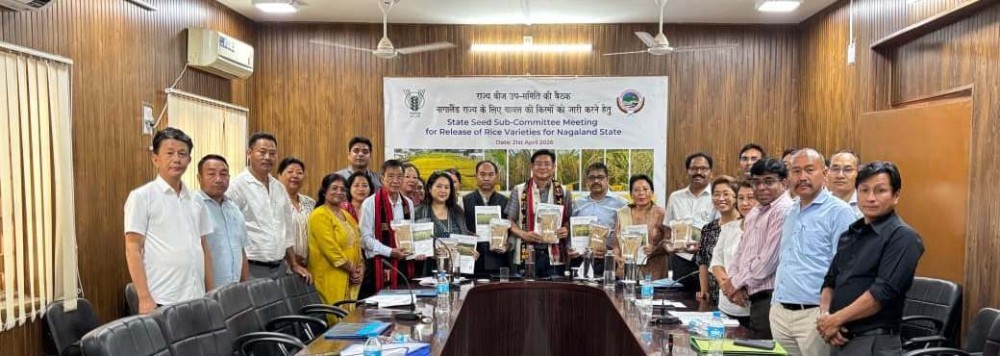
Medziphema, April 21 (MExN): The State Seed Sub-Committee on Tuesday approved the release of seven new rice varieties developed specifically for Nagaland’s agro-climatic conditions. The approval came at a meeting convened at the ICAR Research Complex for NEH Region, Nagaland Centre, Medziphema in accordance with prescribed varietal release procedures.
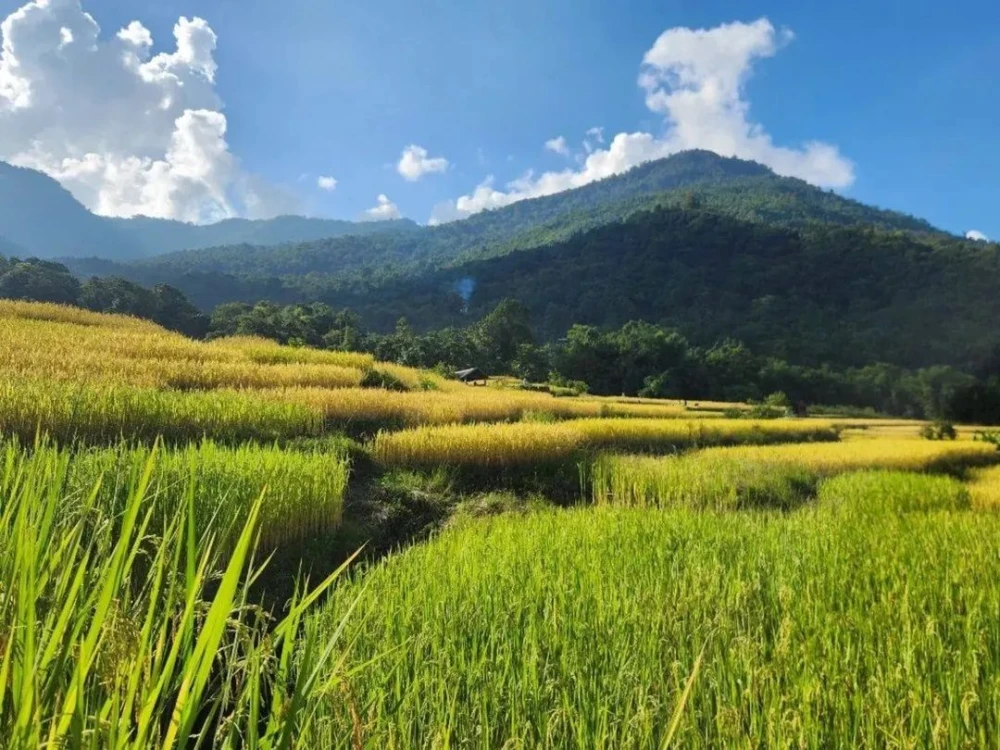
Nagaland’s rice cultivation has long been constrained by the predominance of long-duration, low-yielding varieties. Addressing this challenge, the development of short-duration, high-yielding rice varieties has become a critical priority for enhancing productivity and ensuring food security in the state.
In this context, Dr Harendra Verma, Scientist, Plant Breeding and Genetics, ICAR Nagaland Centre, presented the outcomes of an extensive breeding programme.
A total of 990 breeding lines were evaluated, out of which 30 promising lines were shortlisted, ultimately leading to the development of seven superior rice varieties. These newly developed varieties have a shorter duration of 115–120 days, higher productivity potential of 5–7 tonnes per hectare, and exhibit tolerance to both biotic and abiotic stresses.
Considering their significant potential, a formal proposal for the release of these varieties was placed before the State Seed Sub-Committee. After thorough deliberation, the committee approved the release of all seven varieties and recommended them for further necessary action towards gazette notification, stated an update received here.
The Advisor for Agriculture, Government of Nagaland, Mhathung Yanthan, who was the chief guest, called the development a “historic milestone” for the state’s agricultural landscape. He emphasised that the introduction of these improved varieties would have a tangible and positive impact on farming communities and called for coordinated efforts among various departments to ensure their effective dissemination and adoption.
Dr H Kalita, Head of Regional Centre, ICAR Nagaland Centre said, “The development of these varieties is the result of over nine years of dedicated research and sustained effort.”
The meeting was attended by senior officials including Akumla Chuba, Commissioner and Secretary, Department of Horticulture; Limanenla, Joint Secretary, Department of Agriculture; Sanuzo Nienu, Director, Directorate of Agriculture; District Agriculture Officers; KVK officials; and faculty from Nagaland University. Dr SP Das, Director, ICAR-NRC on Orchid, and Dr SV Ngachan, Former Director, ICAR Research Complex for NEH Region, Umiam, were also present.